
Hadrian has decided to play for keeps. The California-based company, known for its AI fueled approach to manufacturing, just made headlines with a substantial $260 million capital raise, and it is already putting that money to work in bold ways. Rather than making vague promises about future growth, Hadrian is going all in on concrete upgrades to its footprint across California and Arizona, even as the rest of the sector frets over labor shortages and global competition. The result is nearly five football fields’ worth of new manufacturing space, a major ramp up in research and development, and entire teams focused on the challenges of shipbuilding and defense work, which is hardly the kind of tidying up exercise you find in a quarterly report.
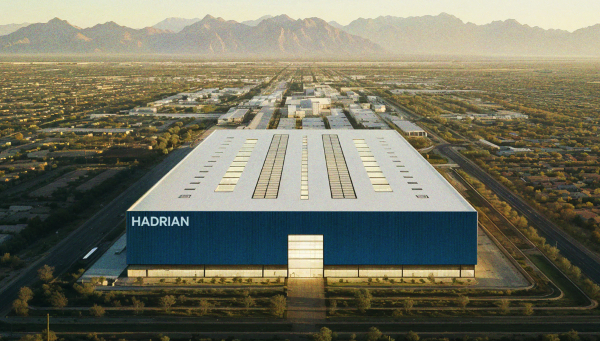
The company’s latest funding round, led by a roster of deep-pocketed backers including Peter Thiel’s Founders Fund and Lux Capital, shows that more people are betting on a new model for American industry. Hadrian is not tinkering around the edges; it is building what it hopes will become the most advanced manufacturing network in the country. At the heart of this latest move is Factory 3, a 270,000 square foot facility coming soon to Mesa, Arizona, with ambitions to churn out defense and aerospace parts at a pace and precision unmatched by the traditional machine shops scattered across the country. While states from Texas to Ohio try to lure the next wave of tech manufacturing, Hadrian’s choice of Arizona is equally about workforce and logistics. The new Mesa factory is four times larger than the company’s current California operation and is expected to create 350 local jobs once it is up and running, which executives say should happen before Christmas.
Not content to let Arizona have all the fun, Hadrian is also expanding its Torrance, California base, a site that will now serve as a research headquarters and research and development hub. The California location alone takes up about 100,000 square feet at present, but after this round of investment, the total footprint of Hadrian’s production and research operation is expected to exceed half a million square feet across both states. The firm’s founder and CEO, Chris Power, sees this as more than just a business expansion. He refers to the effort as “securing American leadership in advanced manufacturing” and scaling new job creation in industries where most U.S. capabilities have fallen behind.
One thing that sets Hadrian apart from many others pitching the dream of high tech manufacturing revival is the focus on actual production, not just research and development or automation for its own sake. The company specializes in what it calls the “advanced manufacturing stack,” a soup to nuts approach that includes everything from sourcing raw materials to delivering finished components and, increasingly, complete systems. Hadrian’s new facilities will support this ambition by drastically expanding the number and types of things it can make, from precision parts to full assemblies for everything from missiles to ship hulls.
The shipbuilding and naval defense side of the business is getting special attention. Hadrian has created a dedicated division, Hadrian Maritime, that will bring its highly automated model to a sector known less for innovation than for complicated supply chains and chronic worker shortages. Automation is the word of the day, but with a twist, Hadrian is shooting for up to 90 percent automation in core production processes, aiming to lower barriers for training new workers and create more resilient factory floors. With so much of America’s shipbuilding workforce set to retire soon and with critical gaps in the ability to build everything from submarines to missile tubes, this kind of technology driven leap forward may come none too soon.
Hadrian is also rolling out something known as “Factories as a Service.” Instead of building everything in house, the company is helping other defense contractors scale up their own plants, sometimes even taking over production on site. This guarantees some flexibility and makes it easier for defense primes to ramp capacity quickly when a new government contract drops, all while reducing the risk of falling behind global competitors. The different approach may also help explain why investors have lined up not just for equity but for loans designed specifically to expand and equip new facilities. This is not a bet on software alone; it is a wager on nuts, bolts, and the manufacturing backbone the country is going to need for the next 50 years.
What is clear is that Hadrian is not planning for slow, incremental growth. New factories, new jobs, and new product categories are all coming at once. With a $260 million infusion now landing in Hadrian’s bank account, American manufacturing, as well as the communities supporting these massive new facilities, are about to see just how far AI and automation can go when someone is ready to build, not just brainstorm.
