
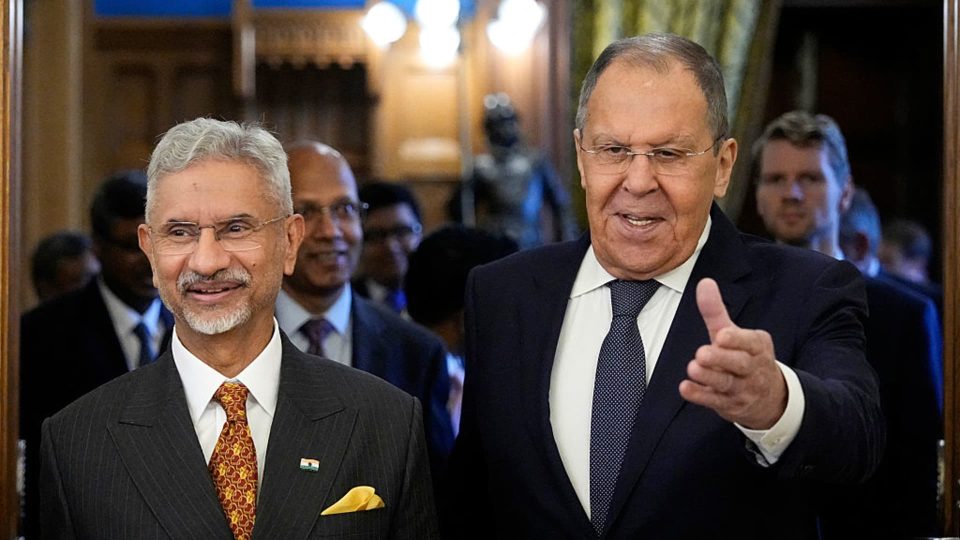
India and Russia are strengthening their trade relationship, reaffirming plans to grow their economic ties despite pressure from the United States over energy imports. During Indian External Affairs Minister Subrahmanyam Jaishankar’s recent visit to Moscow, both countries expressed a clear intent to boost bilateral trade by about 50% within the next five years, aiming for a $100 billion annual trade volume. This ambitious target involves removing trade bottlenecks and lowering non-tariff barriers that currently hinder smoother commerce. Russia ranks as India’s fourth-largest trading partner, with India being Russia’s second-largest, highlighting the strategic importance of this economic partnership.
While Washington has pushed back hard, particularly on India’s rising imports of Russian crude oil, stability and mutual benefit continue to drive New Delhi and Moscow closer together. Since the full-scale conflict in Ukraine began in 2022, India has sharply increased its intake of Russian oil, which now makes up 35% of its total oil imports. President Trump has responded by raising tariffs on Indian imports, with a 25% tariff recently added on top of existing duties, bringing the total to 50%. These punitive measures place India among the highest tariff targets by the United States, framed as a tactic to discourage support for Russia amid the Ukraine.
However, Indian officials have publicly challenged the U.S. stance, pointing to Washington’s own request for India to help stabilize global energy markets by purchasing Russian oil. Minister Jaishankar described the U.S. threats as perplexing, emphasizing the longstanding strategic alliance and the complexity of global energy security dynamics. This tension does not appear to deter India from maintaining its current import levels, as both countries seek ways to work around the tariffs for their national interests.
Beyond energy, the relationship is further deepening in labor cooperation. Russia faces severe labor shortages, partly due to many Russian men being deployed in the Ukraine conflict and broader demographic challenges. To address this, Russia plans to recruit up to one million Indian workers by the end of 2025. This workforce will bring skills primarily in information technology, construction, and engineering, sectors where Russian demand is high. Indian construction workers have already begun to appear on Russian projects, with several large Russian companies hiring skilled specialists such as concrete workers, welders, BIM design engineers, and industrial equipment technicians. The Indian government is actively facilitating this exchange, with efforts to certify Indian qualifications and open consulates for smoother labor mobility.
The move to bring in Indian workers not only fills gaps in Russia’s labor market but also signals an intention to solidify bilateral ties beyond just trade in goods. It is intended to create a lasting cooperation that spans people-to-people ties and economic integration. Russian officials have voiced confidence that the labor cooperation agreements and trade expansion plans will serve their respective national interests despite external political challenges.
Meanwhile, economic data underscoring the growing trade volume shows that India-Russia trade hit a record $68.7 billion in the fiscal year ending March 2025, including $59 billion in Indian exports to Russia. Growth in trade is not just about oil but spans various sectors, including raw materials and technology. With both countries members of the BRICS group, their cooperation aligns with broader efforts by developing countries to forge economic alternatives less dependent on Western markets (Markets.com, Indian Embassy Moscow).
The U.S. pressure, including the threat of tariffs up to 500% on countries buying Russian energy under proposed legislation called the Sanctioning Russia Act of 2025, has created a paradoxical effect. Some analysts suggest that instead of pushing India away from Russia, the tariffs may act as a catalyst for India to deepen ties further with Moscow, seeking dependable partners amid global uncertainty.
India’s major industrial players are central to this relationship. Reliance Industries, led by Mukesh Ambani, has been pivotal in increasing Russian crude imports into India’s Jamnagar refinery, from a mere 3% before the war to nearly half of the refinery’s crude intake now. This economic reality on the ground further complicates U.S. efforts to isolate Russia economically and highlights the deep commercial interests that drive India’s policy choices.
India and Russia are actively expanding their economic relationship in spite of U.S. sanctions and tariffs. With ambitious trade growth goals, significant labor cooperation plans, and strong diplomatic ties, both countries are steering their partnership into new territory. Their collaboration in trade and workforce mobility reflects a shared strategy to navigate external pressures by strengthening mutual reliance and reducing barriers to commerce and labor exchange. This is a clear signal that global economic relationships are evolving, influenced by geopolitical tensions but also by pragmatic needs that transcend them.
