
[stock_market_widget type=”card” template=”basic2″ assets=”PYNKF” realtime=”true” api=”yahoo-finance”]
Perimeter Medical Imaging AI, Inc. (TSX-V: PINK, OTCQX: PYNKF), a medical technology company known for advancing cancer surgery with cutting-edge imaging tools, has named Dr. Ted James as its new Chief Medical Officer. This role, though fractional, places Dr. James at the forefront of shaping the company’s medical direction as it works to bring its innovative imaging technology closer to broader clinical use.
Dr. James joins Perimeter from Endeavor Health Cancer Institute, where he served as System Physician Executive. His previous leadership included heading the Breast Surgical Oncology division and directing the Breast Center at Beth Israel Deaconess Medical Center, a position where he developed a nationally accredited multidisciplinary breast program. Beyond his clinical expertise as a surgical oncologist, Dr. James has been an academic leader, having served as Vice Chair of Academic Affairs in the Department of Surgery at Beth Israel Deaconess and as an Associate Professor of Surgery at Harvard Medical School. He holds a medical degree from Drexel University and completed specialized training in surgical oncology. Additionally, he earned a Master of Science in Healthcare Management from the Harvard T.H. Chan School of Public Health.
The role at Perimeter reflects Dr. James’s long-standing commitment to improving breast cancer surgical outcomes, particularly in addressing the challenge of margin assessment. Margin assessment, determining whether cancerous tissue has been entirely removed during surgery, is a difficult problem that has significant implications for patient outcomes and the need for additional surgeries. Dr. James expressed enthusiasm about joining Perimeter, citing the opportunity to put practical, advanced tools into surgeons’ hands that have a direct real-world impact in the operating room. He emphasized looking forward to helping bring this technology to patients who truly need it.
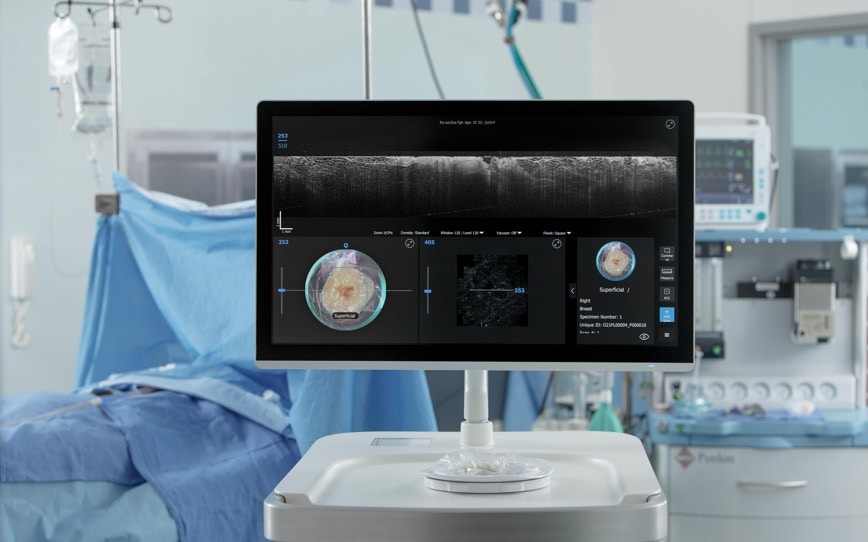
Perimeter Medical Imaging AI develops high-resolution, real-time imaging systems designed to assist surgeons by providing detailed cross-sectional views of excised tissue at the cellular level. Their FDA-cleared Perimeter S-Series OCT system is available across the United States, while their investigational Perimeter B-Series OCT system, which incorporates next-generation artificial intelligence under the brand ImgAssist AI, has been evaluated in pivotal clinical trials. These trials have benefited from a substantial grant of up to US$7.4 million awarded by the Cancer Prevention and Research Institute of Texas.
As Perimeter advances toward regulatory approval for its AI-enabled B-Series platform, Dr. James’s blend of clinical experience, research leadership, and insight into healthcare delivery will support the company’s efforts. Perimeter’s CEO, Adrian Mendes, highlighted the value Dr. James brings, noting that his expertise will be essential in demonstrating both the medical and practical benefits of Perimeter’s technology to regulators and healthcare providers.
The company’s ticker symbol, PINK, is a deliberate nod to Breast Cancer Awareness Month and reflects its commitment to tools that could reduce repeat surgeries and improve surgical precision for cancer care. While Perimeter S-Series has 510(k) clearance generally, the specific applications in breast cancer margin evaluation are still being established in clinical contexts. Meanwhile, the Perimeter B-Series is currently limited to investigational use under U.S. law.
Dr. James’s appointment comes at a pivotal time for Perimeter Medical Imaging AI as they continue to innovate and seek broader adoption of their tools, aiming to make tangible improvements to surgical oncology practices. His leadership in a fractional capacity suggests a collaborative approach driving medical strategy alongside the company’s growth and commercialization plans.
With the integration of Dr. James’s expertise from both clinical and healthcare system perspectives, Perimeter is looking forward to navigating the complex path of regulatory approvals and clinical adoption to ultimately deliver on the promise of enhanced surgical outcomes for cancer patients.
