
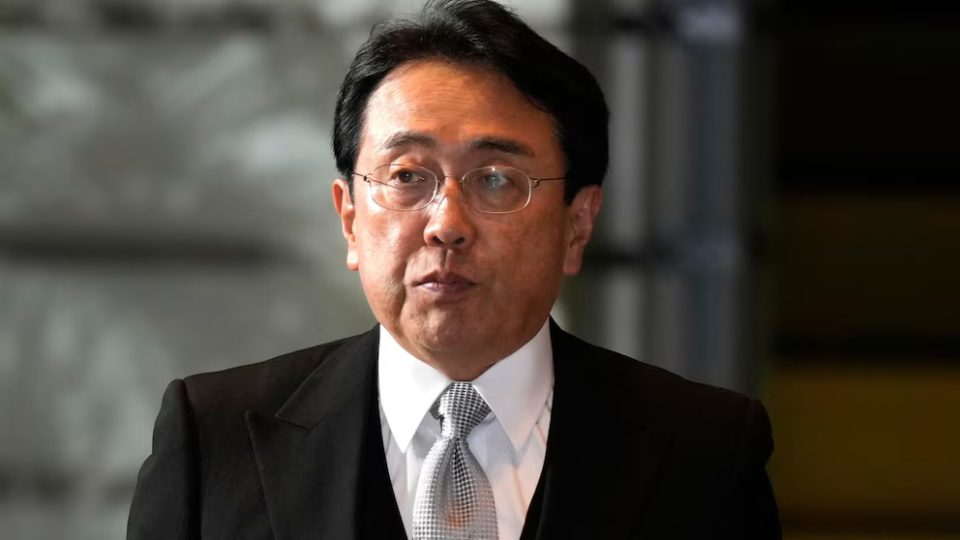
Japan’s chief trade negotiator, Ryosei Akazawa, has abruptly postponed a planned trip to Washington that was aimed at finalizing a joint statement on a tariff agreement with the U.S. administration. This postponement highlights continuing tensions and unresolved details in the ongoing trade negotiations between the two economic powers. The Japanese government has called for a faster implementation of the tariff cuts agreed upon in July, underscoring frustration with delays from the U.S. side.
In July, Tokyo and Washington announced an agreement to reduce tariffs on a broad range of Japanese imports to the U.S. from 25% down to 15%, effective August 1. The deal appeared to offer relief to Japanese exporters facing punitive “reciprocal tariffs” imposed by the Trump administration. However, soon after the announcement, Japanese officials raised concerns that the 15% tariff was being added on top of existing tariffs rather than replacing them, effectively resulting in a higher cumulative tariff on some products. Washington acknowledged this mistake and promised to abide by the 15% tariff agreement and refund any excess duties collected, though those refunds have yet to be processed.
Chief Cabinet Secretary Yoshimasa Hayashi elaborated on the issue, stating that Japan will “firmly urge the United States to amend its presidential order to correct the reciprocal tariffs and issue a new order reducing tariffs on vehicles and auto parts.” Vehicles and automotive components are a cornerstone of Japan’s export economy and have been a major sticking point in the negotiations. Despite recent signals from the U.S. Commerce Secretary that Washington is prepared to finalize the deal, which includes a Japanese pledge to invest up to $550 billion in the U.S. over coming years, the implementation details remain unsettled. Plans for Akazawa’s rescheduled visit to Washington remain uncertain as these discussions continue.
The tariff dispute between the U.S. and Japan comes amid broader frustrations in bilateral trade relations. Japan’s calls for swift action are also an attempt to build on the momentum created by the initial agreement. Akazawa had previously stressed the risk that any U.S. demand for a fully formalized, written agreement before enacting tariff cuts could result in delays and potential misinterpretations. He urged President Trump to implement the tariff reductions immediately through executive action, rather than waiting for a formal treaty that could get bogged down in bureaucracy.
The situation reflects the difficulties Japan faces in navigating trade under an administration that has frequently used tariffs as a tool for leverage and negotiation pressure. Earlier in the year, Japan was hit hard by tariffs and reciprocal duties that threatened to slow its economic growth, spurring Prime Minister Shigeru Ishiba to call the situation a “national crisis.” Japanese officials have scrambled to respond with new diplomatic efforts, creating task forces and seeking consensus among domestic political parties to counteract the impact of the U.S. trade policies.
The stakes are high for Japan’s automotive industry and other export sectors, which have warned that prolonged tariff uncertainties could deter investment and disrupt long-term planning. Japanese firms need clarity on tariff rates to maintain competitiveness in the U.S., one of their largest export markets. There is also broader concern that unresolved issues in U.S.-Japan trade could complicate the relationship between two economic allies and affect future cooperation on economic security.
In the background of these negotiations is Japan’s commitment to invest heavily in the United States, with planned investments totaling as much as $550 billion over several years. This investment pledge is a core part of the deal’s broader intent to deepen economic ties and encourage mutual growth. Still, without clear resolution on the tariff mechanics and prompt action from the U.S., the outlook remains uncertain.
The latest postponement of Japan’s chief trade envoy trip to Washington signals ongoing friction beneath the surface of what appeared to be an agreement. Until the United States takes concrete steps to implement the agreed tariff reductions clearly and refunds any excess duties, Tokyo will likely continue to press for faster and more transparent action.
