
[stock_market_widget type=”card” template=”basic2″ assets=”TSLA” realtime=”true” api=”yahoo-finance”]
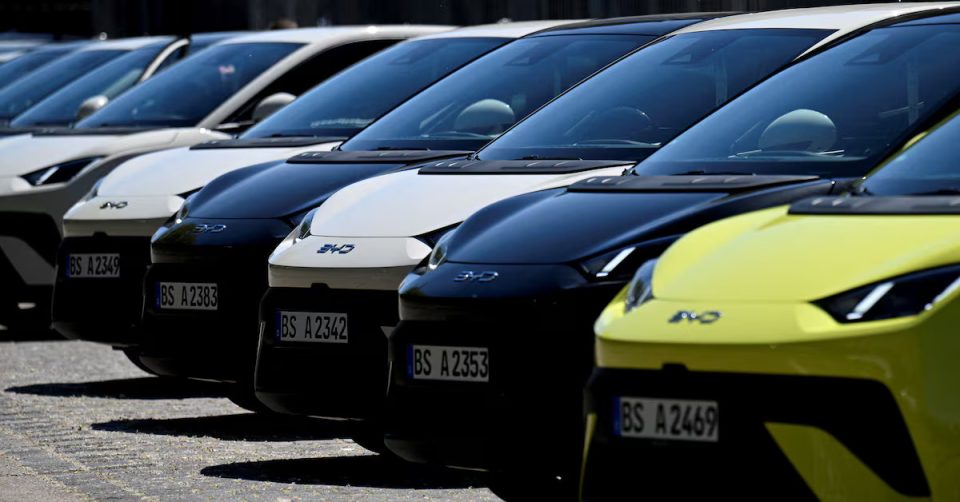
Tesla’s European sales have taken a steep fall while Chinese automaker BYD surges ahead in the region’s electric vehicle market. In July 2025, Tesla sold 8,837 new vehicles across Europe, marking a 40% drop compared to the same month last year, based on figures from the European Automobile Manufacturers Association (ACEA). Meanwhile, BYD recorded 13,503 new registrations in the same month, a striking 225% increase year-on-year, highlighting a major shift in the competitive landscape for electric vehicles in Europe.
The broader European car market showed signs of growth last month, with total new vehicle registrations rising by 7.4%, driven in part by strong performances from other automakers such as Volkswagen and Renault. Electric vehicles as a category are also expanding rapidly, with battery-electric and hybrid-electric cars seeing year-over-year increases of 39.1% and 56.9%, respectively. This makes Tesla’s decline even more conspicuous since the market is growing overall, not shrinking.
Tesla’s struggles come amid fierce competition from multiple fronts, especially Chinese manufacturers like BYD, which is gaining significant traction by offering aggressively priced models and expanding its range. Other European automakers are also refreshing their lineups and introducing new electric models, making the market increasingly crowded. Analysts note that Tesla has yet to roll out a truly affordable mass-market electric vehicle despite promises and has not introduced a major update to its lineup in nearly a decade, which has contributed to its decline in share.
Additionally, Tesla is facing reputational challenges in Europe that go beyond the competitive landscape. CEO Elon Musk’s public political stances, including his support for controversial political figures and policies, have reportedly alienated a segment of European consumers, especially in key markets like the United Kingdom and Germany. This reputational damage has led to consumer backlash and even protests, complicating Tesla’s efforts to maintain its foothold in these crucial automotive markets.
Country-specific data reveals deeper struggles for Tesla. In the UK, Tesla registrations plunged nearly 60% in July, and in Germany, they fell by more than 55%, despite overall electric vehicle sales rising sharply in these markets. This illustrates the growing preference for alternatives to Tesla’s offerings among European buyers. Tesla’s market share in Europe has dipped to just 0.7% in new vehicle registrations as of July 2025, whereas BYD holds about 1.2% market share, a notable disparity given BYD’s relatively recent entry into the market.
The challenges facing Tesla in Europe underscore a broader reality about the electric vehicle market’s evolution. While Tesla once dominated early on, its inability to maintain pace with competitors’ innovations and pricing strategies, coupled with external reputational issues, is eroding its position. BYD’s rapid ascent highlights the growing influence of Chinese automakers, who are entering the European market with competitively priced vehicles and rapidly expanding their model lineups, making them formidable contenders.
For Tesla, recovery may hinge on successfully launching more affordable models and refreshing its offerings to meet evolving consumer expectations. However, with the influx of new competitors and ongoing market dynamics, regaining lost ground in Europe will be a considerable challenge. Analysts remain cautiously uncertain about when or if the tide will turn for Tesla in this vital market.
