
[stock_market_widget type=”card” template=”basic2″ assets=”EXA.PA” realtime=”true” api=”yahoo-finance”]
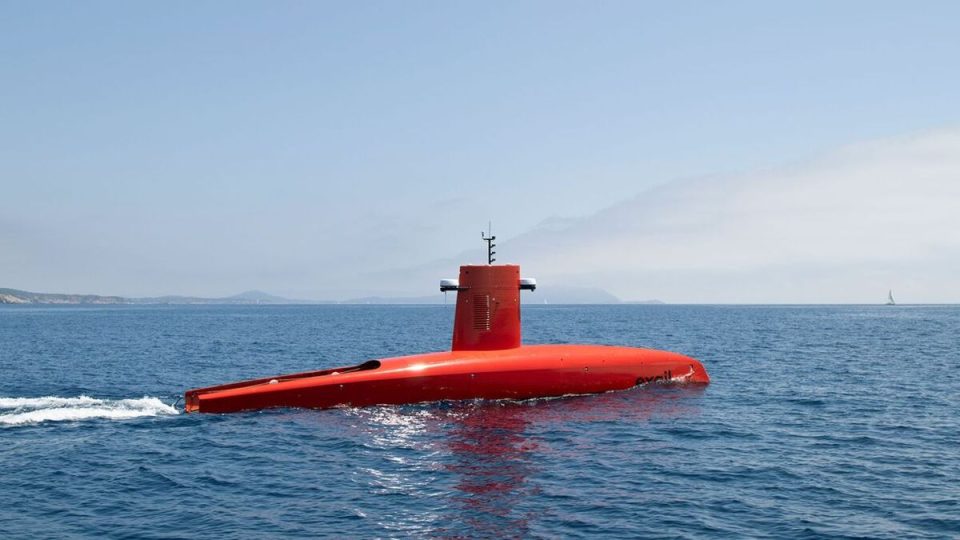
Exail Technologies (Euronext: EXA, OTCQX: EXALF) has taken an important step forward in expanding its autonomous surface vessel offerings with the first confirmed sale of its latest model, the DriX H-9. The French maritime technology company has secured this sale to a leading global hydrographic authority, a move that signals growing demand for advanced uncrewed surface vehicles (USVs) capable of extended autonomous operations. The deal marks a significant moment in Exail’s pursuits to broaden its reach across both commercial and defense sectors in the fast-evolving USV industry.
The DriX H-9 builds on the successful foundation set by its predecessor, the DriX H-8. With a boost in autonomous endurance to an impressive 20 days, the H-9 offers more than just longevity at sea. It also brings increased payload capacity and enhanced adaptability to carry out complex maritime missions over extended distances. These capabilities are particularly relevant for offshore energy exploration, subsea infrastructure maintenance, and naval surveillance operations, where persistent, over-the-horizon data collection is vital and offshore logistics pose a logistical challenge.
One of the key strengths of the DriX H-9 lies in its sensor integration and versatility. The vessel can simultaneously support multiple geophysical instruments, including side-scan sonar, magnetometers, multi-beam echo sounders, and sub-bottom profilers. It also features an aft launch and recovery system designed to deploy towed sensors and inspection-class remotely operated vehicles (ROVs), critical for seabed mapping and underwater asset inspection. This flexible configuration allows the H-9 to address a diverse array of mission profiles, from environmental monitoring to infrastructure assessment and intelligence-gathering tasks.
The vessel’s design intentionally optimizes for hydroacoustic sensors through a gondola architecture that helps maintain stable, high-quality data acquisition even in challenging sea conditions. Moreover, Exail has ensured compatibility across the entire DriX series by maintaining a common framework for fleet integration. This approach simplifies logistics for operators by allowing the sharing of spare parts and streamlining maintenance procedures, improving operational readiness and cost efficiency across the fleet.
Sébastien Grall, head of Exail’s Maritime Autonomy activity, underscored the significance of the sale: “With this sale of the H-9, alongside the recent success of the DriX O-16, the DriX series is becoming a true reality at sea, enabling operations from shallow to deep waters, with expanding endurance, the ability to embark a wide range of sensors, and the capability to launch and recover various assets.” He highlighted how the maturity and reliability of the DriX series have earned broad acceptance among civilian and military users worldwide. This positions Exail distinctly as a leader pushing the boundaries in autonomous maritime systems.
Scheduled for delivery in 2026, the DriX H-9 arrives amid accelerating global interest in autonomous maritime technologies. The proliferation of such systems is being driven by the dual needs of operational efficiency and enhanced data collection capability in increasingly complex offshore environments. With the H-9, Exail responds to these demands with a robust, mission-ready platform crafted to meet evolving operational requirements across a wide spectrum of users.
The DriX series itself has a proven track record since its launch in 2017. Collectively, these USVs have accumulated over 500,000 nautical miles in operations across some of the most demanding maritime regions globally. Trusted by top hydrographic agencies, navies, and offshore operators on five continents, the DriX vessels facilitate missions ranging from seabed mapping and environmental monitoring to subsea infrastructure inspection, rapid environmental assessment, and intelligence, surveillance, and reconnaissance. This broad operational footprint reflects the reliability and performance that have come to define the DriX name in the high-end USV market.
In recent quarters, Exail has also demonstrated strong commercial momentum. Its maritime robotics division, which encompasses the DriX USVs, has seen growing order intake, driven by both defense modernization programs and new civilian applications. Notably, Exail has been chosen for contracts supplying advanced underwater mine countermeasure systems and navigation technology, further cementing its expanding footprint in maritime autonomy.
Exail’s continued investment in product diversification within the autonomous maritime space aligns well with increased demand for platforms that reduce human risk and operational costs while extending mission capabilities. The DriX H-9 represents an evolutionary leap that combines endurance, flexible payload accommodation, and operational simplicity, a combination that should resonate with operators seeking to enhance their maritime domain awareness and infrastructure management capabilities without proportionally increasing logistical complexity.
Exail’s sale of the DriX H-9 is more than a transaction; it’s a statement that autonomous surface vessels are becoming an essential tool in maritime operations worldwide. With advanced features, proven reliability, and a growing base of users, the DriX series continues to influence how oceans are monitored and managed, offering operators a practical answer to the challenges of modern maritime missions.
