
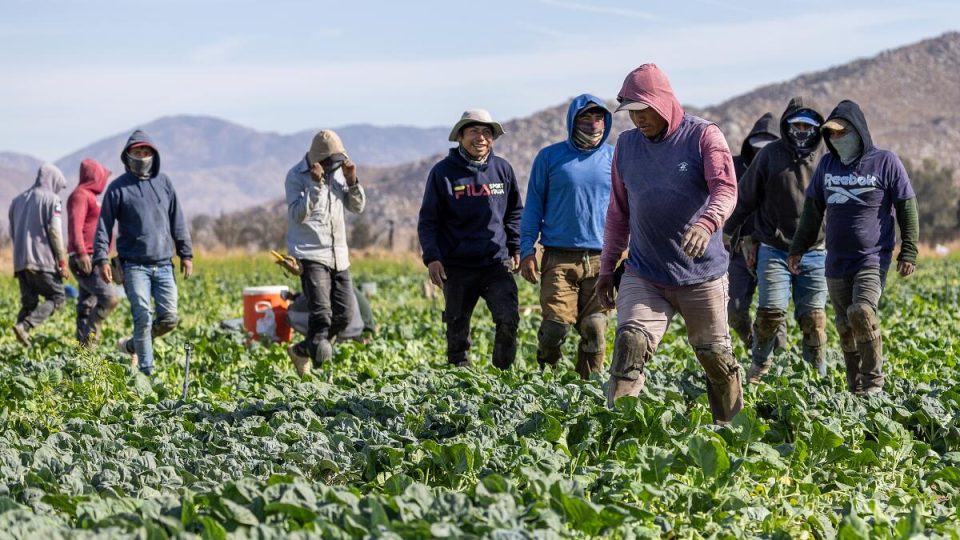
In 2025, American farmers are facing serious challenges due to a sharp decline in immigrant workers, a trend that is upending labor availability and productivity across U.S. agriculture. The situation has intensified this year, with immigration policies and enforcement actions leading to a 75% drop in new immigrant arrivals to farm jobs over recent years. This decline is hitting farming operations hard, making it difficult to find workers to harvest crops and maintain productivity while pushing labor costs ever higher.
Immigrant workers have long been the backbone of U.S. farming, comprising more than half of all hired farmworkers as of 2019. Many of these workers are engaged in labor-intensive roles such as handpicking fruits and vegetables. Their decline has left farms scrambling for labor, forcing some growers to scale back production or leave crops to rot in the fields. The United States Department of Agriculture (USDA) estimates that about 42% of crop farmworkers are undocumented immigrants, with another 26% being immigrants who have obtained legal status. However, increased immigration enforcement and raids, especially in urban areas which are primary labor sources, have severely curtailed available workers, creating widespread disruptions.
This labor shortage is compounded by demographic factors such as an aging workforce with few young people entering farming, along with fewer native-born workers willing to take on demanding farm jobs. Experts agree that conditions such as low wages, long hours, and minimal benefits have deterred U.S. citizens from farming roles for decades. Many farmers struggle with rising labor costs as they compete to attract a shrinking pool of workers, with labor expenses for some specialty crops reaching nearly 40% of total costs. These dynamics force difficult operational decisions and threaten the financial viability of smaller farms.
The shortages are not just a localized issue; they have broad economic implications. The agricultural sector is interlinked with transportation, processing, and retail industries, and labor shortages reverberate through these supply chains. Analysts estimate that inadequate farm labor has cost U.S. growers billions of dollars in lost fruit and vegetable production each year. This, in turn, raises food prices for consumers and threatens the stability of the nation’s food supply.
Policy uncertainty and enforcement rigidity have exacerbated the problem. The climate of fear caused by immigration raids discourages many would-be workers from seeking employment or remaining visible in their communities. While some political leaders have called for domestic workforce solutions, encouraging able-bodied adults on social programs to take on farm jobs, there is skepticism about whether such measures can fill the gap given the nature of the work and compensation offered.
The labor shortfall is particularly acute in states known for fruit and vegetable production, where timely harvests are critical. Farmers report losing significant portions of their workforce due to heightened immigration enforcement, which corresponds with crops left unharvested and income lost during peak seasons. In Oregon, for example, cherry growers have seen half their workforce disappear, forcing them to watch ripe fruit spoil on the branches.
Looking ahead, the farming industry faces a crossroads. Without changes to immigration policy or major investments in labor-saving technology like automation and robotics, the labor shortage is expected to worsen. Forecasts suggest that 2025 could see a need for an additional 2.4 million farmworkers across the country to meet labor demands. Some farms are already consolidating or shifting toward mechanization, but these adaptations take time and capital, and do not fully substitute the skilled manual labor essential for many crops.
The sharp decline in immigrant workers is reshaping farming operations across the U.S. in 2025, squeezing productivity, inflating costs, and threatening the future of many agricultural businesses. The crisis highlights the complex connections between immigration policy, labor markets, and food security, emphasizing the urgent need for balanced solutions that support both the workforce and the farmers who depend on it.
