
[stock_market_widget type=”card” template=”basic2″ assets=”1211.HK” realtime=”true” api=”yahoo-finance”]
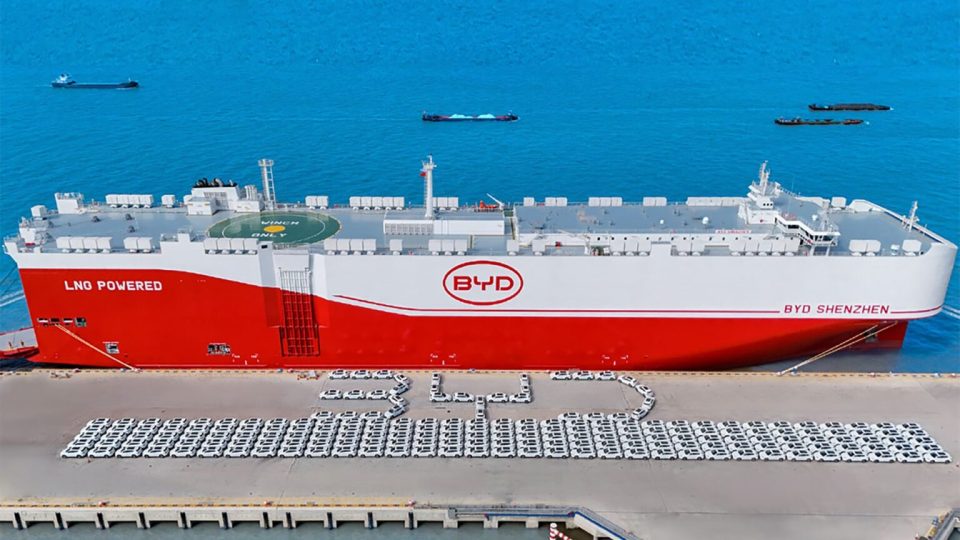
BYD Company (HKSE: 1211, Shenzhen: 002594) is quickly becoming a dominant force in Brazil’s electric vehicle market in 2025, driven by its unique approach to logistics, local production, and aggressive sales strategy. The company ships its electric vehicles to Brazil using its own fleet of large cargo ships, including its flagship vessel, BYD Shenzhen, which holds the record as the world’s largest car carrier with capacity for over 9,000 vehicles per trip. Utilizing this proprietary shipping fleet, BYD bypasses intermediaries, cutting costs and speeding delivery to meet swiftly rising demand across Brazil.
The scale of BYD’s operations in Brazil is impressive. The company has sold more than 20,000 electric vehicles in the first quarter of 2025. This surge is supported by its new assembly plant in Camaçari, Bahia, which began operations in early July 2025. The factory assembles vehicles locally from imported knock-down kits, aiming to produce 50,000 electric vehicles in total for 2025. Local assembly helps BYD manage Brazil’s complex tariff system and reduce prices, making electric vehicles more attractive to Brazilian consumers.
The sales momentum endured into the second quarter, with estimated sales of about 22,000 units, matching or slightly exceeding the first quarter. This steady progress is boosted by an expanding dealership network, which grew to 180 outlets by mid-2025, with plans to reach 240 stores by year-end. BYD’s vehicles, including popular models like the Dolphin Mini and Song Plus, are generating strong sales thanks to competitive pricing and increased geographic coverage, even in more remote regions such as the Midwest and Northeast of Brazil.
Brazil’s broader EV market is also expanding rapidly. In May 2025 alone, fully electric vehicle sales hit a record high of nearly 7,000 units, a 35% increase year-over-year, with BYD commanding over 80% of the fully electric vehicle sales market that month. This dominance is notable as Chinese brands are steadily consolidating their hold, offsetting a decline in traditional automakers and pushing Brazil toward a more electrified future.
Beyond shipping and sales, the Bahia factory is a significant economic driver, expected to create up to 20,000 direct and indirect jobs as it transitions to full manufacturing by mid-2026. BYD is addressing regulatory and labor challenges carefully but remains committed to making Brazil a cornerstone of its Latin American strategy. The company’s focus on local production also aligns with Brazilian government priorities to promote industrial growth and reduce dependency on imports.
In terms of market share, BYD holds approximately 89.5% of the Brazilian electric vehicle sector, a figure that continues to grow as the company leverages its vertical integration in battery technology, electric motors, and vehicle design. This gives BYD a competitive edge not only in costs but in innovation, enhancing its appeal to consumers looking for affordable, reliable electric vehicles amid rising fuel prices and environmental concerns.
The company’s strategy is clearly paying off. BYD surpassed traditional brands to become the fourth best-selling automaker in Brazil in 2025, an impressive feat for a relatively new entrant. With the combination of its fleet capability, local assembly, and broadening dealership network, BYD is reshaping Brazil’s EV landscape. As electric vehicle adoption in Brazil accelerates, other automakers will need to watch BYD closely as it sets the pace for growth in one of the most promising emerging EV markets in the world.
