
[stock_market_widget type=”card” template=”basic2″ assets=”BABA” realtime=”true” api=”yahoo-finance”]
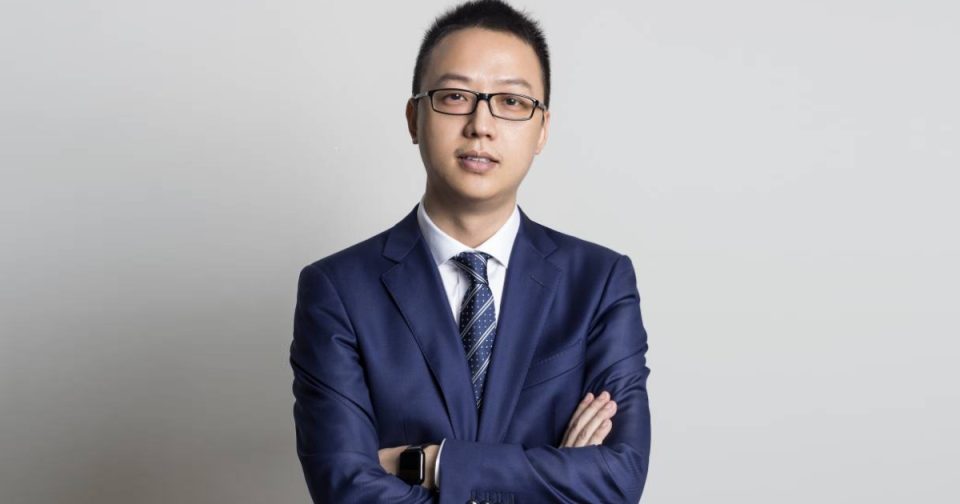
Alibaba Group Holding (NYSE: BABA, HKEX: 9988) saw its shares jump more than 9% in the United States at Wednesday’s market open, following a bold announcement by CEO Eddie Wu to increase spending on the company’s artificial intelligence businesses. Wu, who took over as CEO in September 2023, outlined a strategy that revolves heavily around artificial intelligence, framing it as a critical growth area for Alibaba’s future.
Since Wu assumed the leadership role, he has sharpened Alibaba’s focus on AI and cloud infrastructure. The company initially committed to investing $53 billion (380 billion RMB) over three years to bolster its AI capabilities and cloud infrastructure, a figure that eclipses its total AI and cloud spending over the entire previous decade. This investment is part of what Wu describes as the most intensive period of infrastructure development in Alibaba’s history, with daily spend estimated at around ($50 million (350 million RMB).
Under Wu’s direction, Alibaba has reorganized internally to prioritize AI. The company established specialized teams such as DAMO Academy for research, Alibaba Cloud for infrastructure, and a Smart Information Group for consumer applications. Alibaba’s Qwen AI team, focusing on large language models, has expanded to roughly 100 members. The open-source platform ModelScope now hosts over 54,000 models and serves a community of 5 million developers, part of Alibaba’s wider effort to build an ecosystem that fosters AI innovation.
Wu has been vocal about AI representing a once-in-a-generation business transformation opportunity. He has publicly stated that Alibaba’s goal is to push the boundaries of intelligence by developing advanced AI models and embedding AI more deeply into all aspects of the company’s business operations. This strategy reflects a pivot away from Alibaba’s traditional core of e-commerce and signals a vision of becoming a global leader in AI infrastructure and services.
Alibaba’s aggressive AI investment puts it in competition with major global tech players like Microsoft, Alphabet, and Amazon, which have similarly pledged tens of billions of dollars toward AI infrastructure in 2025. This ramp-up underscores the growing importance of AI as a key driver of cloud computing demand, which remains Alibaba Cloud’s most clear revenue contributor. Recent quarters have seen triple-digit growth in Alibaba’s AI-related product revenue, signaling strong market acceptance and commercial traction.
To fund this expansive AI agenda, Alibaba has employed various capital-raising strategies. These include bond issues valued at $714 million ($5 billion and $1 billion Singapore dollars) in green bonds. The company also raised cash by divesting stakes in other businesses, such as a $357 million sale of its investment in SenseTime and a $1.5 billion exit from XPeng shares. These efforts help Alibaba allocate resources where Wu believes they will generate the most value in the increasingly AI-driven economy.
The market responded positively to Wu’s AI spending announcement, with Alibaba’s share price reaching its highest level in nearly four years. This surge reflects investor confidence in the company’s vision and ability to capitalize on AI’s transformative potential. Since the start of 2025, Alibaba’s market capitalization has grown by over $100 billion, reaching approximately $342 billion.
Looking ahead, Alibaba’s broad restructuring into six separate units, each with its own leadership, supports Wu’s plan to break down internal barriers and accelerate innovation across diverse fronts including cloud, e-commerce, logistics, media, and entertainment. This new structure allows Alibaba to move quickly and align AI development with specific industry needs, increasing the chances of commercial success.
CEO Eddie Wu’s leadership is clearly steering Alibaba toward an ambitious new era focused on AI. His dual role as CEO and head of Alibaba Cloud steers significant resources into AI infrastructure, which appears poised to be a key growth engine not only for Alibaba but for the broader tech landscape in China and globally.
Alibaba chosing to increase AI spending beyond an already enormous $53 billion plan suggests it is doubling down on the technology seen as essential for future competitiveness. The company’s strategic push shows the scale of commitment required to compete in the global AI race and reflects the sweeping changes transforming not just Alibaba’s own operations, but entire industries worldwide.
Alibaba’s bold AI investment and organizational shifts suggest that the company’s next chapter will be defined by technology leadership that stretches far beyond its original roots in e-commerce.
