
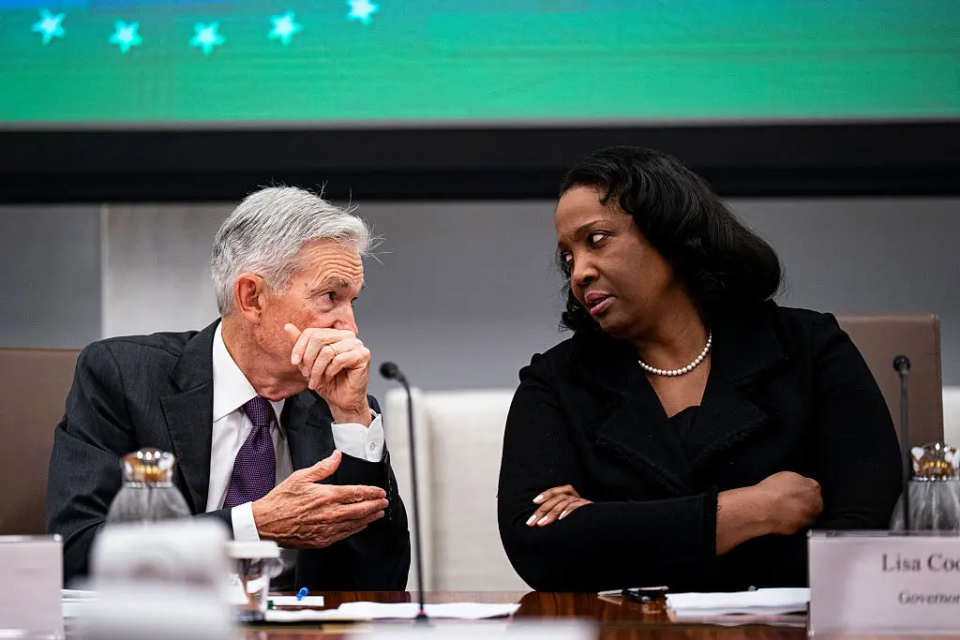
Federal Reserve Governor Lisa Cook has secured an extraordinary level of backing from every living former Chair of the Federal Reserve Board in her ongoing legal battle against President Donald Trump’s attempt to remove her from the central bank’s board. This coalition of influential economists and policy makers from both political parties submitted an amicus brief to the U.S. Supreme Court on Thursday, warning of significant risks to the Federal Reserve’s independence should Trump’s effort succeed.
Earlier this month, an appeals court issued a preliminary injunction preventing Cook’s removal pending the outcome of her lawsuit challenging Trump’s firing attempt. The president’s administration quickly appealed the injunction, prompting the Supreme Court to consider the matter. The case comes just days before the Fed’s crucial September policy meeting, which recently saw a quarter-point interest rate cut after the Fed held rates steady for nearly nine months.
Trump’s effort to oust Cook centers around unproven allegations of mortgage fraud dating back to 2021, before she even joined the Fed Board. Trump’s claim alleges that Cook misrepresented primary residences on mortgage applications to gain favorable terms. Cook denies these claims and has not faced any criminal charges. Her lawyers argue that the allegations are selected pretexts lacking factual or legal basis, emphasizing that she was not given due process or any opportunity to respond before the firing announcement. Courts so far have sided with Cook, determining that the president’s attempt likely violates the Federal Reserve Act’s “for cause” removal protections and Cook’s constitutional rights.
The brief from former Fed chairs including Alan Greenspan, Ben Bernanke, and Janet Yellen, along with former Treasury secretaries from both Republican and Democratic administrations such as Henry Paulson, Tim Geithner, and Jack Lew, stresses the vital role that the Fed’s autonomy plays in safeguarding economic stability, credibility, and effective monetary policy. They caution that prematurely removing Cook would expose the central bank to political interference, eroding public confidence in the institution and weakening its ability to manage the nation’s economy effectively.
This bipartisan group further includes respected economic advisors like Glenn Hubbard and Jason Furman as well as former Fed Governor Dan Tarullo and senators such as Phil Gramm. Their collective warning highlights that the Federal Reserve’s independence is a cornerstone of the country’s monetary framework, one established by Congress to ensure decisions are based on economic fundamentals rather than political pressures. The amicus brief argues that preserving Cook’s role while the courts examine the legality of her firing better serves the public interest than allowing a politically motivated dismissal that could set a damaging precedent.
Cook herself has described her termination as a “death-knell” for the Fed’s independence. She is urging the Supreme Court to reject the Trump administration’s request to lift the injunction that keeps her in place. The stakes extend beyond a single board member’s job. This dispute weighs on the broader question of how much influence a president should wield over the Federal Reserve, which since 1913 has operated with a degree of autonomy designed to insulate monetary policy from short-term political aims.
President Trump has repeatedly criticized the Fed’s cautious approach to lowering interest rates, advocating for more aggressive cuts to stimulate growth. The current Federal Funds rate was lowered recently to 4.3%, down from a high of 5.3% a year ago, but remains above the 1% rate Trump favors. Observers see the attempted firing as a move to reshape the Federal Reserve Board with more administration-friendly members who would support these lower rates.
Ultimately, the Supreme Court’s decision on this matter will test the balance between presidential authority and the Federal Reserve’s protected independence. The unusual unanimity of former Fed chairs and top economic officials across party lines underscores the concern that removing Governor Cook against established legal safeguards risks undermining public trust and throwing the nation’s monetary authority into turmoil. As the legal battle continues, all eyes remain fixed on the Court and the Fed’s next moves at this critical point in monetary policy.
