
[stock_market_widget type=”card” template=”basic2″ assets=”AMD” realtime=”true” api=”yahoo-finance”]
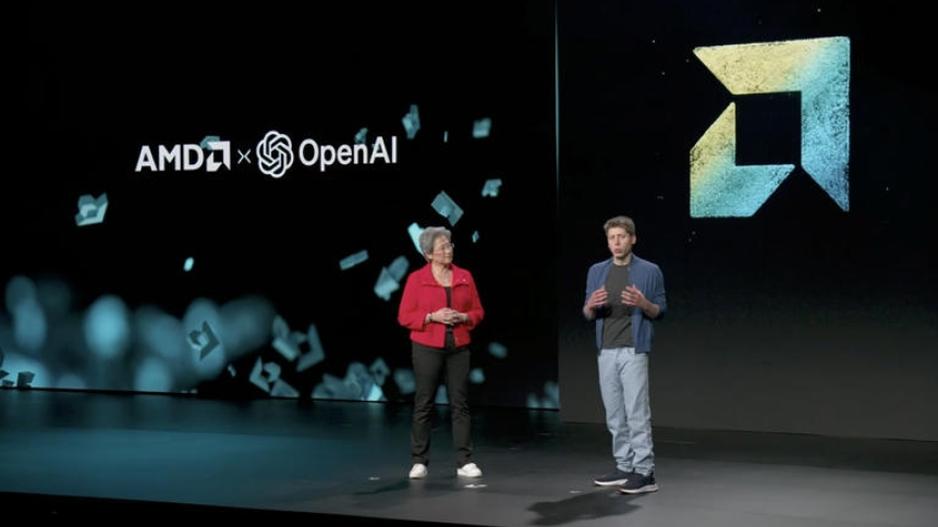
Advanced Micro Devices (NASDAQ: AMD) has entered a major multi-year agreement to supply artificial intelligence chips to OpenAI, the company behind ChatGPT. This deal involves the deployment of up to six gigawatts of AMD’s graphics processing units (GPUs) over several years, starting with a one-gigawatt rollout of its upcoming MI450 series in the second half of 2026. It is expected to generate tens of billions of dollars in annual revenue for AMD and could reshape the competitive dynamics in the AI chip market.
OpenAI’s decision to rely heavily on AMD chips marks a significant pivot in its partnerships. For years, OpenAI has collaborated with AMD on earlier chip designs, but this new agreement elevates their relationship to a strategic level. It also broadens OpenAI’s vendor base beyond its existing $100 billion deal with Nvidia, the current market leader in AI processing hardware. By spreading its chip supply across AMD and Nvidia, OpenAI aims to secure the vast computational power required to support its next-generation AI infrastructure while reducing reliance on a single supplier.
The scale of this chip deployment is impressive. Six gigawatts of power is equivalent to the electricity consumption of an entire U.S. state, enough to cover all the homes in Massachusetts. The initial one-gigawatt phase will use AMD’s MI450 GPUs, which are set to be released next year. OpenAI plans to build a dedicated data center for this purpose, and revenue recognition for AMD will begin once these chips start shipping.
An unusual aspect of the deal is a warrant arrangement giving OpenAI the option to purchase up to 160 million shares of AMD common stock at a highly favorable price. If exercised in full, this stake would represent roughly 10% ownership in AMD based on current outstanding shares. The warrant will vest in phases tied to milestones such as the deployment levels of computing power and AMD’s stock price reaching certain targets.
This equity component signals a deeper strategic alignment between the two companies. OpenAI gains an investment opportunity in one of the few rivals to Nvidia’s dominant AI chip business, while AMD secures a committed major buyer for its high-performance computing products. Given that AMD’s revenue this year is estimated at $32.78 billion, the deal’s tens of billions in annual revenue potential represents a significant boost.
The partnership also carries broader implications for the AI hardware market. Nvidia has long enjoyed a commanding lead, fueled by its early development of GPUs capable of powering demanding AI workloads. Its stock price surged as demand for AI chips exploded, and the arrival of the OpenAI-Nvidia $100 billion agreement underscored that dominance.
But AMD’s new deal with OpenAI challenges this status quo. Analysts and AMD executives describe the agreement as transformative, not only for AMD but for the industry’s competitive landscape. By enabling large-scale deployment across multiple generations of AMD GPUs, including the new MI450 series, AMD is positioning itself as a credible alternative to Nvidia for AI infrastructure.
AMD’s share price responded accordingly, surging as much as 37% in premarket trading following the announcement and poised to reach levels unseen since early 2024. Meanwhile, Nvidia’s shares dipped slightly, reflecting investor concerns about potential market share erosion in the multi-billion-dollar AI chip segment.
For OpenAI, diversifying chip suppliers also provides a hedge against supply chain risks and pricing pressures. It may afford the company more negotiating leverage as it builds out its massive AI data center footprint. The AI startup’s CEO Sam Altman highlighted that this partnership will help accelerate AI progress by ensuring sufficient compute capacity.
The deal is expected to catalyze additional interest in AMD from other AI-focused companies. AMD’s strategy chief predicted that OpenAI’s adoption could lead others in the industry to follow, leveraging AMD’s AI chip technology to support their own ambitions.
The multi-dimensional nature of this agreement, combining chip supply, equity investment, and multi-generational collaboration on hardware and software, illustrates the increasingly intertwined ecosystem that powers today’s AI advancements. OpenAI and AMD appear to be banking on this partnership as a foundation both to compete and innovate in the fast-evolving AI space.
The next several years will reveal how well AMD can leverage OpenAI’s trust to capture more market share and how the competitive dynamic with Nvidia unfolds. One thing is clear: AI chip demand is scaling at an unprecedented pace, and suppliers capable of keeping up will wield significant influence over the future of artificial intelligence.
