
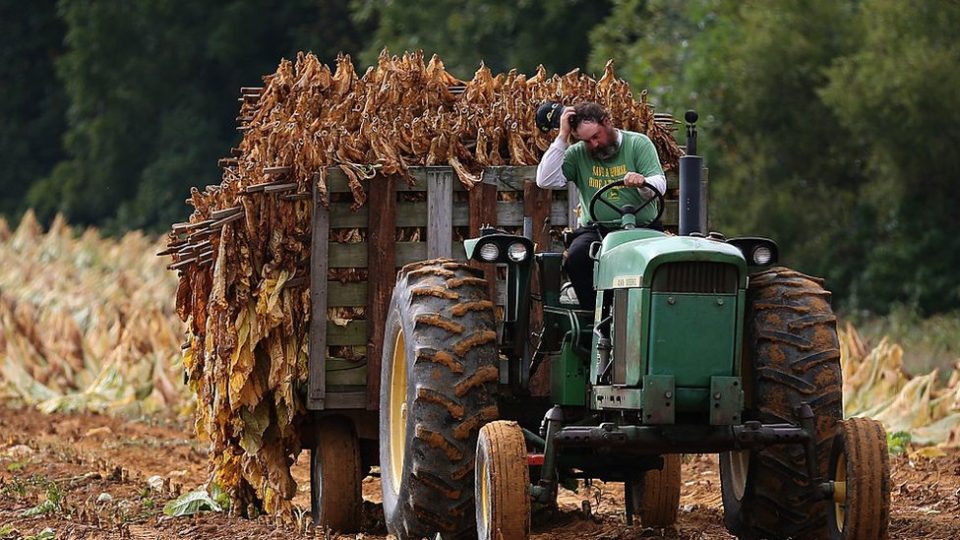
President Trump is reportedly considering a substantial bailout package of at least $10 billion to support American farmers who have been struggling amid his ongoing trade war. The fallout from the trade tensions has hit the agricultural sector hard, raising concerns about how continued tariffs and retaliations are reshaping rural America and influencing wider market dynamics.
For the past year, American farmers have faced increasingly difficult conditions as global trade relationships frayed under the weight of tariff battles initiated by the Trump administration. These tariffs, designed to pressure key trade partners, resulted in retaliatory tariffs on U.S. agricultural exports, shrinking demand from major buyers in China, the European Union, and other markets. Crops like soybeans and corn, staples of American farming, saw decreased exports, pushing prices lower and squeezing farmer incomes. This squeeze has created ripple effects beyond farm gates, affecting equipment suppliers, transport companies, and local economies that rely on agriculture.
Reports indicate that the White House is preparing to extend a bailout package that could offer at least $10 billion in financial relief to these farmers. This aid is intended to offset some of the revenue losses due to diminished export opportunities and stabilize the agricultural economy at a time when many small and medium-sized farms are facing financial distress. While details on the program’s structure remain tentative, sources suggest it may include direct payments, loan assistance, and other forms of subsidy to prop up the sector.
Market watchers and analysts are already factoring this potential bailout into their outlooks for agricultural commodities and related industries. While this financial support might provide some immediate relief, it also raises questions about the long-term effects of the administration’s trade policies. Subsidizing affected farmers could shore up rural voting bases and soften political backlash, but it also risks becoming a recurring expense if the trade tensions persist without resolution. Furthermore, reliance on government aid rather than open market recovery may distort commodity prices and trade flows.
Politically, the move signals an acknowledgment from the administration that the trade war’s costs are influencing critical domestic constituencies. Agriculture has always been a vital sector in American political calculations, and the bailout may be seen as a strategic attempt to maintain support among rural voters who have delivered reliable backing. However, this balance between aggressive trade rhetoric and financial cushioning creates a complex narrative, as it highlights the paradox of tough trade stances combined with protective government intervention.
Investors and businesses tied to the broader agricultural supply chain would do well to watch how this develops. A bailout on this scale can shift short-term market confidence, potentially easing pressure on agricultural lenders and input suppliers. It may also temper fears about farm defaults and bankruptcies in the near term. Yet, uncertainty around the trade war’s duration and the effectiveness of the bailout in restoring export channels will continue to influence market sentiment.
This emerging scenario underscores the broader challenge facing American trade policy: reconciling geopolitical and economic ambitions with the immediate realities of domestic industries caught in the crossfire. For American farmers, the hope is that such financial assistance will provide a necessary buffer while longer-term trade relationships recalibrate.
Whether this proposed bailout will mark the start of a new phase of agricultural support or simply serve as a stopgap remains to be seen. The complexity of global trade and its local repercussions continue to shape the contours of American farming in unexpected ways.
For now, the offer of at least $10 billion in relief is a significant sign that trade policy decisions can have deep and lasting effects on the American economy far beyond headline tariffs.
