
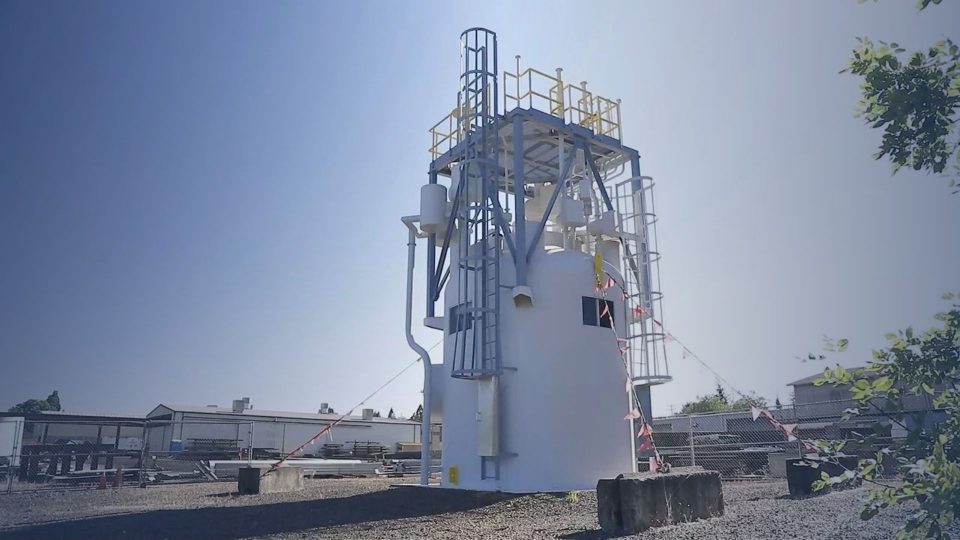
GE Vernova Hitachi Nuclear Energy (GVH) and Samsung C&T have joined forces in a global strategic alliance to drive forward the deployment of the BWRX-300 small modular reactor (SMR) outside North America. This partnership combines GVH’s advanced nuclear technology with Samsung C&T’s extensive engineering and construction experience, aiming to create a stronger supply chain and project delivery framework for the promising BWRX-300 technology. They are also exploring the deployment of five reactors in Sweden, signaling growing interest in SMRs as a clean energy solution beyond traditional markets.
The BWRX-300 SMR is currently under construction at Ontario Power Generation’s Darlington site in Canada, set for completion by the decade’s end. This will become the first small modular reactor in the Western world, representing a significant milestone for nuclear energy development. Key components, such as the reactor pressure vessel, are already in manufacturing, and site work is progressing steadily. The reactor’s capacity of roughly 300 megawatts means it can generate enough electricity to power about 300,000 homes. Its design significantly reduces complexity and costs compared to traditional nuclear reactors, which historically have faced challenges in scalability and expense.
This type of reactor offers more than just electricity generation. The BWRX-300’s design allows it to provide reliable, carbon-free power 24/7, which is increasingly critical as global energy demands rise alongside calls for carbon reduction. The reactor can also support district heating, clean hydrogen production, and water purification through reverse osmosis, showcasing its versatility in industrial applications. By using natural circulation and passive cooling systems, the BWRX-300 simplifies operation and enhances safety, setting it apart from many existing nuclear technologies.
Beyond Canada, the U.S. is also moving forward with plans to permit a BWRX-300 unit. The Tennessee Valley Authority has an application under review for a site in Oak Ridge, Tennessee, marking an important step toward the first BWRX-300 deployment in the United States. European interest is active as well, with Poland’s Orlen Synthos Green Energy selecting a site for its first SMR and Sweden’s Vattenfall narrowing down its choices to the BWRX-300 for new reactors near the Ringhals plant.
Samsung C&T’s involvement brings decades of valuable nuclear and infrastructure experience to the table. Their Engineering & Construction Group has operated worldwide for over 40 years, delivering landmark projects from commercial buildings to large-scale power plants, including nuclear units with a combined capacity exceeding 12 gigawatts. Their track record includes the Barakah Nuclear Power Plant in the UAE, showcasing their capacity to handle complex nuclear infrastructure projects safely and efficiently.
Strategically, the timing for advancing SMRs like the BWRX-300 aligns with growing geopolitical and market factors. Nations worldwide face pressure to decarbonize while ensuring energy security. SMRs offer a modular, quicker-to-build alternative to large nuclear plants and a steady power source unlike intermittent renewables. With the BWRX-300 capable of construction in as little as 24 to 36 months, this technology has the potential to reshape energy landscapes by providing scalable carbon-free energy faster than traditional reactors.
Economically, the reduced size and construction efficiencies of the BWRX-300 could lower the significant upfront costs that typically burden nuclear projects. This could open doors for broader adoption in emerging markets and industrial centers, offering a stable energy backbone without the large footprint of traditional power plants. Its ability to supply process heat and hydrogen production could also spur new industrial applications vital to energy transition strategies.
The alliance between GVH and Samsung C&T is a notable example of how combining engineering strength and advanced nuclear technology can push cleaner energy solutions forward in a market hungry for reliable, sustainable power. As SMRs move from concept to reality in several countries, they could play a key role not only in reducing carbon emissions but also in enhancing economic resilience and energy independence globally.
This collaboration highlights a shift in the energy sector, away from one-size-fits-all megaprojects toward flexible, scalable nuclear power that can integrate seamlessly into diverse grids and industrial applications. The success of BWRX-300 deployments demonstrates the potential of small modular reactors to shape the future of global energy production.
