
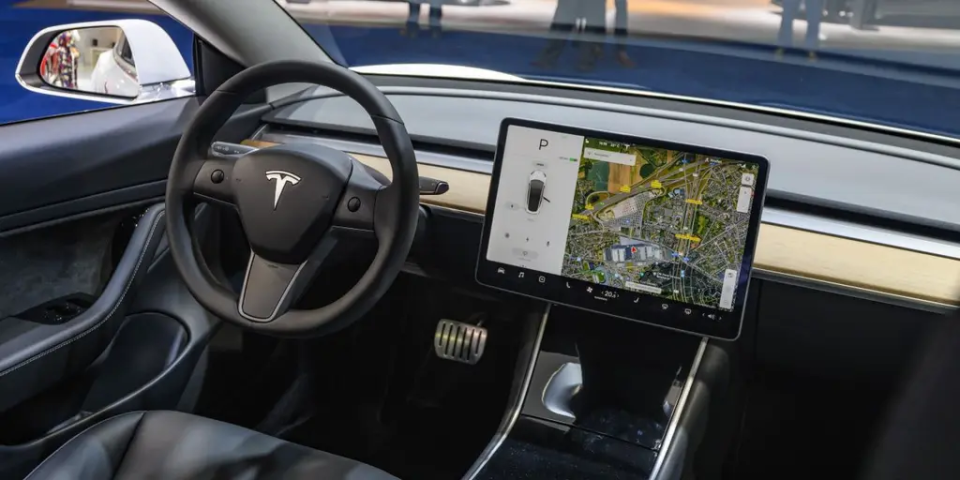
Federal safety regulators have launched a new investigation into Tesla’s Full Self-Driving (FSD) technology following numerous reported incidents involving crashes and traffic violations. The National Highway Traffic Safety Administration (NHTSA) announced that it is investigating approximately 2.9 million Tesla vehicles equipped with the FSD system, covering both the “FSD (Supervised)” and “FSD (Beta)” versions. The probe involves 58 safety incidents including 14 crashes and 23 reported injuries, focused primarily on violations such as running red lights, driving in the wrong lane, and making unsafe lane changes.
The FSD system, classified as a Level 2 driver-assistance technology, requires drivers to remain fully attentive and ready to take control at any moment. Despite Tesla CEO Elon Musk’s long-standing promises to deliver fully autonomous driving, the system currently demands supervision and is not yet capable of true driverless operation. The NHTSA’s investigation aims to assess whether the software’s unexpected maneuvers allow sufficient time and warnings for drivers to react safely. It will also examine the ability of the FSD system to detect and properly respond to traffic signals, lane markings, and wrong-way signs.
Tesla’s journey with self-driving technology has been characterized by ambitious promises and complex challenges. Since the launch of their Autopilot feature in 2015, the company has promoted its vision of vehicles eventually achieving full autonomy through software updates. However, the technology has faced repeated scrutiny: federal regulators have investigated multiple crashes linked to Tesla’s driver assistance features, including fatal incidents involving emergency vehicles and pedestrians. A 2023 NHTSA recall of nearly 363,000 Tesla vehicles highlighted issues where FSD beta software failed to stop appropriately at intersections and sometimes violated speed limits, raising questions about safety compliance.
Tesla has consistently maintained that its FSD system is a driver-assist tool rather than a fully autonomous product, emphasizing that drivers must stay alert and ready to intervene. The company recently issued a software update to address some of the concerns raised by authorities and customers. However, regulators continue to investigate other features such as Tesla’s “Summon” function, which allows the vehicle to navigate autonomously in parking lots and has been linked to minor accidents.
The unfolding investigation follows years of growing concern about whether Tesla’s driver assistance systems provide an adequate safety margin and clear communication about their capabilities and limitations. While Tesla leadership, including Elon Musk, has been vocal about advancing autonomous technology, critics have accused the company of overpromising the current capabilities, potentially leading some drivers to over-rely on imperfect systems.
This inquiry could have significant implications for Tesla’s market performance and regulatory environment as the company continues to push towards its vision of fully autonomous vehicles. The NHTSA’s findings may lead to further regulatory requirements or recalls if it concludes that the current FSD software poses a safety defect. Tesla faces a balancing act between technological innovation and ensuring public road safety, amid rising legal and regulatory challenges worldwide.
The federal regulators are expected to closely analyze data and incident reports submitted by Tesla owners, independent experts, and crash investigations to form their conclusions. As Tesla refines its technology and expands its autonomous features, the company’s approach to transparency and driver safety will remain under intense scrutiny from both regulators and the public.
