
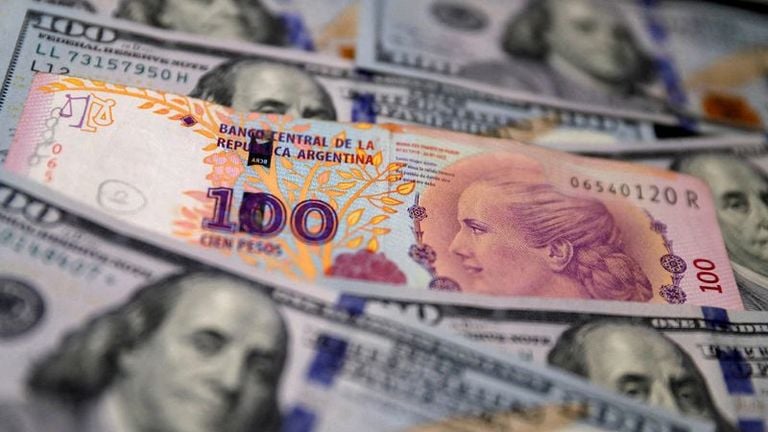
The recent move by the U.S. Treasury to purchase Argentine pesos and finalize a $20 billion currency swap with Argentina’s central bank marks a significant intervention in the country’s financial markets. This effort aims to bolster Argentina during a period of severe currency instability and economic distress, with both countries experiencing notable shifts in their financial landscapes.
For Argentina, this development provides a crucial lifeline to stabilize its peso, which has faced persistent devaluation and liquidity crises. By acquiring pesos directly and establishing a swap framework, the U.S. is offering Argentina additional foreign currency reserves that can be used to support the peso and curb further sharp declines. This support helps the Argentine government manage its foreign reserves more effectively, especially ahead of elections and debt obligations, which have already caused market turmoil. The peso’s value jumped just before trading closed, closing at around 1,418 per dollar, a modest but meaningful increase of about 0.8%. Moreover, Argentine bonds also responded positively, with bond prices rising notably, indicating increased investor confidence temporarily buoyed by U.S. intervention.
For the United States, this move underscores an effort to influence Argentina’s economic stability without a direct bailout. Instead, it involves strategic financial support aimed at stabilizing markets and possibly influencing regional politics. The move is also viewed as a way for the U.S. to reinforce its political alliances in Latin America, particularly with President Javier Milei, a close supporter of Donald Trump and a candidate favored by some factions within the U.S. administration. The direct purchase of pesos and the swap agreement signal the U.S.’s willingness to act swiftly in volatile situations, emphasizing the importance of stability in its broader geopolitical considerations.
Despite the intention to support Argentina, the move has drawn criticism from some American lawmakers and policymakers. Critics argue that using U.S. dollars to stabilize a foreign economy could set a precedent for future interventions, potentially leading to accusations of favoritism or political influence. Additionally, some U.S. officials and lawmakers question whether this is truly a bailout or merely a necessary step to ensure regional stability, especially with upcoming elections that could hinge on the country’s economic outlook.
At its core, this intervention demonstrates the complex dance of geopolitics and economics. The U.S. appears to be balancing its strategic interests, supporting an ally and stabilizing the region, against domestic concerns about prudent financial management and the implications of such measures. While the move provides immediate relief to Argentina’s markets, it also raises questions about longer-term consequences and whether this kind of support might become more common in a globally interconnected economy facing rising volatility and unpredictable political shifts.
Ultimately, the intervention shows how dollar diplomacy remains a tool for broader influence, especially when regional stability is at stake. Both countries are navigating challenges, Argentina with ongoing currency devaluation and liquidity shortages, and the U.S. with its desire to reinforce political alliances and maintain regional influence. This move, while temporary in effect, highlights the continued importance of currency swaps and foreign exchange interventions in managing international economic relations and attempting to shape outcomes beyond their borders.
