
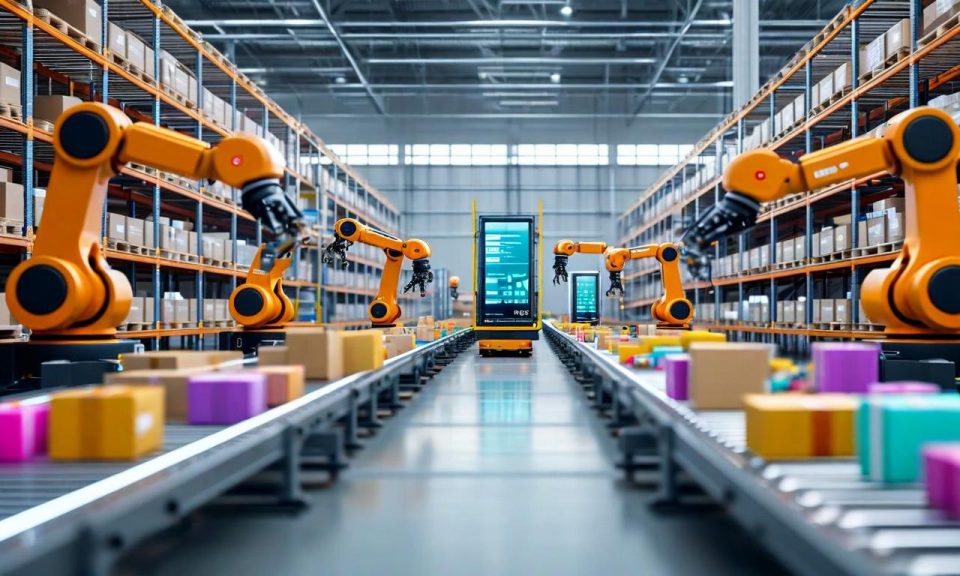
Amazon (NASDAQ: AMZN) is planning a significant shift in how it operates by aiming to automate 75% of its processes, which could alter the labor landscape dramatically. The e-commerce giant, Amazon, envisions this effort replacing more than 600,000 U.S. jobs by 2033, with around 160,000 roles potentially eliminated as early as 2027. The move is part of a broader ambition to double product sales without increasing its workforce in the United States, relying heavily on automation and robotics to meet demand efficiently.
This strategy centers primarily on Amazon’s warehouses and fulfillment centers, where advanced robots handle tasks that traditionally depended on human labor. These machines are designed to take over repetitive and physically demanding jobs, such as picking, packing, sorting, and moving goods. By automating these operations, Amazon projects savings of roughly 30 cents for every item processed, totaling $12.6 billion in reduced labor costs between 2025 and 2027. This is not simply a cost-cutting measure; it’s also an attempt to improve workplace safety by reducing the physical strain on workers.
While critics view this plan as a clear sign of large-scale job displacement, Amazon states that these advances will not lead to immediate mass layoffs. Instead, the company emphasizes that automation is intended to complement human workers, enhancing productivity and creating a safer workplace. The adoption of robotic systems is aimed at reducing monotonous and hazardous tasks, and Amazon also promotes that it will generate new types of roles. These include jobs for robotics technicians, AI monitoring specialists, and system managers, which require different skill sets from those currently employed.
Nonetheless, the reality for many warehouse employees is more uncertain. Some report seeing fewer human colleagues on the floor as robots proliferate, leading to anxiety about their job security. The transition also raises concerns about whether retraining initiatives will be sufficient to prepare workers for new technical roles, especially in communities heavily dependent on Amazon jobs. This situation could widen the economic divide between low-wage labor and highly skilled technical professions.
This automation push by Amazon has broader implications that extend beyond its own workforce. As the U.S.’s second-largest employer with nearly 1.2 million workers, Amazon’s shift sets a precedent likely to influence other major retailers and logistics companies. Competitors such as Walmart, Target, and FedEx may intensify their automation efforts to remain competitive, potentially reshaping millions of jobs across the retail and supply chain sectors nationwide. This technological wave could reduce the availability of low-skill jobs while simultaneously increasing demand for specialized technical roles, presenting new challenges for workforce development and public policy.
Amazon’s leadership, including CEO Andy Jassy, acknowledges that artificial intelligence and robotics will reduce corporate workforce needs in the near future. However, the company insists these changes will be gradual rather than abrupt, aiming to balance innovation with employee safety and productivity. The company characterizes leaked internal documents about automation as exploratory, reflecting one team’s perspective rather than a fixed corporate policy. Despite this, the scale of the company’s ongoing investment in automation and AI signals a clear intention to reshape its operational model over the next decade.
This evolution in Amazon’s operations highlights a critical inflection point for American labor markets. The shift toward robotics and intelligent automation is redefining the relationship between technology and work. While it promises efficiency gains and safety improvements, it also places pressure on workers, communities, and policymakers to adapt to a rapidly changing employment landscape. Ensuring that displaced workers receive adequate training and support will be essential in maintaining economic stability as automation becomes more deeply embedded in commerce and logistics.
