
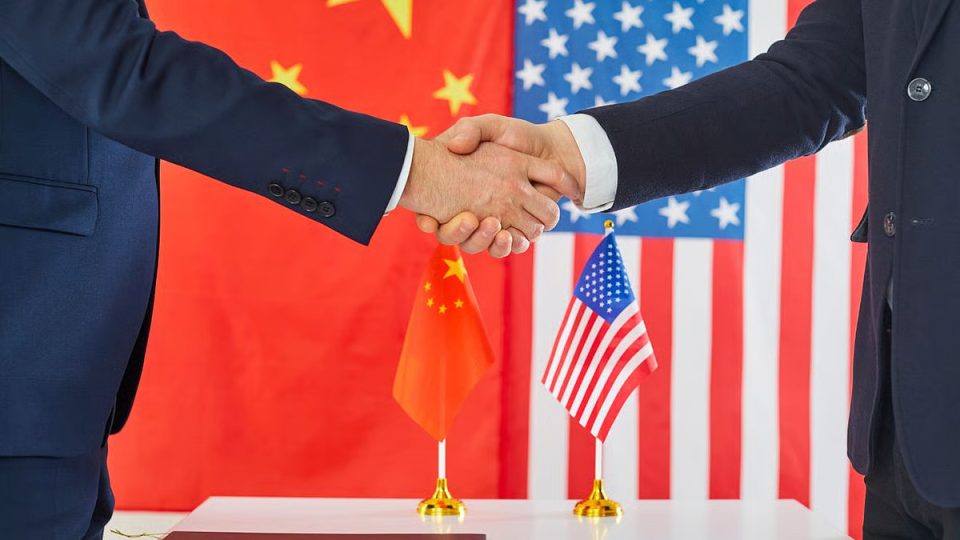
President Donald Trump’s renewed optimism over a potential trade agreement with China has injected fresh energy into U.S. futures markets, reflecting cautious excitement among investors who hope for a resolution to one of the most significant economic conflicts in recent years. Trump, during his current weeklong trip to Asia, indicated that the United States and China are close to “reaching an agreement” on trade issues, ahead of his anticipated high-level meeting with Chinese President Xi Jinping. This optimism stems from progress made in recent negotiations, as well as a series of new trade deals with Southeast Asian countries aimed at strengthening America’s position in a region where China has long held sway.
Trump’s comments underscore a belief that what many considered unattainable, a substantive trade agreement with Beijing, is now within reach. Speaking from Air Force One while traveling between Malaysia and Japan, Trump affirmed his confidence, saying, “I have great respect for President Xi, and we’re going to finalize the deal,” with discussions extending to related issues such as the future of TikTok’s operations in the U.S. and controls over rare earth mineral exports critical to technology industries. His remarks come after recent preliminary discussions between U.S. and Chinese trade officials produced a “very successful framework,” according to Treasury Secretary Scott Bessent, signaling a major step toward resolving long-standing trade tensions.
This renewed bilateral engagement coincides with a flurry of trade agreements between the U.S. and Southeast Asian nations including Malaysia, Cambodia, Thailand, and Vietnam. These agreements, which promote reduced trade barriers and preferential access for American agricultural, energy, and aircraft exports, are viewed as part of a broader strategy by the Trump administration to counterbalance China’s regional influence. Trump highlighted these as foundational moves, emphasizing collaboration while reserving the right to impose tariffs or revoke agreements should commitments be neglected. This cautious but clear approach signals a departure from previous administrations by seeking enforceable, reciprocal trade relationships in the Asia-Pacific.
From a market standpoint, the talk of an imminent trade deal has buoyed U.S. stock futures, with indices pointing to potential record highs. Investors are hopeful that easing tariffs and other trade barriers will revitalize manufacturing, reduce supply chain uncertainties, and boost global economic growth. The U.S. and China had agreed earlier in the year to mutually suspend certain tariffs temporarily, with the U.S. maintaining a baseline 10% tariff to encourage domestic production while modifying or removing others first imposed in April 2025. China expected to postpone implementation of stricter rare earth export controls for one year, this would be a significant concession given that China dominates about 90% of the global rare earth market vital for electronics and renewable energy products. These tariff adjustments and the anticipated agreements on agricultural purchases like soybeans are seen as positive steps for both countries’ economies and global trade stability.
Market optimism, however, is measured given the history of prior negotiations and fluctuating tariff threats. Economists caution that while the framework agreements mark progress, fundamental concerns, such as manufacturing imbalances and technology access restrictions, remain unresolved. Yet this sense of progress contrasts with the fears that recent restrictions, particularly on precursors for fentanyl and rare earth elements, could spiral into a wider economic conflict. The upcoming meeting between Trump and Xi in South Korea is expected to be decisive, potentially solidifying terms on these contentious issues and possibly formalizing the arrangement to allow continued TikTok operations in the U.S., an unexpected addition that underscores the complexity of this trade relationship.
Trump’s approach to trade reflects a continuation of his administration’s uncompromising stance aimed at protecting American workers and manufacturers from unfair practices. The president’s tough tariff policies, even retaining a 10% baseline tariff and preserving Section 301 tariffs related to intellectual property protections, are positioned as necessary to level the playing field. These efforts come paired with a pragmatic willingness to negotiate and finalize deals that open Asian markets to U.S. goods at strategic leverage points. This dual approach, increasing pressure while creating pathways for collaboration, is reshaping the narrative around U.S.-China economic relations and contributing to the cautious optimism fueling market movements.
While the U.S. markets are responding positively to the prospects of a trade deal with price gains at the open, this optimism is tempered by the complexity of trade negotiations and the ongoing implementation challenges. The tentative steps taken by both sides to reduce tariffs and settle disputes over trade practices represent incremental but meaningful progress. For now, investors and businesses alike are watching closely as Washington and Beijing prepare for negotiations that could set the tone for global trade dynamics in the coming years.
This budding optimism is a reflection not only of the progress of the negotiations but also of broader confidence in Trump’s ability to secure agreements with key Asian partners. The unfolding trade discussions, combined with new deals in Southeast Asia, reflect a strategic pivot that could significantly influence the economic landscape across the Pacific. Whether these efforts will translate into durable improvements remains to be seen, but the current mood marks a notable shift in what has been a tense and often volatile trade relationship.
