
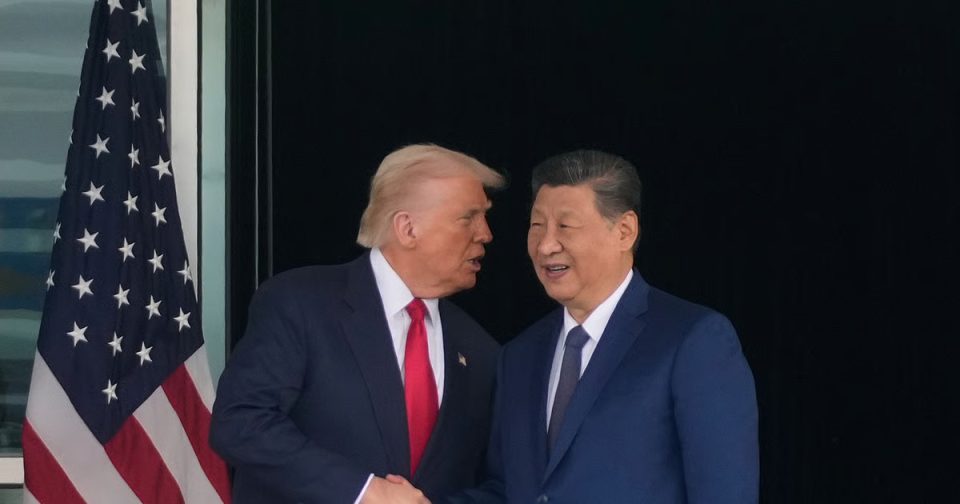
President Donald Trump and Chinese leader Xi Jinping reached a trade agreement during their recent meeting in South Korea, marking a notable easing of tensions between the world’s two largest economies. The deal includes a significant reduction in tariffs and a temporary pause on contentious export controls, both of which have immediate implications for global markets and key industries such as agriculture and rare earth minerals.
Trump announced that the U.S. would reduce fentanyl-related tariffs on China from 20% to 10%, effectively lowering the overall tariff rate on Chinese goods from 57% to 47%. This tariff cut is designed to encourage China to curb the flow of fentanyl and its chemical precursors into the U.S., a pressing issue given the public health crisis linked to these synthetic opioids. In return, China agreed to resume soybean purchases from U.S. farmers, ending a previous freeze that had hurt American agriculture. This agricultural concession is strategically important, considering the political sensitivity of farming in the U.S., where farmers constitute a critical voting bloc.
The most closely watched aspect of the agreement involves rare earth minerals, essential components in various high-tech applications, from electronics to electric vehicles and defense systems. China, which dominates the global rare earth market, agreed to suspend its newly imposed export controls for one year. These controls, announced earlier in October, had threatened to escalate trade conflicts further by restricting supply of these critical materials. Trump characterized this suspension as a one-year deal with the expectation of regular extensions, emphasizing that “all issues related to rare earths have been resolved,” implying a temporary truce rather than a permanent resolution.
Market reaction to the deal has been cautiously optimistic. Equity markets experienced gains, particularly in sectors such as technology and biotechnology, which stand to benefit from reduced trade tensions and more predictable supply chains. However, some analysts cautioned against complacency, noting that the tariff reductions were largely anticipated and that the deal leaves many underlying disputes intact, especially concerning technology access and structural trade issues. For example, Nvidia’s advanced chip technology remains a sticking point, with no concessions reached on U.S. export restrictions. This oversight signals continued friction in high-tech domains despite the broader agreement.
The agricultural sector emerged as an immediate beneficiary, not only from resumed soybean purchases but also from the suspension of punitive tariffs that had disproportionately hit U.S. farmers. Analysts suggest this move is as much political as economic, designed to provide relief to a key domestic constituency ahead of upcoming elections. Meanwhile, commodities related to rare earth elements and gold equities are expected to underperform given the temporary suspension of export restrictions dampens supply fears.
Geopolitically, the agreement reflects a delicate balance rather than a comprehensive end to trade hostilities. Experts emphasize that the deal serves as a “tactical pause” amid a deeply rooted strategic rivalry. Both countries retain considerable leverage and the ability to reimpose tariffs or other trade barriers if diplomacy falters. The exchange of concessions aims to prevent further escalation that could severely disrupt global economic growth and supply chains but likely falls short of resolving fundamental differences between the U.S. and China.
Washington’s decision to reduce tariffs was influenced not only by trade considerations but also by broader concerns about supply chain security and economic stability. China’s temporary pause on rare earth export controls reassures industries that depend on these materials while giving negotiators time to work toward longer-term solutions. The deal also includes sensitive discussions around U.S. regulatory actions against Chinese technology firms such as TikTok, with potential outcomes like forced ownership transfers on the table as part of a wider economic agenda.
While the market has reacted positively to the announced trade truce, the deal’s durability remains uncertain. Investors acknowledge that significant challenges in U.S.-China relations persist, particularly in technology and intellectual property rights, supply chain autonomy, and geopolitical tensions. As a result, market volatility may persist, influenced by both hopeful developments and potential setbacks. The agreement, while easing immediate pressures, represents another chapter in a complex and ongoing relationship defined by competition as much as cooperation.
This U.S.-China trade arrangement signals a rare moment of alignment amid ongoing rivalry, providing a temporary boost to global markets and key sectors like agriculture and rare earth minerals. Yet, it stops short of delivering a comprehensive solution to the deep structural conflicts that define the bilateral relationship at this point.
