
[stock_market_widget type=”card” template=”basic2″ assets=”AMZN” realtime=”true” api=”yahoo-finance”]
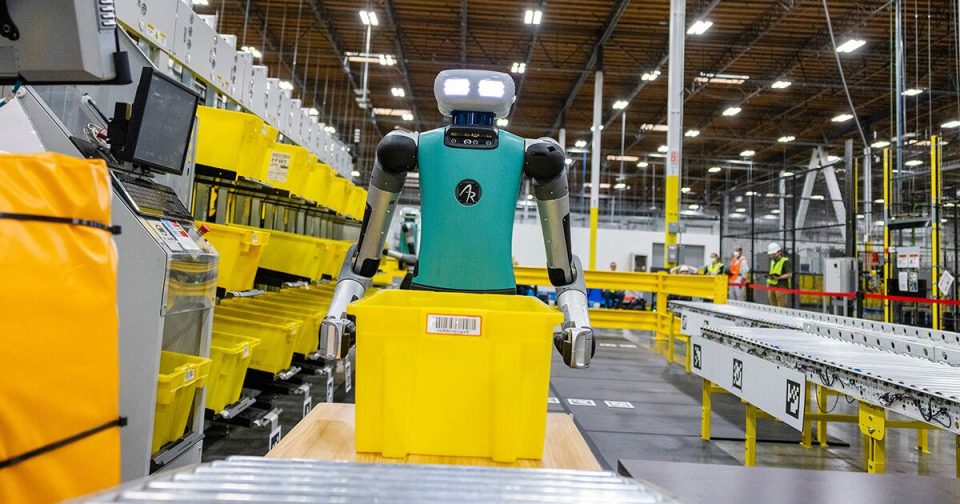
Amazon (NASDAQ: AMZN) is accelerating a profound transformation within its fulfillment operations by ramping up the use of robotics, a shift that is altering the very nature of how work is done in its warehouses. As of 2025, Amazon operates roughly one million robots worldwide, and internal company plans reveal ambitions to automate up to 75% of their operational processes within the next several years. This move aims to significantly reduce their reliance on human labor while increasing efficiency and capacity, a strategy with far-reaching implications for the company’s workforce and the broader labor market.
At the heart of this shift are Amazon’s robot-filled warehouses like the one recently opened in Shreveport, Louisiana, which reportedly employs around a thousand robots. In this facility, the role of human workers has already been cut by 25% compared to pre-automation levels, and with more robots slated to be integrated, the workforce might be halved over the coming year. Similarly, an older warehouse near Atlanta in Stone Mountain is undergoing automation upgrades that could reduce the human workforce by up to 1,200 employees even as productivity is expected to rise by 10%. Amazon’s robotics initiative reflects a strategic goal not only to handle the increasing demand driven by booming sales but to do so while maintaining or lowering staff numbers.
Historically, Amazon’s rapid expansion saw its U.S. workforce triple since 2018, reaching nearly 1.2 million employees at present, making it the second-largest employer in the nation. However, internal documents indicate a shift away from hiring more staff towards replacing many existing and potential new roles with robotic systems. By 2027, the company anticipates avoiding hiring over 160,000 new workers in the U.S. alone, a number that could rise to over 600,000 positions displaced or not needed to be filled by 2033, even as Amazon expects its sales to double within that timeframe.
This vast automation plan carries significant workforce implications. While the company will need fewer traditional warehouse workers, Amazon has simultaneously begun creating new roles focused on managing and maintaining these robotic assets. Facilities with advanced automation, like Shreveport, have introduced robotics technician roles paying $24.45 or more per hour, alongside standard hourly jobs starting at $19.50. To support this transition, Amazon runs apprenticeship programs to train workers in robotics and engineering skills; thousands have participated so far, viewed internally as a key pathway for employee adaptation to the evolving workplace.
Still, these shifts generate valid concerns. Workers in roles vulnerable to automation face job insecurity, especially in communities where Amazon employment is a significant economic factor. For example, at the Stone Mountain warehouse, people report difficulty even finding open positions. This highlights an ongoing tension between technological progress and equitable employment access.
Outside of the warehouse floor, Amazon is also cutting corporate jobs, notably announcing about 14,000 layoffs among middle management and white-collar staff earlier in 2025. Executives have indicated that generative AI and automation tools are streamlining higher-level functions involving project coordination, planning, and reporting, roles once heavily reliant on humans. This suggests the company’s automation impacts extend beyond manual labor to reshaping managerial structures as well.
Cost savings are a major driver behind Amazon’s push towards automation. Analysts estimate that by 2027, Amazon could save as much as $4 billion annually by reducing labor costs through robotics deployment. This economic incentive aligns with industry-wide trends where large retailers and logistics companies increasingly invest in technology to optimize operations amid tight labor markets and rising wages.
Despite the displacement risks, Amazon’s leadership emphasizes that efficiency gains from robotics investments can create new economic opportunities, both within the company and in the broader supply chain ecosystem. The company envisions a future where humans and machines collaborate closely, with workers upskilling to roles requiring technical knowledge and oversight. While the precise scale and timeline remain uncertain, the trend points to a fundamentally different labor landscape for Amazon and the retail logistics sector overall.
This evolving relationship between people and robots at Amazon encapsulates a broader question for businesses and workers alike: How to balance technological innovation with social responsibility and workforce resilience. As automation accelerates, ongoing dialogue and strategic workforce planning will be critical to ensuring that the gains from robotics do not come at the expense of equitable career opportunities.
