
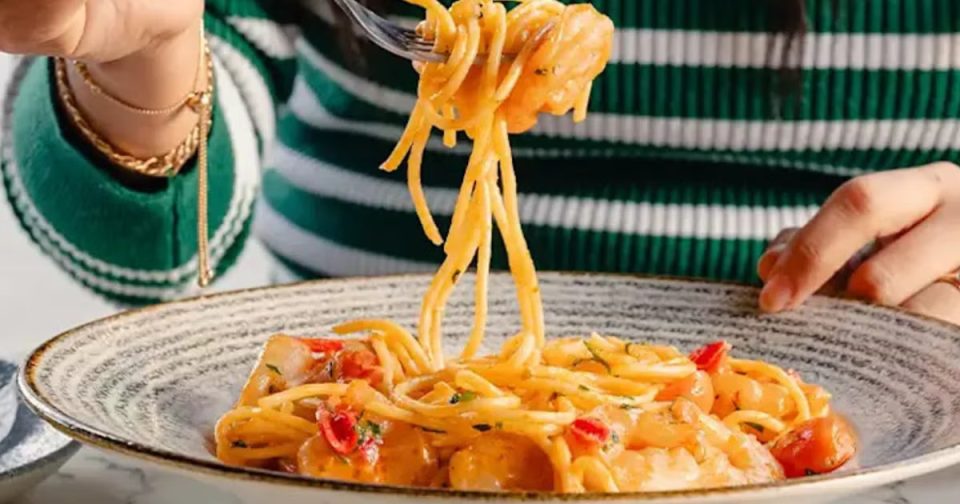
Italian pasta exporters find themselves at a critical juncture as tariffs imposed by the U.S. Commerce Department threaten to dramatically reshape their access to one of the world’s largest consumer markets. The department has provisionally set anti-dumping tariffs close to 92% on 13 major Italian pasta producers, a decision expected to come into effect in January 2026, potentially pushing the combined tariff on Italian pasta imports well above 100% with the existing 15% tariff on European Union goods.
This situation stems from allegations raised in 2024 by U.S. pasta manufacturers accusing Italian companies of dumping, a trade practice involving selling goods at unfairly low prices in foreign markets to gain an advantage. The investigation focused on the period from July 2023 to June 2024. Two of Italy’s largest exporters, Pasta Garofalo and La Molisana, were the main subjects of the inquiry. The U.S. Commerce Department accused them of not providing sufficient information during the investigation and preliminarily found that these companies sold pasta below normal market value. The tariffs imposed on these two companies have also been extended to 11 other Italian producers without individual reviews, multiplying the collective impact.
Italian pasta holds a special place in both culinary tradition and international trade. In 2024, Italy exported nearly $742 million (700 million Euros) worth of pasta to the United States alone, making it a significant export sector. Italian pasta accounts for around 12% of the U.S. pasta market in terms of volume, a number that has been steadily increasing over recent years as American consumers developed a taste for authentic Italian products.
The reaction from Italian industry representatives has been one of dismay and frustration. Luigi Scordamaglia, head of the Italian food industry group Filiera Italia, pointed out that these tariffs, if finalized, would impact about half of the Italian pasta exported to the U.S., including roughly 90% of premium product lines. Many executives view the decision as disproportionate and unjustified. Cosimo Rummo, CEO of Pasta Rummo, questioned the rationale behind the tariffs, emphasizing the close cultural and trade ties between Italy and the U.S., calling the move a pretext to block Italian products from entering the American market.
Massimo Menna, CEO of Pasta Garofalo, expressed strong disagreement with the findings of the Commerce Department. He maintained that the company’s submissions met all requirements, and the accusations failed to grasp the complexity of the pricing and export strategies. Menna noted the tariffs would force a doubling of pasta prices in the U.S. market, which could effectively exclude Italian producers from competing there. This would result in significant revenue losses for producers who have gradually built a strong presence over the years.
From the U.S. perspective, authorities argue that the investigation is a continuation of long-standing safeguards against unfair trade practices. Similar allegations were raised as far back as 1996, when Italian producers first faced dumping accusations. The logic behind the anti-dumping duties is to protect domestic producers from markets flooded with subsidized or below-cost imports that could distort competition and endanger local jobs. The U.S. Department of Commerce insists it is enforcing existing trade laws to ensure market fairness.
The tariffs also highlight an ongoing tension in trade policy between the two nations despite friendly diplomatic ties. Italian Prime Minister Giorgia Meloni’s efforts to engage with the Biden administration have not altered the outcome so far. Meanwhile, the European Union has been closely monitoring the issue, with EU trade officials urging a resolution to avoid prolonged trade friction between two major allies.
For consumers in the United States, the implications could be immediate. With such steep tariffs, importers and distributors are likely to pass on higher costs to retailers and ultimately to shoppers. Some predict that prices for Italian pasta in the U.S. could nearly double, altering buying habits and possibly increasing demand for alternative products, both domestic and imported. The tariffs may also offer an advantage to U.S.-based pasta manufacturers, many of whom have broader political influence domestically.
For the Italian pasta industry, the immediate future carries uncertainty. Many producers are appealing for political support and legal review of the tariffs, stressing the cultural and economic importance of their products abroad. They argue that punitive tariffs risk undermining years of market development and international goodwill. As the review process continues, the uncertainty itself may discourage investment and complicate export planning in a sector traditionally known for its family-owned businesses and artisanal values.euronews+1
The unfolding pasta tariff case offers a sharp illustration of the complexities and sensitivities inherent in international trade. It proves that even familiar, everyday products become focal points for broader questions about fairness, protectionism, and economic relationships between longtime allies.
