
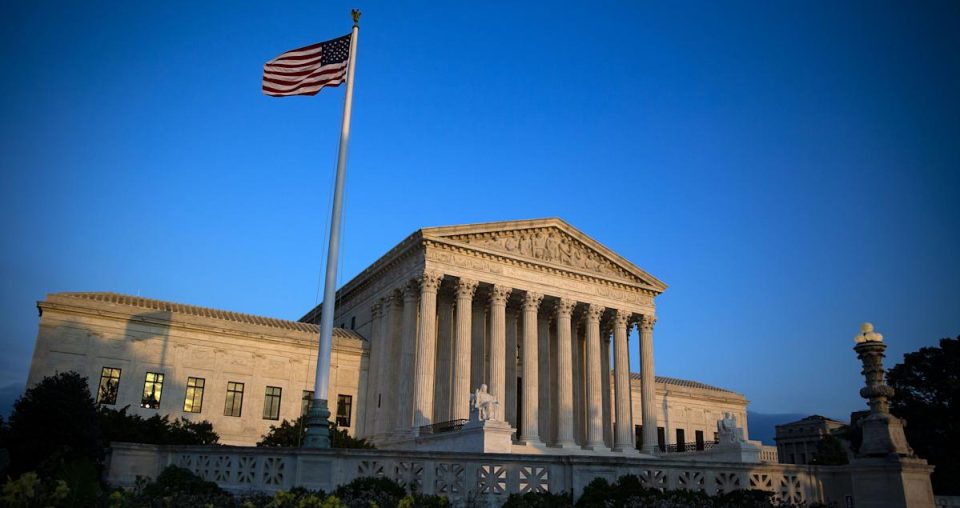
Yesterday the U.S. Supreme Court held a pivotal hearing that put President Trump’s sweeping tariff program under the legal microscope. The focus was on whether the International Emergency Economic Powers Act (IEEPA) grants the president the authority to impose extensive tariffs without congressional approval. The tariffs in question include a baseline 10% tariff, as well as specifically targeted levies aimed at addressing “reciprocal tariffs” and halting illegal drug trafficking through trade channels.
The arguments spanned over two hours, with justices probing both the government’s defense and the challenges brought by small American businesses and states. These challengers argue the tariffs are illegal taxes beyond the president’s power under the Constitution, which places tariffing power squarely with Congress. Solicitor General D. John Sauer, defending the tariffs, contended that the law’s phrase “regulate importation” encompasses the authority to impose tariffs. However, several justices expressed skepticism, noting that the IEEPA has never previously been used to justify broad tariffs or referred explicitly to the word “tariff.”
Justice Amy Coney Barrett questioned the scope of the tariff program, asking whether every nation named in the tariff lists truly posed such threats as to justify this sweeping economic measure. Chief Justice John Roberts raised concerns about the “major authority” the administration claims, ability to levy duties on essentially any product from any country, for any period, at any rate.
The Supreme Court’s 6-3 conservative majority has frequently aligned with Trump administration positions, but the intensity of the questioning indicated possible fracture lines. Some legal scholars see the case as hinging on interpretation, whether the tariffs are part of foreign affairs powers (which might favor the administration) or simply taxes requiring explicit congressional authorization.
Observers expect the justices to take their time before issuing a ruling. Legal experts predict a decision no earlier than mid-2026, possibly by the end of June. Jonathan Adler, a constitutional law professor, described the situation as “a toss-up,” noting that “if they see it as a foreign affairs case, the administration wins. If it’s a textual interpretation case, they lose.” The court’s ruling timeline is accelerated compared to standard major cases, underscoring the tariffs’ large legal and economic significance.
Should the Supreme Court rule against the legality of the tariffs, the consequences could ripple across the economy and government finances. The U.S. government could be forced to refund tens of billions in tariffs already collected, with estimates ranging from $90 billion to upwards of $1 trillion if delays stretch rulings into the next year. Such a refund process would be unprecedented and complex, affecting businesses that have already absorbed these costs or passed them onto consumers.
Beyond financial consequences, an adverse ruling would constrain presidential authority on trade policy, reinforcing Congress’s exclusive power over tariffs and checks and balances on executive actions. It could also weaken a major negotiation tool that Trump used in international trade talks, potentially altering U.S. leverage in ongoing and future agreements.
Small business owners who testified or filed lawsuits reported disruptions to inventory and operations due to tariff costs. Sarah Wells, a CEO of a small company affected, expressed hope that the court recognized the need to limit presidential powers in this domain. Political dynamics will also be intensified by the ruling, shaping debates on the boundary of executive authority in national emergencies.
This Supreme Court decision will not just define the future of the Trump tariffs but will also set a crucial precedent on the limits of emergency powers in trade policy and executive reach. As the U.S. awaits this landmark ruling, businesses, lawmakers, and consumers alike are watching closely to understand how far the president can go without explicit congressional consent.
