
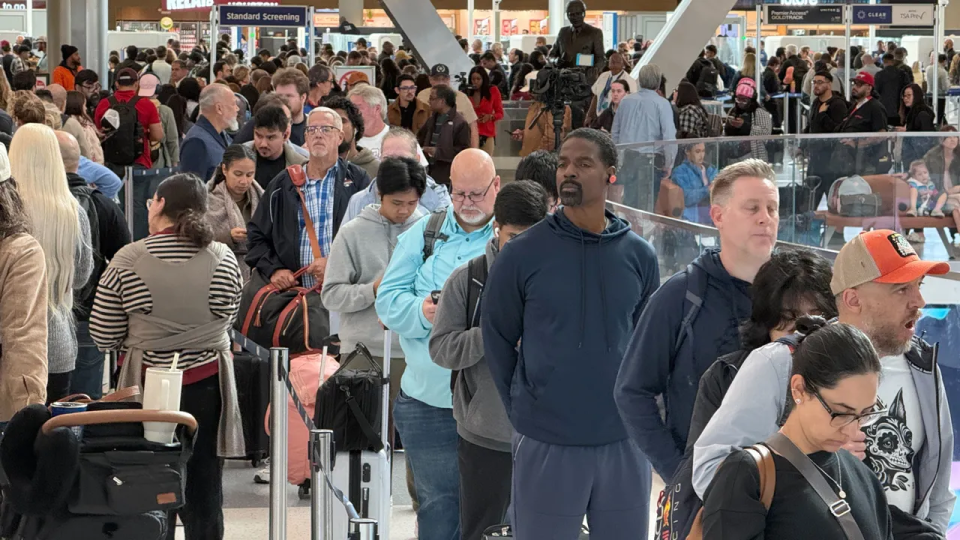
The US airline industry is facing major disruptions with over 2,700 flights canceled in recent days as a result of the ongoing government shutdown. This situation is affecting travel across the country, particularly at the busiest airports, leaving travelers frustrated and uncertain about their plans. The Federal Aviation Administration (FAA) has ordered a staged reduction of air traffic at 40 major airports to maintain safety amid a shortage of air traffic controllers working without pay.
Starting last Friday, the FAA mandated an initial 4% cut in flights at high-impact airports, including those in Atlanta, New York’s John F. Kennedy and LaGuardia, Chicago O’Hare, Los Angeles, and Dallas/Fort Worth. This reduction has steadily increased with plans to reach up to a 10% cut by mid-November and potentially 20% if the shutdown persists. Airlines such as American, Southwest, and Delta have already canceled hundreds of flights under these constraints. For example, American Airlines canceled approximatley 220 flights on the first day, impacting approximately 12,000 passengers, most of whom were rebooked within hours. Southwest canceled over 100 flights initially and planned additional cuts, while Delta also removed around 170 flights from its daily schedule of about 5,000 flights.
These reductions have caused significant delays, Chicago O’Hare has seen over 1,000 delayed flights, with approximately 320 canceled, while Atlanta’s Hartsfield-Jackson Airport experienced nearly 400 cancellations alongside more than 580 delays. John F. Kennedy International has reported long queues and extended wait times, especially in terminals servicing major international carriers. Other airports affected include Newark Liberty, Houston’s George Bush Intercontinental, and Orlando, with reported departure delays often exceeding an hour and growing.
The root of this disruption lies in the federal government shutdown that has left many air traffic controllers and Transportation Security Administration officers working without pay. This has resulted in some controllers calling in sick or seeking other temporary employment, further straining an already pressured air traffic system. This shortage has forced the FAA to limit aircraft operations to maintain safety standards, a non-negotiable priority despite the inconvenience.
Travelers are feeling the impact acutely. Many people have found themselves stranded or forced to reroute through alternate airports, sometimes hours away from their original destinations. Several have reported anxiety and frustration over missed connections, delayed holidays, and uncertainty about when normal service will resume. One traveler for instance, recounted being diverted to another airport several hours from their intended arrival, requiring extensive rebooking efforts.
Despite the turbulence, most airlines are providing full refunds to passengers whose flights are canceled and allowing flexibility in travel plans via waived change fees. However, airlines are not obligated to cover secondary costs such as hotels or meals, which often exacerbates the traveler’s difficulties. The FAA’s priority remains safety, but the cumulative effect of controller shortages and flight cut mandates is likely to worsen in the days leading up to the busy Thanksgiving travel period, potentially grounding flights to levels described by Transportation Secretary Sean Duffy as “reduced to a trickle.” Many Americans may find it more challenging than usual to reunite with family this holiday season.
The ongoing government shutdown is presenting a major operational challenge for U.S. air travel. The mandated flight reductions at key airports reflect hard choices aimed at maintaining safety amid staff shortages. This has created a palpable human impact, with thousands of travelers facing significant delays, cancellations, and disruptions in their travel plans. Unless a resolution to the shutdown emerges soon, the situation is expected to deteriorate, particularly as the holiday travel peak approaches.
