
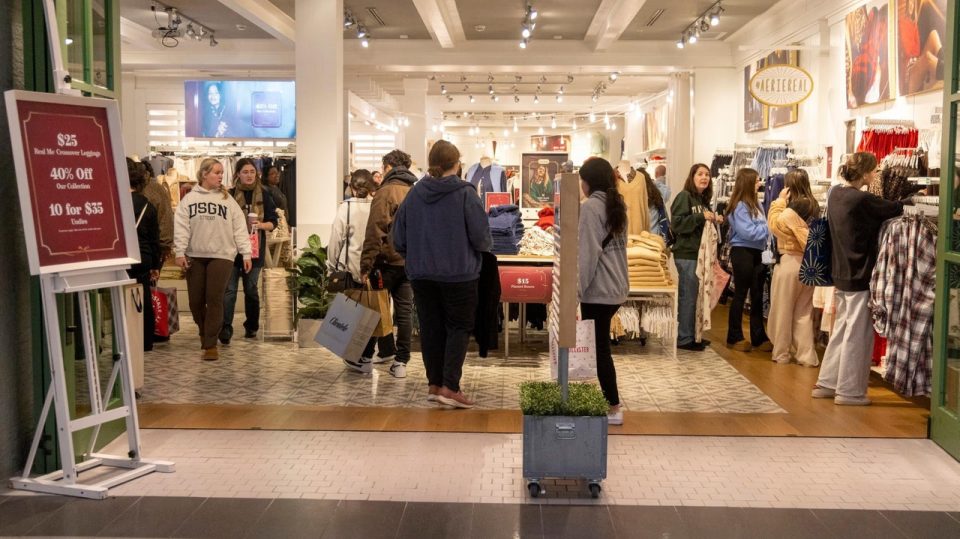
This holiday season is shaping up to be a landmark one for U.S. retail sales, with spending expected to cross the $1 trillion threshold for the first time, according to the latest forecast by the National Retail Federation (NRF). This projection marks an increase of between 3.7% and 4.2% over 2024, which itself saw a 4.3% rise over the previous year, reaching $976 billion. Despite the promising growth figures, the outlook is nuanced, shaped by economic headwinds that include inflation pressures, shifts in consumer behavior, and labor market dynamics.
At the heart of the forecast is a recognition that while American consumers remain fundamentally resilient, their spending habits reflect caution and selectivity. NRF President and CEO Matthew Shay highlights that consumers are increasingly focused on discounts and are more selective about their purchases. This careful behavior contrasts with the strong overall spending growth, suggesting that shoppers are seeking value while continuing to engage deeply with holiday retail. The average consumer budget for holiday-related purchases, covering gifts, food, and decorations, is projected at around $890, which stands as the second-highest in the NRF’s 23 years of tracking such data.
A key factor coloring this holiday season is the ongoing federal government shutdown, the longest in U.S. history thus far. This situation complicates forecasting efforts, as it results in delayed federal spending and a consequential loss of private-sector income, which erodes consumer demand. NRF’s chief economist, Mark Mathews, points out that the timing is especially challenging right before the holidays, and while some of the economic impacts may be temporary, the longer the shutdown continues, the more significant the drag on economic activity could become.
Labor market conditions also reveal some softness. NRF projects that retailers will hire between 265,000 and 365,000 seasonal workers this year, a decline compared to 442,000 hires for the 2024 season. Some of this reduced hiring activity may stem from retailers pulling forward staff additions to accommodate early holiday promotional events in October, but it also mirrors broader caution in the labor market. This softer hiring environment is compounded by numerous corporate job cuts, some attributed to rising operational costs linked to tariffs and shifting spending patterns among consumers and businesses.
Inflation and tariffs remain another considerable factor shaping consumer spending. The NRF forecast models incorporate inflation data alongside consumer spending, disposable income, and wages to gauge retail sales accurately. Yet, inflationary pressures, especially stemming from tariffs imposed in previous years, are pushing prices higher. Bank of America economists estimate that a significant portion, between 50% and 70%, of tariff costs are being absorbed by U.S. consumers, adding weight to the challenges faced by lower-income households trying to keep pace with rising expenses.
Despite these hurdles, the broader view of consumer spending remains one of resilience. Spending across many retail categories continues, though the types of purchases consumers prioritize are shifting. For instance, spending on restaurant outings has shown a decline in frequency, echoing the trend toward more cautious discretionary spending. Shopper behavior also indicates a more pronounced focus on deals, with a growing number of consumers browsing and making purchases ahead of traditional holiday peaks like Black Friday.
This evolving landscape underscores how the U.S. holiday retail season, which accounts for roughly 19% of annual retail sales, is adapting to economic pressures. The sector remains a crucial indicator of broader economic health given that consumer spending drives about 70% of the nation’s gross domestic product. The expected spending increase in the final two months of the year is a testament to the durability of consumer demand, even as economic variables exert a cautious influence.
Looking ahead, retailers face the delicate task of balancing inventory, pricing, and staffing decisions in an environment that remains marked by uncertainty. The NRF’s forecast embraces this complexity, suggesting that while the holiday shopping season of 2025 will reach new highs in spending, it will do so in a backdrop that demands sharper attention to consumer sentiment, inflationary impacts, and external factors like government operations.
This season, more than ever, reflects the intricate balance of optimism and caution in the U.S. retail market, one defined not only by record-breaking dollar amounts but also by the challenges that temper the pace of growth.
