
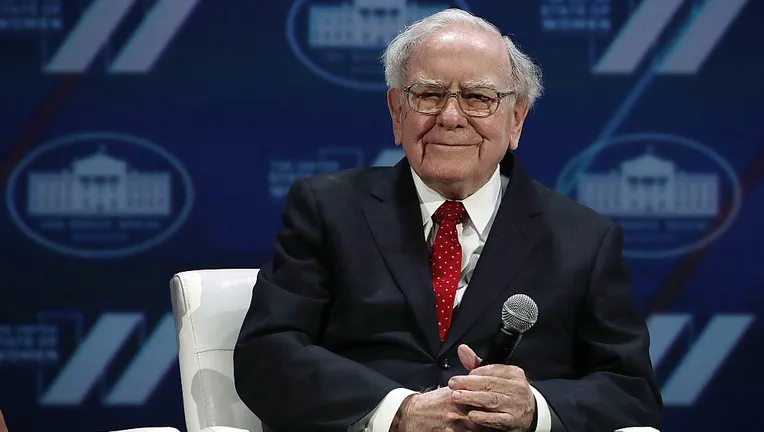
Earlier this year Berkshire Hathaway’s long-standing CEO, Warren Buffett, announced he will step down at the end of 2025, bringing to a close an extraordinary 60-year tenure leading one of the world’s largest and most admired conglomerates. The 95-year-old Oracle of Omaha shared his final letter to shareholders last week, offering reflections on his career, confidence in his successor, and a peek at his philanthropic plans as he transitions away from an active executive role.
Buffett’s decision to retire signals an important moment not just for Berkshire Hathaway but for the broader landscape of leadership in American business. He wrote with clarity, “I will no longer be writing Berkshire’s annual report or talking endlessly at the annual meeting. As the British would say, I’m ‘going quiet.’” Yet his voice remains present through an annual Thanksgiving message, underscoring his ongoing connection to the company and its shareholders.
One of the most striking themes in his farewell communication was his trust in Greg Abel, who will take over as CEO at year-end. Buffett described Abel as “a great manager, a tireless worker and an honest communicator,” praising his understanding of Berkshire’s diverse businesses and personnel, as well as his swift grasp of complex matters many CEOs overlook. “I can’t think of a CEO…that I would select over Greg to handle your savings and mine,” Buffett wrote, setting the stage for a leadership transition grounded in continuity and stewardship.
Financially, Berkshire Hathaway under Buffett’s leadership enters this new phase with a notably strong position. Its cash reserves reached a record $381.7 billion by recent accounts, a figure that underscores the company’s cautious, value-focused approach to capital. This massive cash hoard reflects Buffett’s long-held belief in balancing bravery with prudence in times of market uncertainty, a pillar of his investing philosophy. Alongside this liquidity cushion, Berkshire’s profits rose 17% in the period leading to Buffett’s announcement, signaling operational strength that could ease concerns about the company’s future without its iconic founder.
Buffett also did not shy away from critiquing trends outside his own firm. He took a pointed stance against excessive CEO compensation elsewhere, emphasizing Berkshire’s culture of avoiding “look-at-me” wealth accumulation. His letter stressed the importance of management aligned with long-term shareholder value rather than personal enrichment, a principle that has guided Berkshire throughout its history.
Beyond corporate matters, Buffett shared a significant development on the philanthropic front. Demonstrating his commitment to giving back, he converted 1,800 Class A shares into 2.7 million Class B shares specifically to transfer to several family foundations, including The Susan Thompson Buffett Foundation, The Sherwood Foundation, The Howard G. Buffett Foundation, and the NoVo Foundation. This move accelerates his legacy of philanthropy, entrusting his children, all beyond typical retirement age, with substantial resources to continue charitable efforts. As he put it, “My children…like working long hours to help others, each in their own way,” and this transfer is meant to support that work sustainably for years to come.
Throughout his final letter, Buffett conveyed a sense of optimism for Berkshire’s future under fresh leadership, albeit tempered by an understanding of the company’s scale and challenges ahead. He acknowledged that Berkshire is unlikely to evade occasional setbacks, but it remains shielded from “devastating disasters” thanks to conservative management and a shareholder-focused board. His hopes for Greg Abel’s tenure extend decades, with a vision of only a handful of CEOs over the next century to maintain Berkshire’s legacy without disruption.
The chapter closing on Warren Buffett’s leadership is a rare moment in business history: a founder with unmatched influence preparing for life beyond the CEO role with thoughtfulness, care, and an unwavering commitment to both shareholders and philanthropy. His parting message is a mix of reflection on a remarkable career and cautious optimism about the next leaders at Berkshire Hathaway. This milestone will be watched closely, but Buffett leaves the company in strong financial shape and in trusted hands.
For investors, Buffett’s retirement means more than the end of an era. It is a reminder of the principles that have made Berkshire successful: steady cash management, long-term value creation, and the steady hand of leadership grounded in integrity. As the company prepares to navigate the post-Buffett world, these fundamentals provide a stable foundation and a hopeful outlook.
