
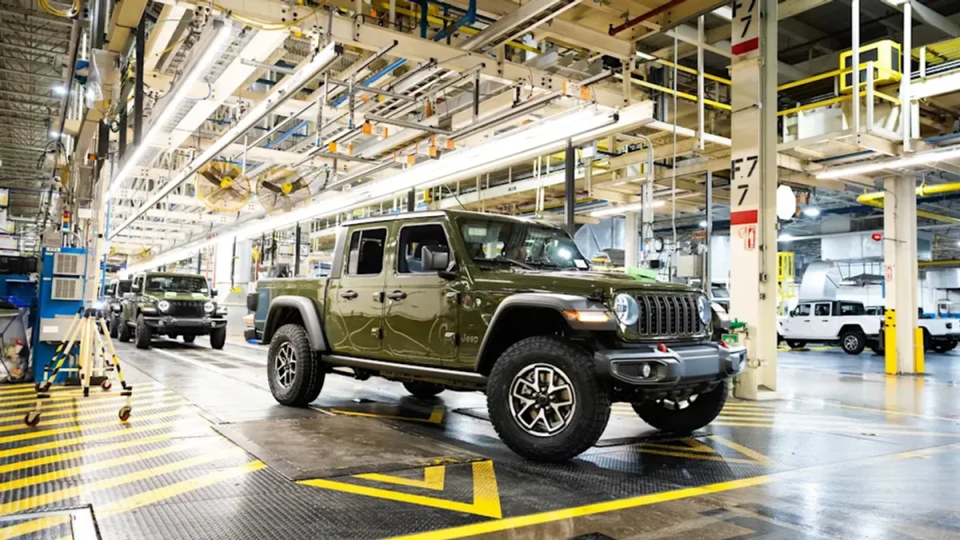
Stellantis, the automaker behind Jeep, Ram, Dodge, and Chrysler, is making a bold move to strengthen its foothold in the U.S. by committing $13 billion over the next four years to boost domestic production and job creation. This is the largest single investment in the company’s 100-year history in the United States and signals a renewed focus on expanding manufacturing capabilities at a critical time for the industry.
The move comes amid continuing challenges in the U.S. auto market and follows years in which Stellantis, like many global manufacturers, faced pressure from shifting consumer preferences, supply chain disruptions, and tariff impacts. The company’s CEO, Antonio Filosa, who took the helm in June, has made accelerating growth in the U.S. a top priority. Filosa highlighted that this substantial investment will increase annual vehicle production in the country by 50%, adding five new vehicle models alongside the refreshment of 19 existing products through 2029.
Key to this plan are investments in plants across Illinois, Ohio, Michigan, and Indiana, which will collectively add more than 5,000 new jobs. The Belvidere facility in Illinois will reopen to produce two new Jeep models. The Toledo, Ohio plant is set to build an all-new midsize truck, supported by a $400 million investment and expected to create 900 jobs by 2028. Meanwhile, in Warren, Michigan, nearly $100 million will go toward manufacturing a new range-extended electric vehicle and an internal combustion engine large SUV, supporting another 900 jobs. Detroit will see the production of the next-generation Dodge Durango, backed by $130 million in investment.
Adding to the modernization efforts, the Kokomo, Indiana facilities will produce the new four-cylinder GMET4 EVO engine, starting in 2026, with a $100 million commitment spurring over 100 jobs. Overall, Stellantis currently operates 34 manufacturing and distribution centers in 14 states and employs around 48,000 people in the U.S.
This massive investment aligns partially with the ongoing reshoring trend encouraged by U.S. trade and industrial policies aimed at reducing reliance on foreign imports and fostering domestic manufacturing. It is also a strategic response to tariffs that have affected import costs, notably the estimated $1.7 billion hit Stellantis experienced due to tariffs imposed during former President Donald Trump’s administration. By expanding local production significantly, Stellantis hopes to insulate itself from such external financial pressures going forward.
The company’s plan is more than just a manufacturing expansion. It demonstrates a comprehensive strategy to regain market share by refreshing its product lineup with a mix of electric, hybrid, and traditional vehicles that appeal to a broad range of American consumers. It also reflects a management shift under Filosa, who prioritizes production volume growth alongside profitability to reestablish Stellantis as a major force in U.S. automotive sales.
While the investment represents an ambitious turnaround effort, challenges remain. The competitive landscape is fierce as companies race to electrify their offerings while managing cost pressures, regulatory demands, and evolving consumer expectations. Additionally, global economic uncertainties and raw material supply constraints introduce risks into execution timelines and cost targets.
Nevertheless, Stellantis’s commitment to creating thousands of jobs across multiple American states, along with the introduction of new vehicles across iconic brands like Jeep, Ram, and Dodge, underscores a confident bet on the U.S. market’s long-term potential. It is a clear statement that the company sees its future growth tied closely to revitalizing its American roots.
As Stellantis embarks on this significant expansion, the next few years will be crucial in determining how successfully it can translate capital investment into gains in market share, brand strength, and customer loyalty, key measures of success in one of the world’s most competitive automotive markets.
