
[stock_market_widget type=”card” template=”basic2″ assets=”AMZN” realtime=”true” api=”yahoo-finance”]
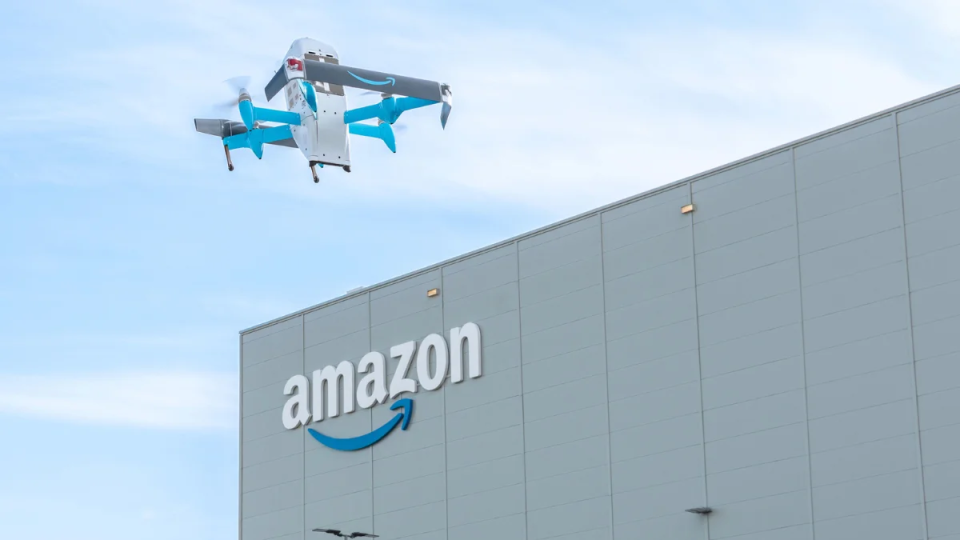
Amazon.com, Inc. (NASDAQ: AMZN) has recently come under investigation by the U.S. Federal Aviation Administration (FAA) following an incident involving one of its delivery drones in Waco, Texas. The drone, an MK30 model used for Amazon Prime Air deliveries, clipped an overhead internet cable as it completed a delivery earlier this month. Fortunately, the drone executed a “Safe Contingent Landing” as designed, and no injuries or significant service disruptions were reported, though the cable was damaged and repaired by Amazon at its expense.
This incident fits within a broader context of the rising use of delivery drones around the world. Companies including Amazon, Walmart, and others in the U.S., Europe, and Asia continue to integrate autonomous drones into their logistics networks. Amazon alone aims to deliver 500 million packages annually by drone by 2030, leveraging continuous advancements in drone technology and regulatory approvals. The technology promises faster last-mile delivery options, especially in less accessible areas.
However, the Texas event is not isolated in raising safety concerns. Earlier in 2025, two Amazon Prime Air drones collided with a construction crane in Arizona, prompting a temporary suspension of drone operations in that area for safety reviews. The FAA’s ongoing investigations reflect the regulatory challenges faced by this emerging mode of delivery, balancing innovation with operational risk management and public safety. The National Transportation Safety Board has not launched parallel investigations, deferring to the FAA’s jurisdiction here.
Delivery drones operate in complex environments and occasional mishaps tend to occur as companies iron out technology and protocols. Industry reports and databases indicate incidents still occur but remain relatively infrequent given the scale and novelty of drone deliveries. Most drones are equipped with fail-safes that activate automatic landings or controlled descents in case of malfunctions or collisions with obstacles, as was the case in Texas.
Globally, the pace of drone adoption varies with regulatory frameworks across regions. The U.S. leads with more developed policies but still tightens requirements after incidents such as these. Europe and parts of Asia are also accelerating drone delivery projects, yet concerns about infrastructure safety, privacy, and air traffic integration persist. The FAA probe into Amazon’s drone incident will likely influence future regulatory adjustments for drone safety and operational transparency in the U.S. and may ripple across global drone delivery strategies.
This technology is growing and evolving, but it comes with growing pains as public agencies and companies navigate new airspace use, technology limits, and safety futures. Amazon’s recent setback is a reminder of the complexities involved in replacing traditional delivery methods with autonomous drones, spotlighting the need for robust safety protocols and continued regulatory oversight as the industry scales.
