
[stock_market_widget type=”card” template=”basic2″ assets=”NKE” realtime=”true” api=”yahoo-finance”]
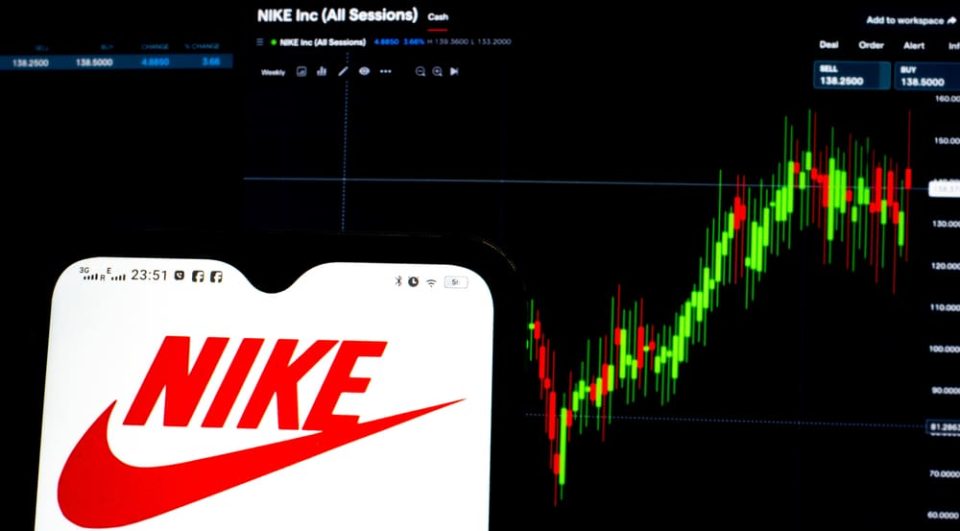
Nike, Inc. (NYSE: NKE) released its latest quarterly results, and the market responded with a swift 10% drop in the stock price at the open of the market this morning, before retracing slightly. This reaction came even though the numbers beat some analyst forecasts on revenue and earnings per share. Investors seemed to focus on deeper troubles, like stagnant growth and warning signs in key markets.
The company posted revenue of $12.43 billion for the quarter, flat compared to the year before and edging past expectations of $12.22 billion. North America showed some life with a 9% rise, which felt like a bright spot amid broader softness. Yet Greater China sales plunged 17%, missing estimates and highlighting ongoing struggles in that vital region. Analysts noted this as a red flag, pointing to weak consumer demand and heavy competition from local brands like Anta and Li-Ning.
Earnings per share came in at $0.53, down from $0.78 a year earlier but still topping the $0.37 forecast by a solid margin. Operating margins shrank to 8%, off 32 points from last year, as costs climbed faster than sales. One analyst from InvestingPro called it a “mixed outcome,” praising the beats but worrying about China’s drag on the bottom line. These figures painted a picture of a company treading water, not surging ahead as shareholders hoped.
Elevated inventory levels lingered as a sore point, with the company still working through excess stock from prior quarters. Nike executives mentioned progress in clearing it out, but units and dollars remained higher than ideal, forcing deeper discounts. Gross margins took a hit too, down to around 40.3% in some reports, pressured by wholesale promotions and factory store clearances.
Analysts zeroed in on these pressures during the earnings call. One questioned tariff impacts, estimated at up to $1.5 billion, which could linger into the next fiscal half. Another highlighted digital sales weakness, down sharply in several regions, as Nike repositions its online model toward full-price sales. “Inventory cleanup is on track, but recovery in China will take time,” summed up the executive response, yet that timeline felt too vague for impatient investors.
What really stung was the outlook. Nike spoke of building momentum in running and performance products, like the Vaporfly line hitting $100 million in quick sales. Still, full-year guidance implied only modest improvement, with revenue growth pegged at 3.3% next year, trailing the sector average. Analysts expected more aggressive steps to counter rivals such as On Running and Hoka, who have chipped away at Nike’s running dominance.
“We see a clear path to recovery,” management said, but the market heard echoes of past promises amid “Win Now” initiatives that have yet to fully deliver. Share repurchases and dividends held steady at billions, signaling some confidence. Market watchers like those at Nasdaq pointed to “plunging after-hours” as proof that beats alone no longer cut it in a high-bar environment.
Wall Street voices captured the sentiment shift. “Nike exceeded on revenue and EPS, but the China miss is concerning,” one report stated, rating it neutral despite short-term upside potential. Another from AInvest flagged the 86% EPS drop to $0.14 in a prior quarter context, tying it to 15% China declines and tariff woes. Faith leaders at Nike acknowledged results fell short of standards, vowing a “sport offense” pivot, but analysts questioned if innovations could scale fast enough.
Geopolitical tensions and supply chain snarls added layers of uncertainty, from Vietnam tariffs to U.S.-China trade ripples. Investors, burned by recent misses, priced in risks rather than rewards. This earnings moment felt like a pivot point, where execution details outweighed headline wins.
Nike’s story reflects a sportswear world in flux, where direct-to-consumer dreams clash with wholesale realities. Rivals gain ground as consumers shift to trendy alternatives, and macro headwinds test resilience. The 10% slide underscores how quickly sentiment turns when growth stalls, even amid tactical fixes. Forward momentum hinges on nailing product cycles and market resets, a bet many on the Street remain cautious to make.
