
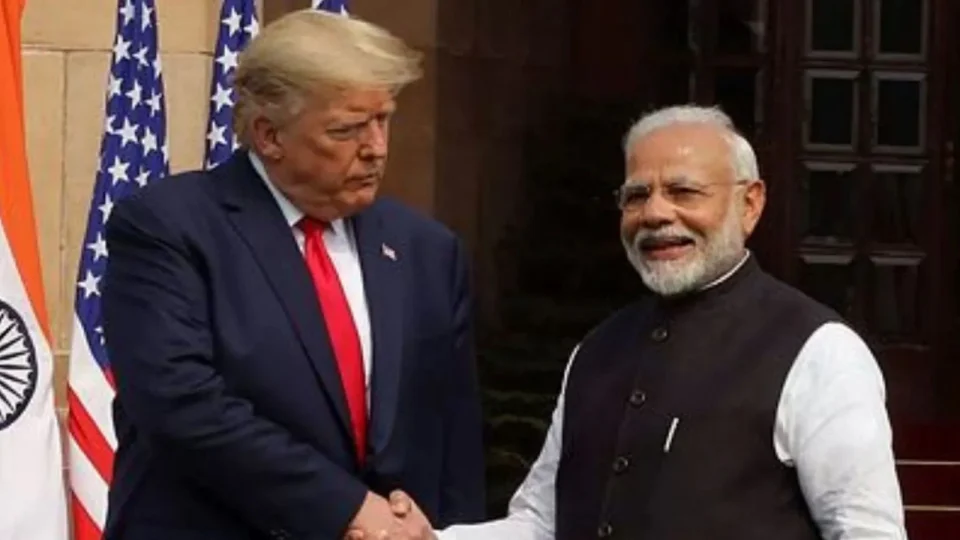
Relations between the United States and India have taken a notable turn with a new trade agreement. President Donald Trump shared details on Truth Social, noting that Prime Minister Narendra Modi pledged to halt purchases of Russian oil while ramping up buys from the U.S. and possibly Venezuela. This builds on India’s ongoing cutbacks in Russian crude imports, down from about 35% of its total oil mix to below 25% lately, driven by stricter U.S. sanctions. Crude oil powers much of India’s economy, from gasoline to plastics, so these shifts affect daily life and business broadly.
The context of this deal reveals more layers. Trump highlighted immediate tariff reductions, with U.S. duties on Indian goods falling from 25% to 18%, while India commits to easing toward zero tariffs and clearing non-tariff hurdles over time. India also eyes up to $500 billion in U.S. purchases across sectors over the coming years. These steps address long-standing frictions, like U.S. complaints over India’s market barriers and India’s pushback on high American duties. Yet the oil shift stands out, as it ties directly to geopolitics and energy security. Russia has supplied India cheaply since Western sanctions over Ukraine hit in 2022, letting New Delhi save billions while refineries adapted to its heavy, discounted grades.
Now consider what this means for India. Refineries there, run by giants like Reliance Industries Limited, have tuned their operations to process Russian oil efficiently; its properties match their setups better than lighter U.S. crude, which carries higher sulfur and refining costs. Switching fully could add $9 billion to $11 billion annually to India’s oil bill, squeezing margins in a nation where energy powers 80% of transport and industry. On the brighter side, U.S. volumes might stabilize supply chains strained by sanctions, and Venezuela’s heavier crude could fill gaps left by Russia, keeping costs somewhat in check. Broader trade relief, like lower tariffs on electronics and autos, could offset pain by opening U.S. markets to Indian exports, fostering jobs in manufacturing hubs from Gujarat to Tamil Nadu. Still, economists note market forces will dictate pace; India imports 85% of its oil needs, so full stops demand careful planning.
For the U.S., the gains look clearer. Curbing India’s Russian buys strikes at Moscow’s war chest; those imports have funneled over $169 billion to Russia since 2022, funding tanks and troops. American producers, especially in Texas and North Dakota, stand ready with excess capacity, potentially exporting millions more barrels daily to Asia’s third-largest economy. Post-Maduro Venezuela adds another angle, as eased U.S. sanctions there could restart heavy oil flows, benefiting both nations’ refiners. Trump frames this as a win for energy independence and alliances, reducing reliance on adversarial suppliers. Domestically, it bolsters rural economies tied to drilling and supports a reelected president’s push for fossil fuel revival amid global green shifts.
Geopolitics weaves through every barrel. India walks a tightrope, balancing ties with Russia (a decades-old partner) against deepening U.S. bonds, vital for tech transfers and defense deals like the Quad alliance. The U.S. sees this as leverage in a multipolar world, where China looms large; stronger trade cements India as a counterweight. Yet challenges persist. Refining mismatches might slow the pivot, and if oil prices spike, Indian consumers face higher fuel costs, stoking inflation at 5% to 6%. Venezuela’s output remains shaky post-sanctions relief.
Business leaders will watch how this unfolds. Lower tariffs could spark joint ventures in renewables or semiconductors, blending energy shifts with tech growth. For India, the deal tests resilience; it has diversified suppliers before, from Saudi Arabia to Iraq. The U.S. benefits from locked-in demand, shielding exporters from volatile Middle East swings. As negotiations deepen, expect details on timelines and volumes to clarify paths forward. This accord, rooted in oil but reaching wider, signals pragmatic partnership in uncertain times.
