
[stock_market_widget type=”card” template=”basic2″ assets=”UBER” realtime=”true” api=”yahoo-finance”]
Autonomous driving taxis are quietly shifting from science-fiction experiments to a real business line in the global transport and ride-hailing landscape. In the U.S., services backed by companies such as Alphabet’s Waymo have already begun charging passengers for rides without a human safety driver in cities like San Francisco and Phoenix, even as regulators and local governments wrestle with safety and liability questions. At the same time, more traditional ride-hailing platforms and automakers are funneling fresh capital into partnerships that suggest they expect robotaxis to become a meaningful part of their long-term operations, not just a side experiment.
One of the most visible recent moves is the multi-billion-dollar collaboration between Uber (NYSE: UBER) and Rivian (NASDAQ: RIVN). Uber has agreed to invest up to $1.25 billion in Rivian as part of a plan to deploy up to 50,000 robotaxis across several countries by 2031, including 10,000 autonomous versions of Rivian’s upcoming R2 electric vehicle, with options to buy tens of thousands more. The first robotaxis based on the R2 are expected to start appearing on Uber’s platform in selected U.S. cities as early as 2028, with San Francisco and Miami named as initial markets before expansion into a broader set of 25 urban centers across the U.S., Canada and Europe.
This deal is not an isolated bet. Robotaxis now sit at the center of a broader, global lobbying and investment campaign by automakers, tech firms and mobility platforms. In the United States, companies such as Waymo, Tesla and Amazon’s Zoox have all ramped up pilot programs and regulatory filings that point toward wider commercial deployment, even though many earlier timelines have slipped. In China, Didi and Baidu have run extensive autonomous taxi trials in cities like Beijing and Shanghai, while European and Middle Eastern cities have seen test fleets from manufacturers and startups testing everything from small shuttles to full-size sedans.
The business logic behind these investments is relatively straightforward, even if the execution remains uncertain. If a fleet of robotaxis can operate without a human driver, the single largest cost in ride-hailing, driver wages, can be reduced or eliminated over time, which would change the economics of the entire model. At the same time, operators hope that having a standardized fleet of electric, self-driving vehicles will lower maintenance costs and make it easier to integrate them into charging and servicing networks. The result is a scenario where companies can either offer cheaper rides, higher margins, or both, depending on how competitive the market becomes.
Investors and companies also point to the growing maturity of the underlying technologies. More powerful AI chips and better-tuned software stacks have allowed companies like Rivian and its rivals to collect and process vast amounts of real-world driving data, which they then use to refine their autonomy systems. That data loop, as executives sometimes describe it, is seen as a key differentiator between firms that rely on off-the-shelf sensor packages and those that design their own hardware, software and sometimes even their own compute platforms. For a company like Rivian, the ability to tightly integrate its consumer vehicles with its commercial robotaxi fleet could theoretically speed up testing and deployment while giving partners such as Uber a more predictable platform to build around.
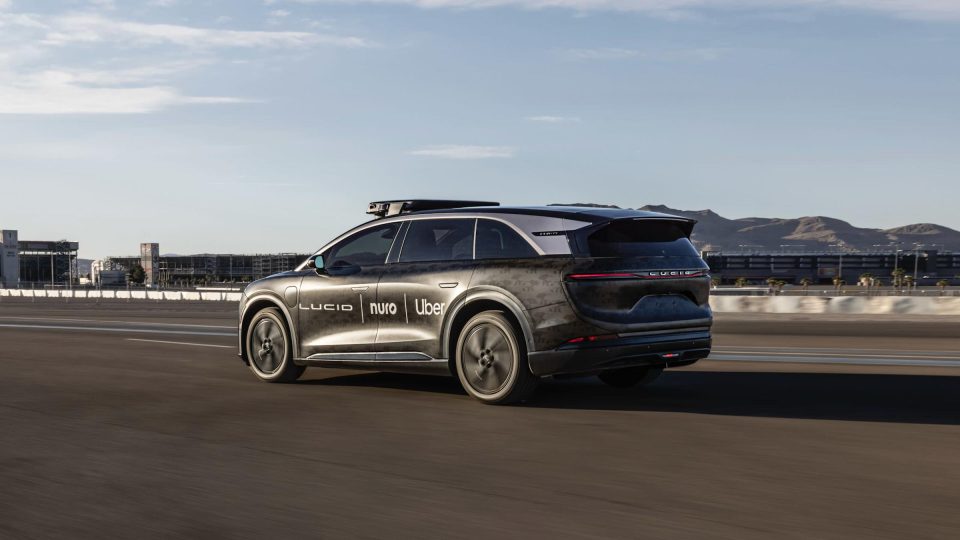
The Uber–Rivian alliance is also part of a broader reset in how ride-hailing firms approach autonomy after an earlier wave of failed ventures. A few years ago, Uber sold its internal autonomous-vehicle unit, stakes in other self-driving projects, and walked back some of its more aggressive timelines. Now, rather than trying to build everything in-house, Uber is spreading its bets across multiple partners, including Lucid, Zoox, Stellantis and Nvidia, each of which brings different designs and technology stacks to the table. That diversification lowers the risk that any single technical snag or regulatory delay will derail the entire strategy.
Outside the U.S., the robotaxi push is more uneven but still visible. Some Asian and Middle Eastern cities have moved relatively quickly to allow limited autonomous taxi services, often framed as part of broader “smart city” initiatives. In Europe, regulators have generally taken a more cautious stance, tying expansions to rigorous safety assessments, operator transparency and data-sharing requirements. That patchwork of rules means companies must treat each region as a separate operating environment, rather than assuming a single global playbook will apply.
For the ordinary business reader, the most important takeaway is not the technical details of how a robotaxi sees or plans its route, but how the business model is shifting. As ride-hailing companies and automakers lock in multi-year, multi-city contracts for autonomous vehicles, they are effectively treating driverless fleets as a core part of their go-to-market strategy. That reshapes not only how people move around cities but also how capital is allocated across manufacturing, software, insurance, and infrastructure, creating a new set of winners and losers in the mobility ecosystem.
