
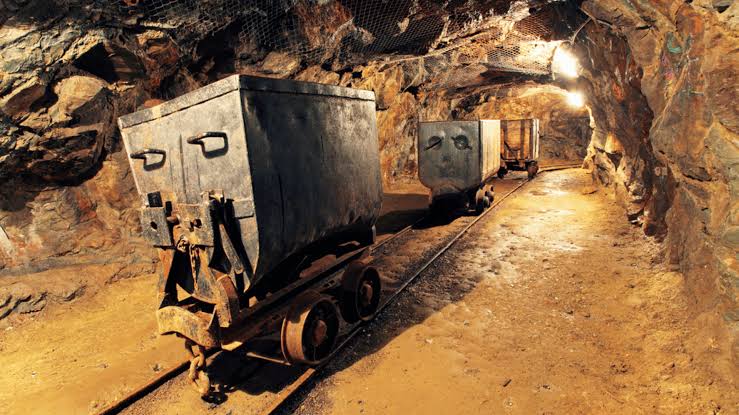
In the rolling hills north of Whitehorse, the Minto copper belt has long been one of Yukon’s better known mining districts. The area once supported an operating mine that produced copper concentrate along with gold and silver before closing and entering care and maintenance. Now, a new round of drilling is adding detail to what lies beneath the surface and helping shape a path toward possibly restarting operations.
Selkirk Copper Mines Inc. (OTCQX: SKRKF, TSXV: SCMI) announced that step-out drilling at its Minto North target intersected high-grade mineralization near the southern edge of a priority resource zone. One hole, labeled 26SCM209, returned 9.27% copper, 7.43 grams per tonne gold and 54.9 grams per tonne silver over 5.4 metres, which calculates to about 15.11% copper equivalent. The company described this as one of the highest-grade intercepts ever drilled on the Minto property.
This result comes as part of a much larger effort. Through late September, Selkirk had completed about 52,485 metres of diamond drilling in 224 holes under its Phase 2 program, building on an earlier Phase 1 campaign that totaled roughly 98,467 metres and cost about US$31.7 million (C$45 million). Phase 2 has already exceeded its original metre target, and the company says assay results will continue to arrive through the fall and into winter.
Why this matters is that the new holes are testing areas just beyond where the geology was previously defined. Step-out drilling like this helps confirm whether mineralized zones continue in a given direction and whether they remain high grade. For a project that already has a mill, camp, and other infrastructure on site, showing that high-grade copper and gold extend near existing facilities can support the economic case for a restart.
On the corporate side, Selkirk is an exploration and development company focused on restarting the former Minto copper-gold-silver mine. The Selkirk First Nation holds a controlling equity stake through a wholly owned subsidiary, and the company controls about 26,850 hectares of claims in the Minto-Carmacks copper belt along with the old mine’s processing plant, camp, and related buildings.
The next major milestone is a feasibility study. In mining, a feasibility study is a detailed engineering and economic analysis that looks at how a mine would be built and operated, what it would cost, and what returns it might generate under a specific set of assumptions. It is more detailed than a preliminary economic assessment and is often used to support financing decisions and permitting. Selkirk has said it plans to begin feasibility study work in the fourth quarter of 2026, after completing its current drill program and updating its resource estimate in early 2027.
The Minto project sits in an established mining district with road access and existing infrastructure, which can lower the capital needed to bring a mine back into production compared with a completely new, or greenfield, project. At the same time, any restart would still require permitting, financing, and a final investment decision, and the economics will depend on future copper, gold, and silver prices as well as operating costs.
The recent drill results do not guarantee that Minto will reopen, but they do add concrete data to a plan that already includes a positive preliminary economic assessment and a large, fast drill campaign. As more assays arrive from Phase 2, the company will have a fuller picture of the size and grade of the resource near Minto North and other targets, which will feed directly into the upcoming feasibility study.
