
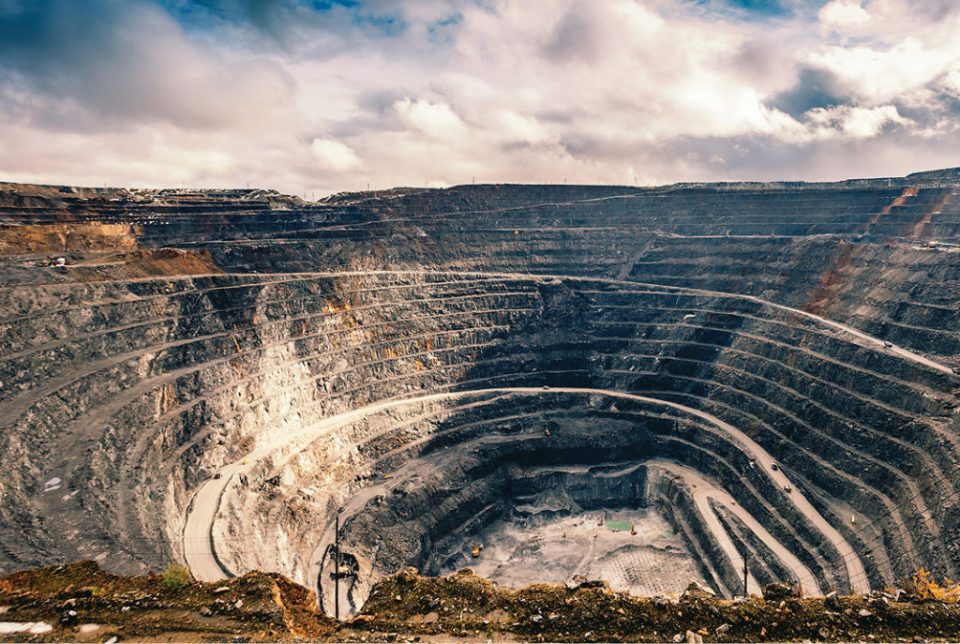
Gold has a habit of turning up in hard places, and few parts of Canada are harder to work in than Nunavut and northern Quebec, in Canada. Both regions sit on ancient bedrock, the same type of geology behind many of the country’s richest gold deposits. Roads are scarce. In much of Nunavut, fuel and equipment arrive by plane or by sealift during a short summer. That makes exploration expensive, so the deposits that get built tend to be rich enough to carry those costs.
Nunavut has quietly become an important gold producer. The territory has three large operating gold mines, which together were expected to produce more than 1.2 million ounces this year. Meliadine, near Rankin Inlet, and the Meadowbank complex, north of Baker Lake, have been running for years. The Goose mine in the Back River district reached commercial production in October 2025. The North remains unforgiving, though. A fire in April disrupted crushing at Goose and led its operator to trim its outlook for the year.
Smaller companies do much of the early searching. Blue Star Gold Corp. (OTCQB: BAUFF, TSXV: BAU.V) explores the High Lake Belt in Nunavut’s western Kitikmeot region. Its latest drilling found gold up to 230 metres south of its existing North Fold Nose resource, suggesting the deposit extends further than first mapped.
Northern Quebec tells a similar story. The Eeyou Istchee James Bay region was overlooked for decades. Roads and power lines built for Hydro-Quebec’s hydroelectric projects gradually opened it up and lowered exploration costs. The Eleonore mine became the area’s anchor, and juniors followed. Sirios Resources Inc. (OTCQB: SIREF, TSXV: SOI.V) is drilling its Cheechoo project, about 15 kilometres from Éléonore. The deposit holds roughly 1.26 million ounces of indicated resources and 1.69 million ounces of inferred resources. Early holes this summer returned 2.4 grams of gold per tonne of rock over 48.5 metres, extending the deposit beyond its 2025 boundary.
Against that backdrop, Fury Gold Mines Limited (NYSE American: FURY, TSX: FURY.TO) released the first results today from its 2026 drilling at the Committee Bay project in the eastern Kitikmeot region of Nunavut. The company also has the Eau Claire project in Quebec’s James Bay region. This year’s Nunavut program totalled 11 holes and 4,219 metres. The five holes reported today were infill holes. These were drilled between earlier holes inside the Three Bluffs resource to test whether the gold is as continuous as expected.
All five holes hit the targeted shear zone, a band of crushed and altered rock where gold tends to collect, with mineralized widths between 17 and 99 metres. The standout was hole 26TB158, which returned 3.88 grams per tonne over 17.82 metres. That included a richer core of 18.78 grams per tonne over 3.30 metres at a depth of about 190 metres. Hole 26TB161 delivered something different: 0.77 grams per tonne over 98.60 metres. The company reports this is the widest mineralized interval drilled to date at Three Bluffs.
Each result matters differently. A high-grade core at relatively shallow depth points to the kind of rock that can pay for mining. A very wide, lower-grade zone hints that the gold system is larger than earlier drilling showed. Three Bluffs already holds an estimated 524,000 ounces in the indicated category at 7.85 grams per tonne. It also holds 720,000 ounces in the less certain inferred category at 7.64 grams per tonne. Infill drilling is how companies build the confidence needed to move ounces from the second group into the first.
Five holes are still at the lab, including two extension holes drilled to find where the gold stops. Every result from this season will feed into an updated mineral resource estimate. Chief Executive Officer Tim Clark said the numbers released today strengthen the company’s confidence in the size of the project heading into that update. This round of drilling showed that the gold at Three Bluffs holds together where the company expected. The next round will show how far it reaches.
