
Parents have always checked on sleeping babies. What has changed over the last decade is how they do it. A growing category of connected infant health-monitoring products now lets a caregiver watch, listen to and even measure a sleeping child from a phone in another room. These products fall into two broad groups, and each comes with its own promise and its own risks.
The first group is the nursery camera. Modern versions stream high-definition video over home Wi-Fi, send alerts when they detect crying or movement, and often report room temperature. They look harmless, but they plug into the wall, and that cord is the hazard. The U.S. Consumer Product Safety Commission has long warned that monitor cords can strangle infants and toddlers, and it tells parents to keep cords at least three feet from any part of a crib or bassinet. That is why many cameras ship with rigid plastic guards that enclose the cable as it runs down the wall.
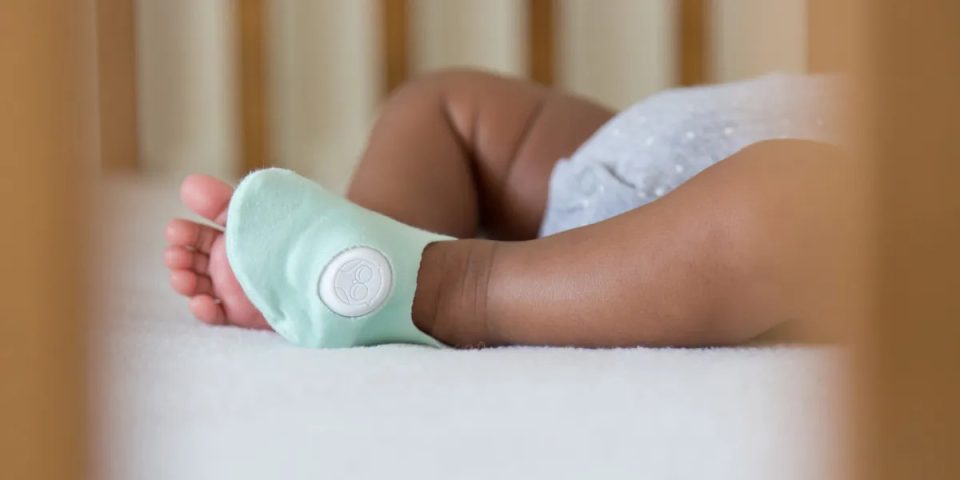
The second group is the wearable, most often a fabric sock that wraps around a baby’s foot. A small sensor shines red and infrared light through the skin to estimate blood oxygen and pulse rate, the same principle behind the fingertip clips used in clinics. When readings drift outside preset ranges, the parent’s phone and a bedside base station sound an alert.
Regulation matters a great deal here. On September 16, 2025, the U.S. Food and Drug Administration warned families not to use unauthorized infant monitors that claim to track vital signs and stressed that no device has been authorized to prevent sudden infant death syndrome. The American Academy of Pediatrics also says home monitors should not be used as a strategy to reduce SIDS risk. In other words, these products sell information and reassurance, not prevention.
The business model has changed too. A device is a one-time sale, so makers increasingly charge monthly fees for extras such as sleep history, video playback and expert guidance. That recurring revenue usually carries higher margins than the hardware itself.
That tension sits at the center of today’s third-quarter report from Owlet, Inc. (NYSE: OWLT), the Lehi, Utah, company behind the Dream Sock and the Dream Sight camera. Revenue came in at $30.4 million, down 4.9% from $32.0 million a year earlier. Hardware sales fell to $26.8 million from $30.5 million, which the company tied to a tough comparison with last year’s camera launch and heavy discounting by rivals ahead of an August 10th FDA-clearance deadline set by Amazon.com, Inc. (NASDAQ: AMZN).
Subscriptions told a different story. Revenue from the Owlet360 service rose to $3.6 million from $1.5 million, and paying subscribers passed 142,000. Subscription gross margin was 68.4%, which helped lift overall gross margin to 53.8% from 50.6%. Operating income was $1.2 million. Net income was $1.4 million, down from $4.2 million, although the prior-year figure included a $4.3 million gain tied to warrants.
The safety news may matter more to a stock that is already down more than 71% this year. Owlet said it received a safety incident report involving exposed camera cables and starting today it will ship an enclosed replacement cable guard system, free of charge, to any camera owner who asks. The company calls this a safety update, and the release does not describe it as a recall. It also does not say how many units or which camera models are involved, whether anyone was hurt, or whether federal regulators are participating.
The update led Owlet to withdraw its full-year 2026 outlook. Management pointed to remediation costs, returns from retailers, an interruption in fourth-quarter retail sales and uncertain near-term demand, but gave no dollar estimates, saying more detail would come in its quarterly 10-Q filing.
The quarter shows a company whose recurring revenue is growing quickly and earning strong margins, yet hardware still made up about 88% of sales. Subscribers depend on devices in nurseries, and devices depend on parents’ trust. How large the cable guard fix turns out to be, and how quickly retailers resume normal selling, will likely decide whether subscription growth can carry Owlet through the holiday quarter.
