
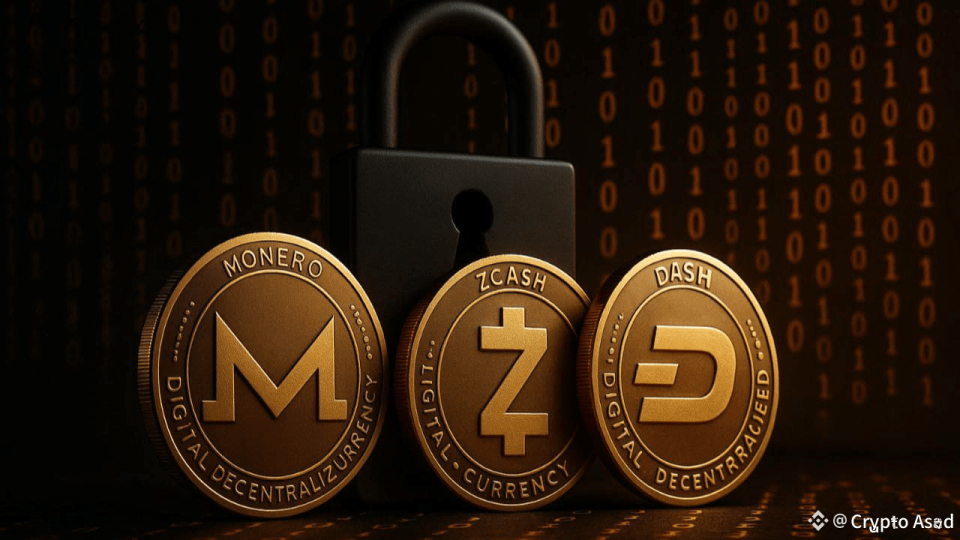
Every time money moves on a public blockchain, it leaves a permanent record that anyone can read. That openness helped early cryptocurrency earn trust, because nobody needed a bank to confirm a payment had happened. It also means that once a wallet address is linked to a real person, their entire financial history can be traced. Privacy technology grew out of that problem, and it has become one of the most debated corners of digital finance.
The main tool behind it is a branch of cryptography called zero-knowledge proofs. Put simply, these proofs let a network confirm a transaction is valid while hiding the sender, the recipient and the amount. Zcash, launched in 2016, built this into its design but made it optional. Users can choose between transparent and shielded transactions rather than having privacy applied automatically. Transparent addresses work much like Bitcoin, while shielded addresses hide the details.
Demand for that option has grown. The share of Zcash supply held in shielded form rose from about 8% at the start of 2025 to roughly 23% by the end of that year, a sign that people were using the privacy features rather than just trading the coin.
Regulators see the same features differently. Europe’s new anti-money-laundering package bars exchanges from listing privacy coins, and the rules are set to apply from July 2027. Supporters argue that the outcome depends less on outright bans and more on whether businesses can show proper controls around shielded transactions. That tension between personal privacy and financial oversight hangs over the whole sector. Large asset managers have taken notice anyway, and Grayscale has filed to offer a Zcash exchange-traded product in the U.S.
Prices reflect the uncertainty. Zcash hit a high of $1,695 on September 26th, then fell roughly 41% to lows near $1,000 during a broad crypto selloff on November 10th and 11th. Hotter than expected U.S. inflation data set off that selloff, which hit smaller coins harder than Bitcoin.
One of the companies most exposed to those swings is Cypherpunk Technologies Inc. (NASDAQ: CYPH). The business used to be Leap Therapeutics, a cancer drug developer, and it rebranded in November 2025 after a $58.9 million investment from Winklevoss Capital. Its main job now is holding and producing Zcash. It has also invested in ZODL, the team behind the most widely used Zcash wallet, and it still owns its legacy antibody therapy programs.
On August 18th, the company launched a mining fleet that it said made up about 18% of the Zcash network’s computing power, with a goal of reaching about 20% by late October. Mining lets the company earn new coins for helping process transactions, instead of relying only on purchases in the open market.
Results released today show how heavily the coin’s price shapes the company. Cypherpunk reported third quarter net income of $306.0 million, or $1.13 per diluted share. Most of that came from a $330.8 million unrealized gain tied to Zcash rising from $400.09 to $1,414.56 during the quarter. That gain is an accounting figure rather than cash in the bank, and it was partly offset by a $27.5 million tax provision.
The mining side offers a clearer view of day-to-day operations. In its first 44 days, the fleet mined 8,967.29 ZEC, bringing in $9.9 million of revenue at a cost of about $104 per coin. Counting October output and recent purchases, the treasury now holds 341,858.75 ZEC, or roughly 2.01% of circulating supply.
At September 30th, the company’s Zcash was valued at $470.1 million, alongside $56.0 million in cash, while the whole company was valued by the stock market at around $194 million. The selloff since then has narrowed that gap, but the shares still trade well below the value of what the company owns. Part of the debate is about structure: the coins are held as a receivable with Gemini, an affiliate of Cypherpunk’s largest shareholder.
Whether the discount reflects worry about Zcash’s volatility or doubts about the company’s setup is still an open question. What is clear is that Cypherpunk’s fortunes now rise and fall with a single privacy coin, and the coming quarters will show whether mining income can soften that dependence.
