
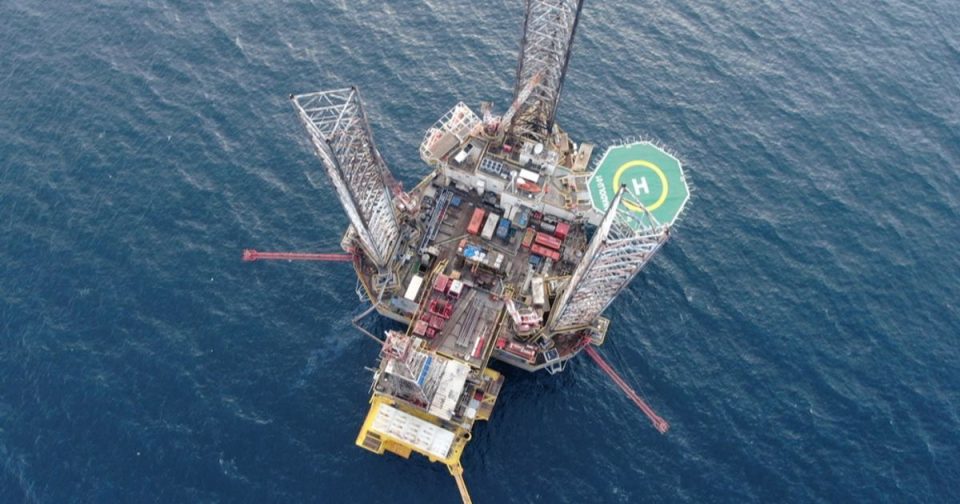
Seven years ago, Guyana had never sold a commercial barrel of oil. By the end of August this year, the South American country of about one million people was producing roughly 908,000 barrels a day, making it the continent’s third largest producer. Output is expected to pass one million barrels a day before the year ends, and the International Monetary Fund expects the economy to grow 22.3% this year.
Nearly all of that oil comes from a single offshore area called the Stabroek Block. It is operated by Exxon Mobil Corporation (NYSE: XOM), with Chevron Corporation (NYSE: CVX), through its Hess unit, and CNOOC Limited (HKEX: 0883.HK) as partners. A fifth floating production vessel, built for the Uaru field, arrived on August 21st to prepare for start‑up, and the partners expect capacity to reach about 1.7 million barrels a day by 2030.
Success has changed the terms for anyone arriving now. Guyana’s newer production sharing agreement, the contract that sets how oil revenue is split between a company and the state, carries a 10% royalty and a 10% corporate tax. It also lowers the share of revenue a company can keep to recover its costs from 75% to 65%. Newcomers can still win big, but they keep less of what they find.
The boom also sits beside an old border dispute. Venezuela claims the Essequibo region, which covers more than two‑thirds of Guyana, and its maritime claim reaches into the Stabroek area. Hearings at the International Court of Justice ended on May 11th, and Caracas says it does not accept the court’s authority.
Not every block has paid off. The deepwater Canje Block, north of Stabroek, produced no commercial development, and ExxonMobil said earlier this year it had met its obligations and would not seek a renewal. The licence lapsed on March 4th.
That lapsed licence is one of two assets now owned by Eco (Atlantic) Oil & Gas Ltd. (AIM: ECO.L, OTC: ECAOF, TSXV: EOG.V). The Canadian‑based explorer said today it had closed its all‑share takeover of JHI Associates Inc., a company it already partly owned. Eco issued 96,307,397 new shares to JHI’s former holders, about 20.7% of the enlarged company, and picked up $1 million in cash. When announced in March, the deal was valued at up to about $52.3 million.
The firmer prize is a 35% working interest in PL001, a licence in the North Falkland Basin directly beside Sea Lion, the $2.2 billion project set to become the islands’ first commercial oilfield. The other 65% belongs to the operator, Navitas Petroleum, Limited Partnership (TASE: NVPT.TA). Closing required a five‑year extension of PL001, and Eco says every condition has now been met.
The Guyana piece is less certain. Eco now holds JHI’s former 17.5% interest in Canje, but that interest only matters if the government reissues the block. Eco expects to hold 30% once a new production sharing agreement is finalized, though none has been signed, and any new deal would carry the tougher fiscal terms.
Both assets carry political risk. On October 13th, Argentina asked the International Tribunal for the Law of the Sea to halt British‑authorized oil activity in the Northern Falklands Basin, and President Javier Milei has threatened sanctions on companies working there. Britain says the filing does not invalidate any licence.
The bigger question is money. Paying in shares spared Eco’s cash but diluted existing owners, and the share count will rise to about 465 million once the new stock is admitted to trading on or around November 20th. Offshore wells in these basins can cost far more than a company of Eco’s size keeps on hand. The next thing to watch is whether partners agree to farm‑outs, where a larger company pays for drilling in exchange for part of the stake.
