
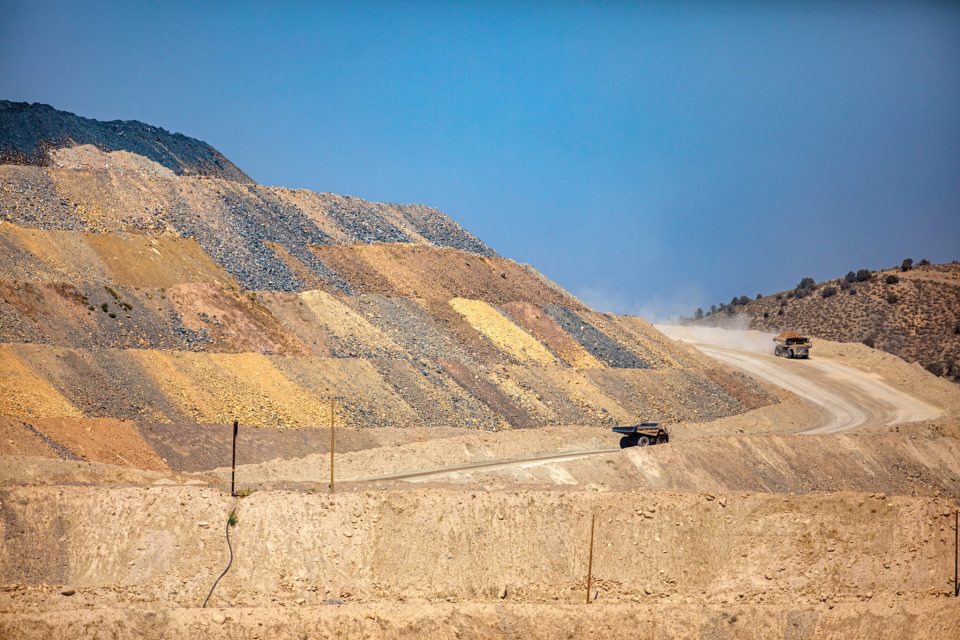
Nevada produces most of the gold mined in the U.S., and that concentration shapes who buys whom. The state’s mines turned out just over 3.38 million ounces in 2025, according to the Nevada Division of Minerals’ latest Major Mines of Nevada report. That was 2.81% less than in 2024, yet the value of the gold produced rose 42.16% because prices climbed so sharply. The division also credits Nevada with about 64% of all gold mined in the country.
Rich geology paired with flattening output explains much of the deal activity. When a large producer’s mines start to level off, the cheapest new ounces often sit on the ground next door, where roads, power, processing plants and permits can be shared. Investors also like the address. Nevada ranked first in the world for mining investment attractiveness in the Fraser Institute’s latest annual survey, released in February.
The biggest move this year came from the state’s two largest operators. On August 10th, Barrick Mining Corporation (NYSE: B, TSX: ABX) and Newmont Corporation (NYSE: NEM) agreed to fold projects that had been kept outside their Nevada Gold Mines joint venture into the partnership, including Barrick’s Fourmile and Newmont’s Fiberline and Mike developments. The agreement settled all outstanding disputes between the partners and included $1.95 billion in consideration from Newmont to Barrick. Combining the assets lets the partners plan mines across property lines that once divided them. [Barrick Mining Corporation]
Smaller buyers follow the same playbook. AngloGold Ashanti plc (NYSE: AU) completed its purchase of Augusta Gold in October 2025, paying $1.19 (C$1.70) a share in cash, or about $106 million (C$152 million) in total. The goal was to tie the Reward and Bullfrog projects into one connected camp in the Beatty district rather than run scattered sites.
Gold prices now add a twist. Spot gold fell below $3,600 an ounce today and touched about $3,515 at one point, its lowest level since September 2025. On October 13th, it settled near $4,163, so the metal has lost roughly 15% in about five weeks. Falling prices make it harder for small explorers to raise money, which tends to make a firm cash offer look better to their shareholders. It also gives buyers with strong balance sheets more room to negotiate.
That backdrop matters for Roxmore Resources Inc. (OTCQX: GARLF, TSX: RM), which filed its management information circular today. Securityholders will vote on December 16th on a plan under which a subsidiary of SSR Mining Inc. (NASDAQ: SSRM, TSX: SSRM) would buy every Roxmore share. Proxies are due by 8:30 a.m. Toronto time on December 14th.
Each share would bring $4.73 (C$6.75) in cash plus 0.33 of a share in RoxCore Resources Inc., a new explorer that will hold the Rattlesnake Hills, Newton and Shabu River properties and $10 million in cash. RoxCore has not begun trading. Roxmore values the package at about $5.08 (C$7.25), a 58% premium to its 20-day volume weighted average price, versus 47% for the cash alone.
The total depends on what is counted. SSR Mining values the equity at about $464 million, leaving RoxCore out, while Roxmore cites about $499 million (C$712 million) with it included.
The prize is the Converse project, about six kilometers west of SSR Mining’s Marigold complex. The buyer counts 2.2 million ounces of indicated gold there and expects the deposit to add between 150,000 and 170,000 ounces a year once production begins, with a target of 2033.
Gold’s slide has changed how the terms look. The buyer is paying roughly $211 per indicated ounce, which was about 5% of the gold price on October 13th and is close to 6% today, so sellers receive more relative to the metal than when the deal was signed. Holders of 26.8% of the shares have agreed to vote in favor, and closing is expected in December or January 2027.
