
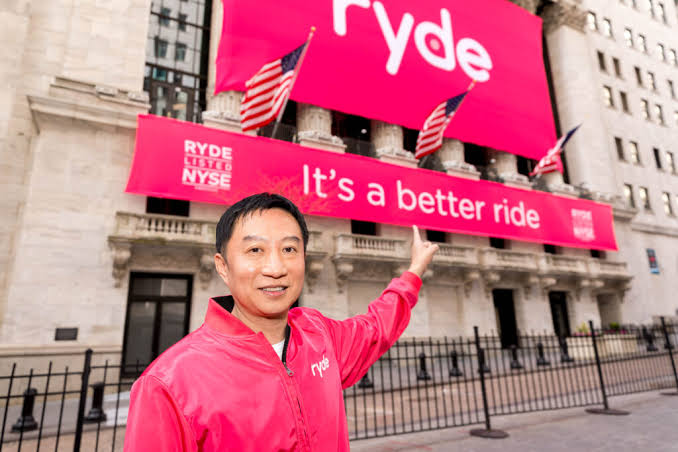
Most companies that announce a move into artificial intelligence lead with the size of the opportunity. The more useful question for a reader is usually smaller and plainer: what has actually been agreed? That question sits at the center of today’s news from a Singapore ride-hailing company that wants to add GPU computing and data centers to a business built on carpools, taxi bookings and deliveries.
Ryde Group Ltd (NYSE American: RYDE) said it has signed a non-binding term sheet with Golden Concord Group Limited to acquire a minority equity stake in Multi Genius Limited, a Golden Concord subsidiary. The indicative value of the transaction is up to $18 million. Multi Genius, through its own subsidiaries, is developing what it calls an energy-backed digital infrastructure platform aimed at artificial intelligence and high-performance computing. [Ryde Multi Genius Release]
Alongside the term sheet, Ryde signed a memorandum of understanding (MOU) with GCL Digital Technology (Holdings) Limited, a subsidiary of Multi Genius. The two companies plan to explore working together in three areas: cybersecurity services, GPU computing infrastructure, and the operation and maintenance of data centers. A GPU, or graphics processing unit, is the kind of chip that now does most of the heavy lifting in training and running AI models, which is why access to them has become so valuable.
A term sheet is not a purchase agreement. Ryde still plans to carry out legal, financial, tax and regulatory due diligence on Multi Genius and to obtain an independent valuation. Any deal would then need definitive agreements, board approvals, and sign-off from regulators and the stock exchange. The company has not said what percentage of Multi Genius it would own, or whether it would pay in cash, new shares or a mix of both. The release does note, in its standard risk language, that any issue of new Class A shares could dilute existing shareholders.
The MOU is looser still. It does not require either side to buy, supply or procure any minimum amount of hardware, computing capacity or services, and any actual commercial work would need separate contracts. Ryde also said the stake and the MOU are being evaluated independently, so neither one depends on the other going ahead.
Scale helps put the numbers in context. With Ryde’s stock market value at roughly $204 million, an $18 million investment would equal about 9% of what the entire company is worth. That is a meaningful amount for a business of this size, which is why the payment method will likely be one of the first things investors look for if a definitive agreement appears.
This is not Ryde’s first step in this direction. On October 23rd, it signed a non-binding term sheet to acquire an initial 10% stake in OneT Solutions, a Singapore company it was already working with on cybersecurity, AI and data center projects. On November 5th, it signed an MOU with Dimension AI to explore a GPU-as-a-Service platform with an indicative value of up to $278 million. The companies described that figure as Dimension AI’s early estimate of the platform’s total capital cost, not as contracted revenue for Ryde. Ryde says today’s proposed investment follows a transformation plan it calls Ryde 2.0, which treats AI, computing infrastructure and cybersecurity as possible areas of growth.
The timing is also unusual, since these announcements arrive during a rough stretch for AI stocks. On November 5th, a broad selloff erased about $2.5 trillion in market value from the Nasdaq 100 in a single session, with chipmakers among the hardest hit. Ryde’s shares moved the other way, climbing from about $0.64 at the start of November to $1.10 on November 18th.
A spokesperson for Ryde said the company is following a disciplined evaluation process, and Yang Yong, a director at GCL Digital, said his company welcomed Ryde’s interest. Those statements describe intent. The real test comes later, when Ryde either signs binding agreements with firm prices, payment terms and commitments, or lets the talks fade. Until then, Ryde’s AI ambitions exist mainly on paper, and that paper is clearly marked non-binding.
