
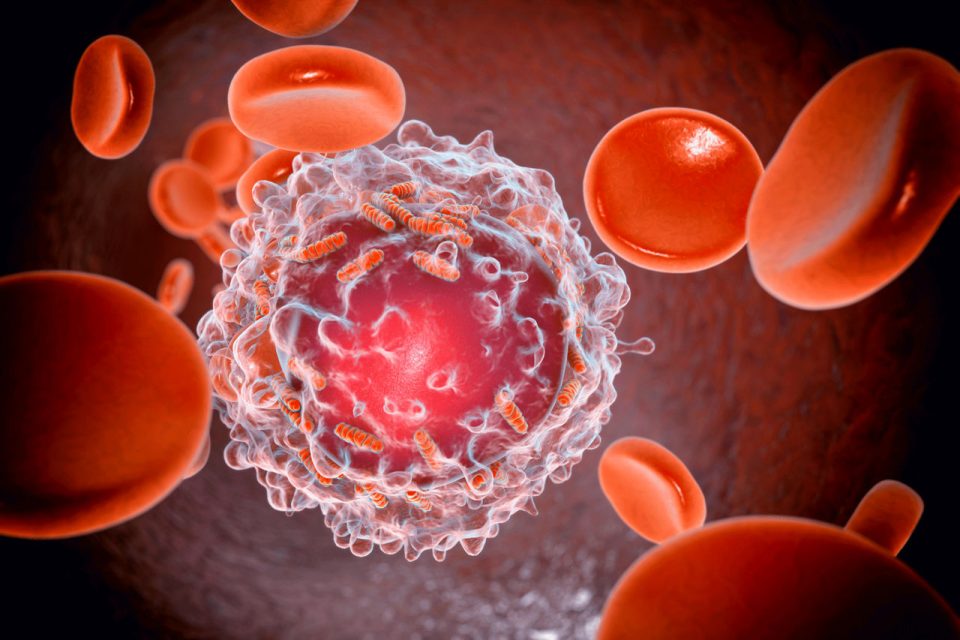
Acute myeloid leukemia, usually shortened to AML, is a cancer that begins in the bone marrow, the soft tissue inside bones where blood cells are made. In AML, immature white blood cells multiply out of control and crowd out the healthy cells the body needs to carry oxygen, fight infection and stop bleeding. It moves fast, which is why doctors call it “acute.” About 22,720 people in the U.S. are expected to be diagnosed with AML this year, and roughly 11,500 are expected to die from it. That makes it a fairly uncommon cancer, about 1.1% of new cases, but an unusually deadly one.
The long-term picture is sobering. Among people diagnosed between 2015 and 2021, only 32.9% were alive five years later, the lowest five-year survival rate of the blood cancers tracked by Blood Cancer United. By comparison, some other blood cancers see survival rates above 90%.
Part of the problem is what happens after treatment seems to work. Intensive chemotherapy can push AML into remission, meaning doctors can no longer find leukemia in the blood or bone marrow. A small number of cancer cells often survive, though, and relapse is common. Once the disease comes back, the odds get worse. In one large study of patients who relapsed, median survival after relapse was just 11 months.
For patients who reach a second remission, the best chance at lasting control is usually a stem cell transplant from a donor. Many patients can’t have one because they are too old, too frail, or have no suitable donor. For them, the choices mostly come down to careful monitoring or lower-intensity drugs, while hoping the cancer stays away.
That gap has drawn interest in cancer vaccines. Instead of attacking cancer cells directly, a therapeutic vaccine trains the immune system to recognize a marker on leukemia cells and keep hunting for them. One promising marker is a protein called WT1, which is highly expressed in more than 80% of AML patients and is linked to relapse.
WT1 is the target behind galinpepimut-S, or GPS, the lead drug candidate at SELLAS Life Sciences Group, Inc. (NASDAQ: SLS). The company’s shares opened up over 300% before retracing in early trading today after it said GPS met the main goal of its late-stage REGAL trial. GPS is an off-the-shelf vaccine built from four pieces of the WT1 protein, and it is licensed from Memorial Sloan Kettering Cancer Center.
REGAL enrolled 126 adults with AML who were in a second or later remission and could not undergo a transplant. Half received GPS as maintenance therapy. The other half got whatever their doctor judged to be the best available treatment, ranging from simple observation to drugs such as venetoclax or low-dose chemotherapy. Patients on GPS lived a median of 24.0 months, compared with 14.7 months in the comparison group. That works out to a 41% lower risk of death, expressed as a hazard ratio of 0.59. Side effects were mostly mild, usually reactions at the injection site.
SELLAS plans to meet with the U.S. Food and Drug Administration and is aiming to submit a Biologics License Application, the formal request to market a biologic drug, in the first half of 2027.
A few questions remain. The trial was open-label, so patients and doctors knew who was getting the vaccine. The result carried a p-value of 0.035, which clears the usual bar for statistical significance but not by a wide margin. Secondary results, such as how long patients stayed leukemia-free, haven’t been released yet, and the company says full data will be presented at a major medical meeting.
Money is the other variable. SELLAS reported $134.7 million in cash as of September 30th. Preparing a filing and getting ready to sell a drug is expensive, so investors will be watching whether the company sells new shares while its stock is high or brings in a larger partner.
For a disease where survival gains have been hard to win, an extra nine months for patients without a transplant option is a meaningful step. What happens next depends largely on how the FDA reads the complete dataset.
