
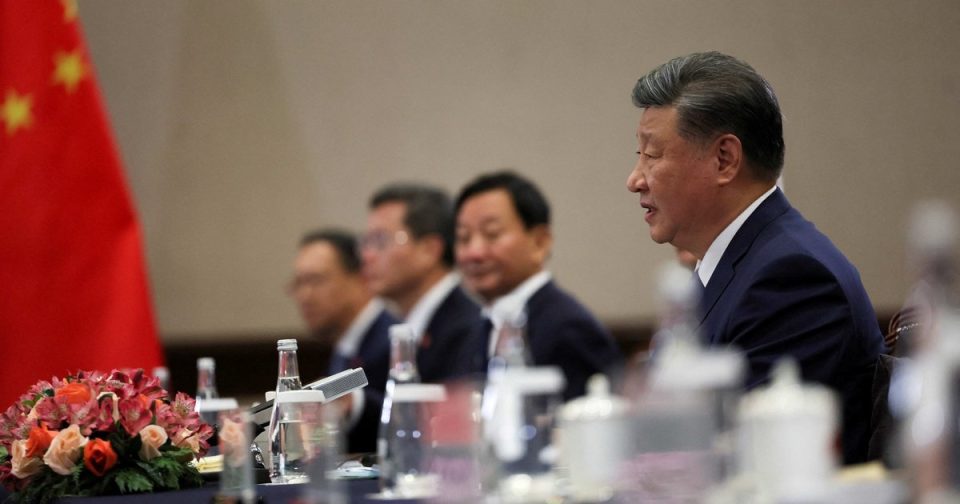
President Donald Trump remains optimistic about securing a major trade agreement with Chinese President Xi Jinping, signaling progress in what has been a challenging and often contentious relationship between the U.S. and China. Speaking at the White House while hosting Australian Prime Minister Anthony Albanese yesterday, Trump expressed confidence that a fair deal was within reach despite recent escalations in trade tensions and rare earth export restrictions imposed by China. The two leaders are expected to meet soon on the sidelines of the Asia Pacific Economic Cooperation (APEC) summit in South Korea, which is scheduled for later this month. Although Beijing has not officially confirmed Xi’s attendance, Trump indicated that discussions would take place in the coming weeks in South Korea, reinforcing the possibility of a direct meeting between the two presidents.
The backdrop to these talks includes conflicting moves from both sides. China’s expanded controls on rare earth minerals, critical in producing smartphones, electric vehicles, and military technology, have prompted Trump to threaten a sharp increase in tariffs on Chinese goods. Currently, China faces tariffs totaling approximately 55-57%, with Trump warning of a potential rise to 155% from November 1st if no agreement is reached. Despite the hardline approach, Trump emphasized that his rapport with Xi Jinping would facilitate negotiations to avoid further economic disruptions and aimed to resume purchases of American farm products like soybeans, which have been heavily affected by the trade conflict. The consequences of these tensions have ripple effects across global markets, with soybean futures rising on the prospect of renewed Chinese demand.
President Trump also downplayed fears of a military confrontation between China and Taiwan, a subject anticipated to come up during the meeting. He expressed confidence in the strength and superiority of the U.S. military to deter any aggressive moves from Beijing, suggesting that China does not wish to escalate the situation. This diplomatic tone reflects an effort to balance firm trade policies with an avoidance of broader geopolitical conflicts during the upcoming talks.
Looking ahead, Trump announced plans to visit China early next year following an invitation from Beijing, suggesting a long-term commitment to improving bilateral relations. His trip to Asia will include stops in Malaysia, Japan, and South Korea, where trade discussions and securing foreign investments are key priorities. The build-up to these negotiations demonstrates the high stakes involved; failure to reach an agreement could further destabilize the largest two economies and unsettle global markets already sensitive to tariff policies and supply chain shifts.
This delicate dance between tariffs and diplomacy underscores the complexity of U.S.-China relations in 2025. The planned meeting at APEC in South Korea is more than a formal encounter; its outcome will influence not just economic policy but the broader geopolitical landscape. Trump’s readiness to finalize a deal, coupled with his assertion that both nations will benefit, highlights the importance of this summit. Whether these optimistic views are realized remains to be seen, but the engagement signals a moment of potential de-escalation following months of tension.
