
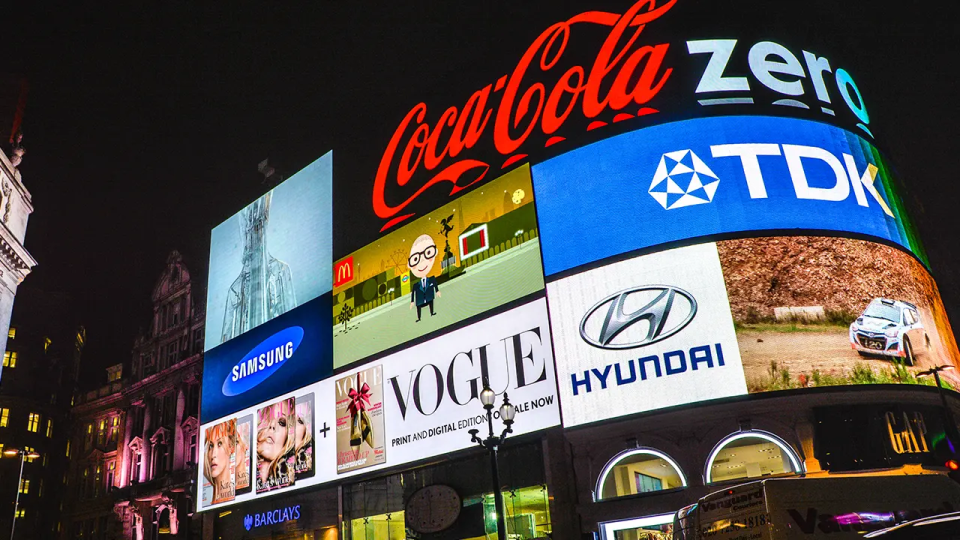
Take a look at the ad world right now, it’s buzzing. Every year, brands spend eye-watering sums to stay visible, but 2025 is shaping up to outdo even the boldest forecasts. Global ad revenue is on track to hit roughly $1.14 trillion, beating expectations despite sluggish economies and ongoing trade tensions. It’s a reminder that this industry tends to thrive when it leans on innovation.
The real engine of that growth is digital. Online platforms are expected to take about three-quarters of all ad dollars, with spending in the neighborhood of $777 billion. Retail media, those ads you see while shopping online, has become a star performer, possibly reaching $175 billion this year. Streaming and connected TV are seeing strong double-digit jumps, while traditional broadcast slips a bit as audiences keep shifting screens. Advertisers are clearly chasing precision over volume, and data-driven tools make that possible.
Zooming in on the U.S., the biggest single ad market, spending could approach $400 billion, nearly 40% of the world total. Growth of around 5–6% might not sound spectacular, but it’s outpacing the wider economy. Much of that is thanks to digital’s continuing pull, plus a rush of brands looking to secure placements ahead of possible new tariffs. China remains the runner-up, crossing $220 billion, though its pace has eased a little under similar pressures. Across both giants, the trend is the same: search, social, and programmatic ads keep winning, while radio and outdoor hang steady.
Not everyone’s moving in sync. The Asia-Pacific region continues to surge, up about 6% to more than $360 billion, led by India, which is close to 8% growth on its own. Europe, the Middle East, and Africa hover around 4–5%, with the U.K. outperforming most neighbors. Latin America brings some spark too, Brazil’s double-digit climb shows the region’s creative energy. The global pattern is clear: local economies may wobble, but digital momentum rarely pauses.
Artificial intelligence is the quiet driver behind it all. Smarter targeting tools are already deciding where most ad dollars go, and by 2027, nearly 80% of total spending could be guided by algorithms. That precision helps advertisers make the most of their budgets even as costs rise from supply-chain or policy disruptions. In the U.S., after the spike from 2024’s political cycle, ad spending looks set to stay on a steady digital growth path, averaging around 6% depending on who you ask.
When you step back, 2025 tells a simple story: advertising’s not just growing, it’s evolving. Digital dominates not by chance but by adaptation. Even with economic uncertainty and slower momentum than last year’s pop, the industry’s trillion-dollar run feels secure. Advertising, as ever, follows the audience, and the audience now lives online.
