
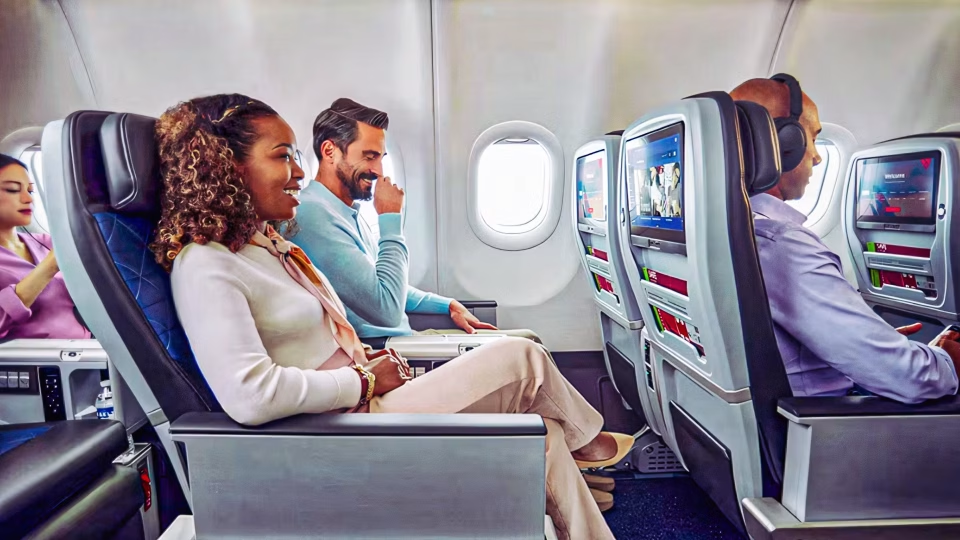
Airlines today face a simple math problem when filling their planes. Every inch of cabin space costs money to operate, but not every seat brings in the same cash. Over recent years, carriers have noticed that passengers willing to pay extra for comfort fill flights reliably, even when fuel prices climb. So they keep tweaking layouts to favor those higher fares over basic coach spots. This shift shows up across the industry, from big networks to budget operators.
Delta Air Lines, Inc. (NYSE: DAL) leads with bold numbers. Premium revenue hit nearly $5.8 billion last quarter, up 9% from before, while main cabin sales dipped 4%. Company leaders now expect those upscale tickets to pass economy totals this year. To handle the rush, Delta added 44 first class seats to select Airbus A321neos starting in May, more than double the usual count. They call it a stopgap until full flat beds arrive, but it proves demand runs hot.
United Airlines Holdings, Inc. (NASDAQ: UAL) matches that energy on key routes. Their Airbus A321neo Coastliners target transcontinental hops like New York to California. Each packs 20 Polaris lie flat beds, all with aisle access, plus 12 premium economy and 36 extra legroom chairs. They cut three rows to add a snack bar, leaving fewer standard spots than before. These start flying this summer, reaching 40 planes by 2028. United also plans similar setups on A321XLRs for Europe and Brazil, and a seven seat first class on CRJ 200 regional jets, dropping total capacity from 51 to 41 seats.
JetBlue Airways Corporation (NASDAQ: JBLU) brings its own twist to domestic premium. They pioneered lie flats on narrow bodies years ago and now prep recliner style first class for A220s, A320s, and A321s by mid 2026. Front rows gain 12 such seats, with economy pitch tightening slightly to make room. This builds on their reputation for better coach experiences while chasing upscale dollars.
Southwest Airlines Co. (NYSE: LUV) broke tradition last year by adding extra legroom rows to Boeing 737s, some offering up to five inches more space. Famous for uniform seating across cabins, they now let passengers buy those upgrades, blending their no frills model with revenue add ons.
Low fare carriers join in too. Spirit Airlines launched Big Front Seats in 2024, wider leather chairs in a 2 2 setup up front with pre recline and no middle seats. Bundle it via Go Big fares for bags and perks, and it draws steady payers. Frontier Group Holdings, Inc. (NASDAQ: ULCC) plans first class style seats by late 2025, swapping front rows for spacious options plus loyalty upgrades.
This pattern stems from steady demand. United’s commercial chief said premium outpaced coach in the first quarter, with main cabin gaining too. Fares tell the story: Newark to San Francisco coach runs $423, but Polaris hits $5,556 on a 757. Globally, airlines commit over $20 billion to premium cabins by 2027, claiming 40-60% of revenue from under 20% of seats. Supply chains strain, delaying planes as seat makers catch up.
Economy feels the pinch. Pitches shrink or rows vanish, but choices multiply with legroom buys or bundles. Regional flights slim down too, prioritizing front revenue. Carriers fill loads while lifting average fares per passenger.
Travelers notice. More book upgrades early, forcing airlines to rethink fleets and routes. What began on long hauls now hits short hops. Budget flyers pay more for basics or opt for perks, while premium grows reliable.
The industry leans into what works. Strong bookings hold despite costs, and cabins evolve to match. Airlines that nail this balance keep planes full and profits climbing.
