
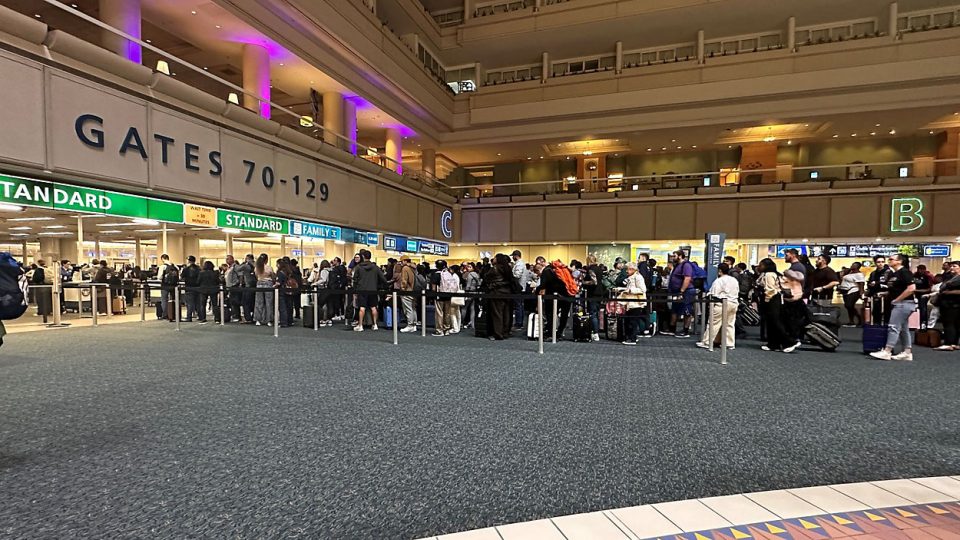
For airlines, the strain of a busy spring travel season is showing, especially as business flyers miss connections and meetings. Corporate schedules bend under the weight of flight disruptions, and companies begin rethinking their travel plans to limit uncertainty.
A partial government shutdown compounds the problem. With the Department of Homeland Security operating on limited funds, the Transportation Security Administration is under pressure. Its 50,000 agents, responsible for screening passengers and luggage at more than 440 U.S. airports, are still required to work, just without pay. After a month of this, morale is fraying. Absences have doubled in some airports, and resignations are rising. A shorter shutdown last year saw a 25% jump in departures; this one already feels worse as spring crowds swell.
At Hartsfield–Jackson Atlanta International, the world’s busiest airport, lines stretch for hours. On a typical Tuesday, three-hour waits mean missed flights for more than one in ten travelers. Houston Hobby saw queues topping three and a half hours on Sunday. With spring break in full swing, airlines expect 171 million passengers between March and April, a four percent increase from last year as families head south and business travelers crowd terminals.
Weather only amplifies the chaos. Storms across the Midwest grounded over 3,400 flights yesterday, with strong winds even toppling structures in Missouri. When schedules are tight and staffing thin, normal delays swell into full-day disruptions.
Airlines are sounding the alarm. Groups like Airlines for America are urging Congress to act, warning that sold-out schedules are at risk. Passengers are venting online, one viral video shows a family still waiting long after their boarding time. For executives, the damage goes beyond inconvenience: one delay cascades into missed calls, postponed meetings, and lost deals. With billions spent annually on corporate travel, even small disruptions ripple through balance sheets.
Major carriers such as Delta and United report the heaviest impacts at their hubs in Atlanta and Chicago. Their stock prices dip with rising cancellations, and investors brace for softer first-quarter earnings. Regional operators, which feed into big carriers, face the same gridlock but with fewer resources. Even cargo flights, critical for supply chains, aren’t immune to ripple delays.
Seasoned travelers are adjusting. Many now arrive three hours early for domestic flights and up to five for international ones. TSA PreCheck and CLEAR memberships can ease the pain, and real-time apps like FlightAware help track security wait times. Global Entry programs, briefly disrupted at the start of the shutdown, are back online but still glitchy. Packing light helps speed things up.
Meanwhile, airports are scrambling for fixes. Some have added screening lanes or brought in private security contractors. But long-term solutions depend on Washington, where funding disputes and immigration debates leave budget bills stalled.
The economic fallout is spreading. Supply chains are slowing as parts miss factory deadlines and perishables spoil in transit. E-commerce giants like Amazon face air-freight bottlenecks that cascade to the ground network. Tourism also suffers, hotels around major hubs empty out, conventions cancel, and cities such as New Orleans lose millions in visitor revenue each day the shutdown drags on.
Even unrelated mishaps underscore the system’s fragility: JetBlue, for instance, grounded its entire fleet on March 10 due to an IT failure. And while not shutdown-related, it served as a reminder of how quickly disruptions can cascade.
Past shutdowns offer perspective. The 2018–2019 standoff, which lasted 35 days, saw similar TSA struggles. Congress eventually restored funding, but departures left agencies short-staffed for months. Today’s situation may prove even harder to recover from.
Still, travelers adapt. Business flyers build in buffers, track delays daily, and favor flexible tickets. The air travel system bends under stress but rarely breaks completely. Some observers point to high-speed rail or remote work as alternatives, but for now, planes remain the backbone of American mobility.
Through it all, TSA agents keep showing up. They screen passengers with professionalism, even as paychecks lag and bills mount. Their resilience, along with the public’s patience, will determine whether this season’s turbulence is a temporary crisis or a lasting scar.
