
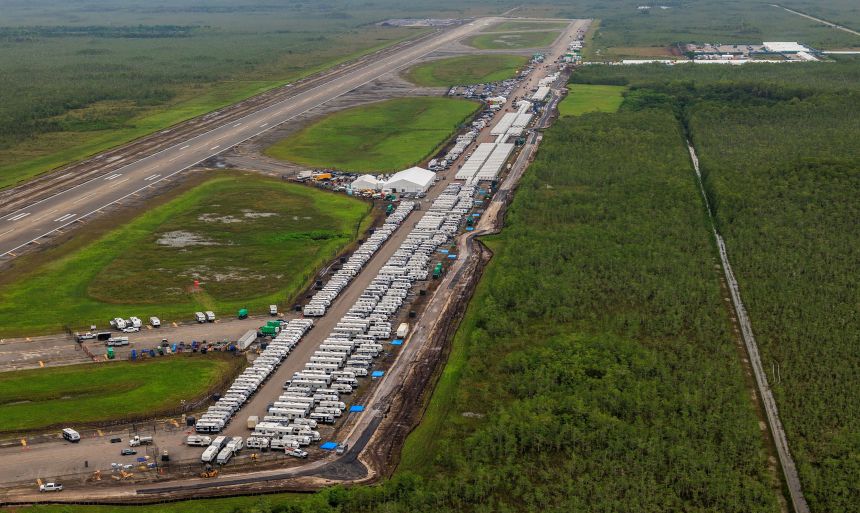
Florida’s migrant detention center known as “Alligator Alcatraz” in the Everglades is facing a significant legal setback after a federal judge ordered its closure and banned any new detainees or construction at the site. The facility, a controversial component of the Trump administration’s immigration enforcement strategy and heavily supported by Florida Governor Ron DeSantis, has been the subject of intense debate over its environmental impact and operational conditions. Despite mounting legal challenges, Governor DeSantis insists that the state’s mission on immigration enforcement will continue, even as the future of Alligator Alcatraz remains uncertain.
Alligator Alcatraz was established in mid-2025 in a remote part of the Florida Everglades, transforming an unused training airport into a sprawling detention complex with large tents and chain-link fencing, designed to house around 5,000 migrants. The facility drew sharp criticism from environmental groups who say its location within a designated UNESCO World Heritage Site has caused irreversible harm to the fragile ecosystem, including its alligators, crocodiles, pythons, and other endangered wildlife. A federal judge, District Court Judge Kathleen Williams, issued an 82-page ruling ordering operations at the center to shut down within 60 days and prohibiting any further construction or expansion, citing violations of environmental laws and irreversible damage to the Everglades. The ruling specifically required dismantling generators, gas, sewage, and other waste facilities at the site, effectively crippling the center’s ability to continue functioning.
Judge Williams, appointed by former President Barack Obama, cited historical efforts to preserve the Everglades environment and warned against exploiting the protected wetlands. The decision represents a significant legal loss for both the Trump administration and Florida state officials who backed the project. Environmental advocates hailed the ruling as a victory for conservation and compliance with environmental legislation. Meanwhile, Florida and the federal government have promptly filed appeals to overturn the injunction, with state officials hoping to resume operations or shift migrant processing efforts elsewhere.
Governor Ron DeSantis has publicly rejected the court’s environmental concerns, arguing that Florida does not need to complete a federal environmental impact statement when conducting business on state-owned land. He reaffirmed his administration’s commitment to immigration enforcement and assured that the state will continue its efforts to deport migrants, even if Alligator Alcatraz itself is shuttered. “DHS hasn’t sent us anymore since that judge ruled, but this week, we’re applying to have that decision stayed,” DeSantis said during a press event. The governor also emphasized that Florida will be reimbursed by the federal government for the hundreds of millions of dollars the state has spent to establish and operate the facility, claiming that the expenses are justified as part of the state’s efforts to reduce costs associated with illegal immigrants accessing medical care and other services.
Independent estimates indicate Florida has committed more than $350 million in contracts related to Alligator Alcatraz, with annual operational costs projected at around $450 million. The expense has stirred criticism and concerns about the long-term cost-effectiveness of the facility, especially given the legal hurdles it faces. Florida taxpayers may be on the hook for substantial financial losses if the facility remains closed, with additional costs to restore the land if the site cannot be used for detention purposes.
As Alligator Alcatraz faces shutdown, Governor DeSantis has revealed plans for new immigration detention facilities to complement the state’s hardline immigration stance. He mentioned the upcoming “Panhandle Pokey” facility located in northwestern Florida, as well as another center nicknamed the “Deportation Depot” in Baker County near Jacksonville. DeSantis expressed confidence that the state’s immigration enforcement mission would continue unabated despite court rulings, saying, “We’re not going to be deterred; we’re totally in the right on this. But I would also note, because of the success of Alligator Alcatraz, there’s demand for more.” The governor’s legal team is actively pursuing appeals to overturn the judicial decisions blocking Alligator Alcatraz’s operations.
The controversy surrounding Alligator Alcatraz highlights broader tensions between the goals of immigration enforcement and environmental protection. While supporters like DeSantis frame the facilities as necessary to uphold immigration laws and manage migrant populations, critics focus on the humanitarian and ecological costs of such detention centers, especially when placed in sensitive natural areas. The battle over the future of Alligator Alcatraz is unfolding in federal courts and public opinion, reflecting the complex and often contentious nature of immigration policy in the United States.
