
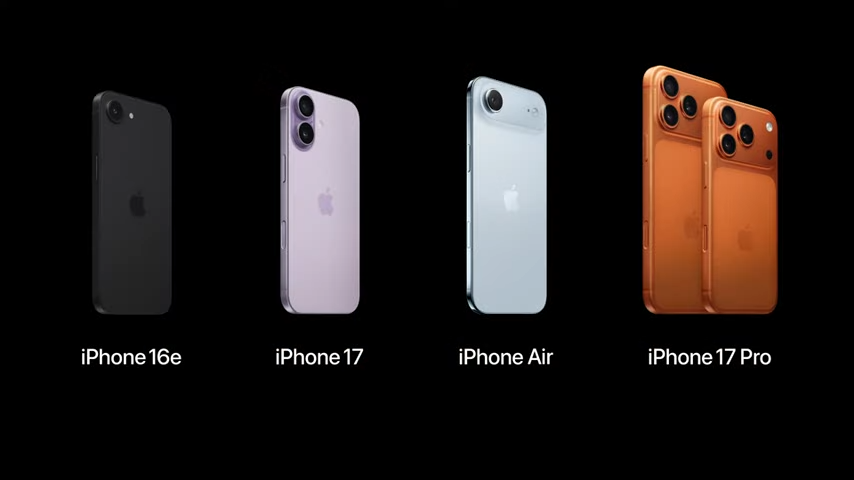
Apple (NASDAQ: AAPL) introduced its latest iPhone lineup today, spotlighting the new iPhone Air, which is now the slimmest iPhone ever made alongside the iPhone 17 and iPhone 17 Pro models. The company held an event to showcase these devices, highlighting innovations in design, performance, and camera technology without increasing prices despite ongoing tariff pressures that have affected prior iPhone costs.
The iPhone Air is notably thin at just 5.6 millimeters, featuring a lightweight yet strong titanium frame Apple calls “space-grade.” The design uses a high-gloss mirror finish and incorporates a precision-milled “plateau” on the back to neatly house multiple cameras, the speaker, and Apple silicon chips. Apple emphasized the durability of the phone, saying the rear is now protected with a new Ceramic Shield 2 glass that offers three times better scratch resistance compared with previous models. The front cover also uses this technology, making the phone more resilient than any iPhone before.
Besides the physical makeover, iPhone Air boasts a large 6.5-inch Super Retina XDR display with ProMotion technology capable of refresh rates up to 120Hz, offering smooth scrolling and vivid visuals. Under the hood, the phone runs on Apple’s latest A19 Pro chip, which leads to improved speed and power efficiency. The internal design optimization and software improvements enable the iPhone Air to deliver an all-day battery life despite the slim form factor.
Apple also unveiled improvements in the camera system with a 48MP Fusion Main camera that simulates the effect of four lenses merged into one, and an innovative 18MP Center Stage front camera, which enhances selfie and video call experiences.
Pre-orders begin on September 12th, with availability set for September 19th. The new iPhone Air comes in four colors: space black, cloud white, light gold, and sky blue.
The company’s broader new iPhone 17 lineup includes the iPhone 17 and iPhone 17 Pro models. These also feature the A19 Pro chip and advanced camera systems with up to three 48MP Fusion cameras in the Pro model, including ultra-wide, telephoto, and main sensors, providing innovative video features for content creators.
One of the most intriguing aspects this year is how Apple managed to keep the prices stable amid the growing tariff pressures on its products. Over the last year and a half, various tariffs imposed by the U.S. government on goods imported from China and India, where Apple manufactures much of its iPhone inventory, have raised costs. Analysts had warned of significant price hikes, with some estimates projecting iPhone prices could increase by up to 40% or more if tariffs were fully passed on to consumers.
Prior tariffs have included a 25% tariff on smartphones imported from China, plus additional levies that pushed the total tariff burden to over 50% in some instances. Apple has also faced tariffs on components and parts sourced internationally. These would presumably have raised the retail price of the new models significantly.
However, Apple chose to absorb much of these increased costs or find ways to mitigate them, avoiding a major price rise this year. The decision to introduce the iPhone Air with a competitive price, similar to previous models, may reflect a strategic move to maintain market share and smooth customer adoption despite these external pressures. This approach contrasts with early 2025 forecasts that had expected iPhone prices potentially to climb near or above $2,000, depending on model and storage size.
Apple’s ability to keep prices relatively stable stems partly from its efficiency improvements in chip manufacturing and design, plus the effect of shifting some production to India. The company also benefits from volume and scale economies, which help offset tariff costs.
This year’s iPhone announcements underscore Apple’s ongoing innovation rhythm while navigating a challenging international trade environment. Customers looking for a fresh new option now have the iPhone Air, which combines elegance, power, and durability in a way no previous iPhone has.
Provided pricing details for the iPhone Air and iPhone 17 models were largely aligned with last year’s base prices, implying that tariff-driven cost increases were not passed through significantly at retail launch. This is a notable outcome for consumers facing an environment where many electronics prices are rising broadly.
For those considering an upgrade or shopping for the latest iPhone, the combination of cutting-edge performance from the A19 Pro chip, advanced camera technology, and the sleek titanium design of the iPhone Air offers an appealing package without immediate tariff-driven price shocks.
