
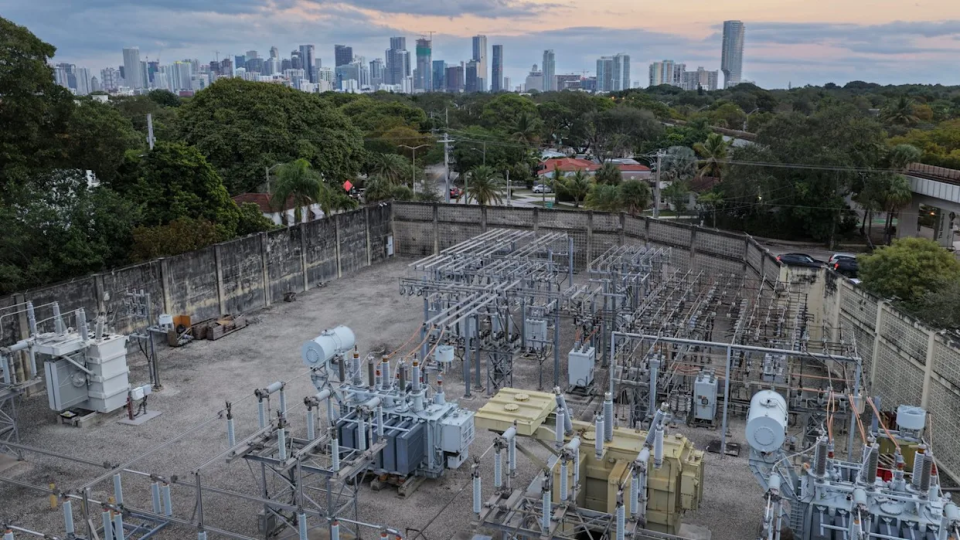
Power costs in the PJM Interconnection region have climbed sharply in recent years, driven largely by the rapid growth of data centers that support artificial intelligence and cloud computing. PJM Interconnection operates the largest grid in the U.S., serving over 65 million people across 13 states and Washington, D.C., including places like Pennsylvania, Virginia, New Jersey, and Maryland. Homes and businesses there now face potential rate hikes of up to 60% over the next five years, with residential charges possibly rising 30% by 2030, according to consulting firm ICF analysis.
These increases stem from PJM’s capacity auctions, where prices jumped to $329 per megawatt-day in the latest round, a roughly 1,000% surge from two years earlier. Data centers account for nearly all the new demand PJM expects by the end of the decade, over 90% of its projected 32,000 megawatts of peak load growth from 2024 to 2030. In practical terms, this means utility bills for customers like those served by Pepco in Washington, D.C., rose an average of $21 per month starting in June 2025, with about half tied directly to these auction spikes. Transmission costs add another layer, as utilities passed on $4.3 billion in 2024 alone to connect data centers, mostly in northern Virginia, to the grid.
The story unfolds like this: tech companies build massive facilities that run nonstop, consuming power equivalent to small cities. Northern Virginia hosts the world’s largest cluster of these centers, pulling in energy for AI training and data storage at a pace that outstrips new supply additions. Capacity auctions secure payments to power plants for availability during peak times, but when demand forecasts from data centers dominate, prices soar and those costs flow straight to consumers. Experts at the University of Pennsylvania note that other demand sources remain stable, leaving data centers as the clear driver. State lawmakers in Delaware and Maryland have raised alarms, arguing everyday ratepayers should not subsidize this growth without protections in place.
Utilities beyond PJM feel ripples too, though the Mid-Atlantic bears the brunt. Nationally, data center power use could triple by 2030, straining grids everywhere from Texas to Georgia, but PJM’s auctions set a stark example with an 82% revenue jump in one year alone, adding billions to bills. Consumer advocates warn of $163 billion in extra charges through 2033 if trends continue, pushing average families to pay around $70 more monthly by 2028. Short-term hikes of 1.5% to 5% start hitting in June 2026, just for capacity, before infrastructure upgrades pile on. This setup creates a cycle where tight supply signals build more plants, yet consumers foot the immediate tab.
One idea floating to ease the pressure involves President Donald Trump urging PJM Interconnection to run a special auction. In this setup, tech companies would bid directly on funding new electricity generation, shifting some financial load off households. A White House official shared this with CNBC, framing it as a way to match booming demand with targeted investment. While details remain sparse, it echoes calls from groups like the Natural Resources Defense Council to limit grid purchases for new data centers and offer only interruptible service until they secure their own capacity. Past shifts, like PJM dropping mandatory power rules for data centers, show flexibility exists, but voluntary measures need refinement.
This approach could work by letting market forces align tech growth with power builds, much like how auctions already signal needs but now spread costs unevenly. Tech firms might compete to back plants using natural gas, nuclear, or renewables, speeding additions where demand clusters. Skeptics point out risks if AI hype fades, leaving overbuilt infrastructure and stuck bills, yet proactive bidding might stabilize prices faster than relying solely on utilities. States could oversee to ensure fairness, preventing another round of broad rate shocks.
Data centers transformed how we access information, but their energy appetite now reshapes household budgets in real ways. Families in PJM states see choices narrow as fixed incomes meet rising essentials, prompting tougher talks on who pays for progress. Tech innovation thrives on reliable power, yet balancing that with affordable access calls for creative fixes like targeted auctions to keep the grid humming without breaking the bank. Regulators, companies, and leaders must refine these paths forward to match supply with tomorrow’s needs.
