
Brookfield Asset Management (TSX: BAM.A) has announced plans to invest up to $5 billion to deploy fuel cells from Bloom Energy (NYSE: BE) as part of a strategic partnership aimed at meeting growing demand for reliable onsite power. This announcement has already had a notable impact on Bloom Energy’s stock, which rose as much as 25% in early trading today.
Bloom Energy’s fuel cells provide an alternative to traditional power from electric grids by generating electricity onsite using a solid oxide fuel cell technology. Unlike conventional combustion-based power generation, these fuel cells rely on a high-temperature electrochemical reaction. The process converts fuel, such as natural gas or biogas, into electricity without burning it, resulting in highly efficient, clean power generation that produces very low emissions. The fuel cell’s core component is a solid ceramic electrolyte coated with special inks that act as electrodes. Ambient air enters one side of the fuel cell, while fuel mixed with steam enters the other side. Oxygen ions from the air migrate through the electrolyte to react with the fuel, producing electricity, water, and a small amount of carbon dioxide. Importantly, the process recycles the steam it generates, reducing the need for external water sources, making it much less water-intensive than traditional power plants.
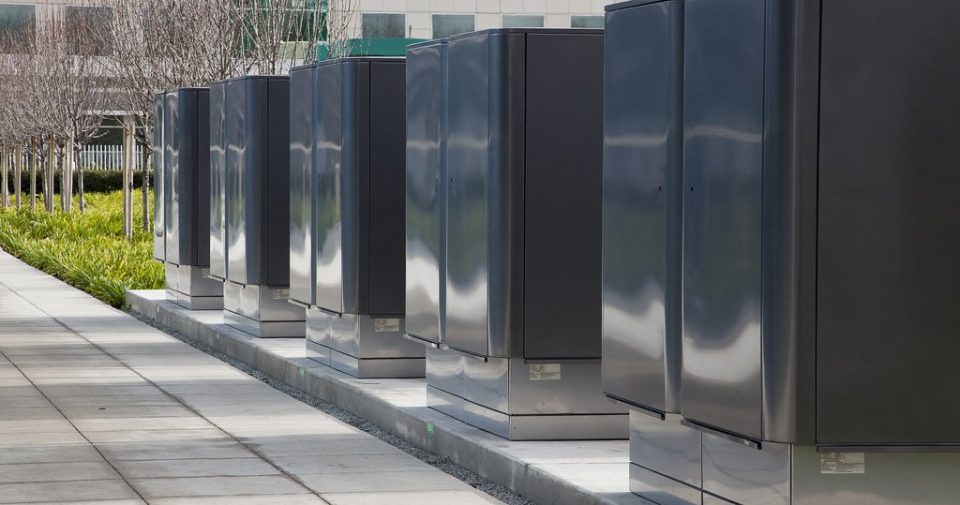
The modular design of Bloom Energy’s fuel cells, often called “Energy Servers” or “Bloom Boxes”, allows them to be scaled from hundreds of kilowatts to tens of megawatts simply by clustering multiple units. Each Energy Server takes up a footprint roughly equivalent to half a standard shipping container, enabling flexible installation directly at the site where power is needed, whether for data centers, manufacturing facilities, or other critical infrastructure. This onsite power approach offers significant advantages in resilience and reliability, as fuel cells do not depend on the regional electric grid and can operate continuously regardless of grid outages or disruptions.
Brookfield’s substantial investment underscores the increasing importance of such decentralized power solutions, especially amid growing concerns about aging grid infrastructure, natural disasters, and the rising cost of electricity. The partnership also aligns with Brookfield’s broader energy transition strategy, focusing on deploying clean and resilient energy technologies at scale.
The $5 billion commitment enables Brookfield to deploy Bloom Energy’s fuel cells rapidly, particularly to meet the needs of emerging artificial intelligence factories and other digital infrastructure that demand constant, high-quality power. This integration of fuel cell technology supports not only energy reliability and cost efficiency but also sustainability goals by reducing greenhouse gas emissions compared to traditional fossil-fuel-based electricity.
Bloom Energy’s technology has been gaining traction over the past decade, with early deployments to companies such as Google, Yahoo, and Walmart. Their units feature longer operational lifetimes, around 10 years, with modularity that improves maintenance and scalability. Industry growth in the fuel cell sector has been impressive, growing at over 44% compounded annually since 2014, and Bloom Energy’s specific technology has seen steady efficiency improvements enabling broader commercial adoption.
The stock market’s strong response, with Bloom Energy shares jumping 25% shortly after the deal announcement, reflects investor confidence in the potential market expansion driven by Brookfield’s financial backing and deployment capacity.
This move could have broader implications for the energy landscape, reinforcing the shift from centralized fossil-fuel power plants toward distributed, cleaner energy sources. Bloom Energy’s platform, while still reliant on fuels like natural gas or biogas, offers one of the highest electrical efficiencies in onsite power generation and significantly lowers water usage, a major advantage in power production sustainability.
The Brookfield-Bloom collaboration highlights a critical turning point where capital meets innovative technology to tackle modern energy challenges. As power demands grow and environmental considerations intensify, fuel cell systems like those from Bloom Energy promise a compelling solution for industries requiring secure, affordable, and low-emission energy options.
