
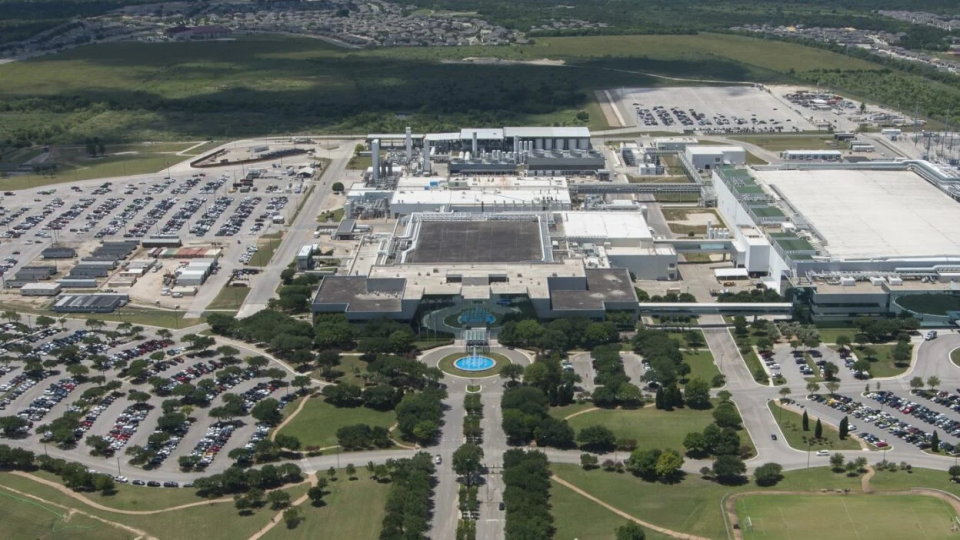
Elon Musk recently shared details about a huge semiconductor project called Terafab. This facility will sit in the Austin area and involve Tesla (NASDAQ: TSLA), SpaceX, and xAI. The goal is to create chips for artificial intelligence systems, robotics projects, and even data centers in space. Musk calls it the largest chip plant ever built, with a price tag between $20 billion and $25 billion.
The plant aims to deliver up to one terawatt of computing power each year once it runs at full capacity. That kind of output would power massive AI training and complex simulations for Musk’s companies. Production might start as early as 2027, but the project begins smaller with an advanced technology fab right near Tesla’s existing Gigafactory in Travis County. There, teams will test equipment and refine chip designs before scaling up.
What makes Terafab stand out is its focus on vertical integration. Musk points out that current global chip production covers only about 3% of what his businesses will need for AI and robotics. By controlling the manufacturing process in house, Tesla, SpaceX, and xAI could cut reliance on outside suppliers. This move promises faster access to custom chips tailored for self driving cars, humanoid robots like Optimus, and satellite networks. Supply chain independence becomes a real business advantage in an industry where shortages have hit hard before.
Now consider how Terafab compares to other semiconductor operations worldwide. Taiwan’s TSMC leads with facilities in Taiwan and new plants in Japan. Its Japan site plans 6 nanometer chips from 2027 at 60,000 wafers per month, but that pales next to Terafab’s targeted scale. TSMC excels at advanced nodes below 5nm for smartphones and servers, yet its total capacity spreads across multiple sites rather than one massive hub.
Samsung in South Korea pushes high bandwidth memory for AI alongside logic chips. Its plants target similar timelines to Terafab, around 2027 for expansions, but costs run high due to energy needs and precision tools. Intel’s Ohio fab, backed by U.S. CHIPS Act funds, costs over $28 billion and aims for production between 2027 and 2028. That project triples U.S. capacity by 2032, reaching 203% growth from 2022 levels, with 28% of global advanced logic share. Still, Intel focuses on mature nodes while Terafab eyes cutting edge 2nm tech for power hungry AI.
GlobalFoundries in the U.S. and Europe serves automotive and specialty chips, avoiding the bleeding edge to keep costs down. China’s fabs, like those from SMIC, add half the world’s new wafer capacity from 2024 to 2028, often at mature nodes with government support. Yet utilization lags, and advanced tech trails leaders by years. Terafab’s one terawatt goal dwarfs most, as typical fabs output far less computing power focused on wafers rather than total performance.
Scale brings big hurdles though. Building a fab costs 10% more upfront in the U.S. than in Taiwan, with operating expenses up to 35% higher due to construction, labor, and energy. Musk lacks deep semiconductor experience, and past timelines have slipped. Skilled workers are scarce; U.S. projects face productivity drops from inexperienced crews. Logistics challenge supply chains too, as raw materials like chemicals and wafers ship from Asia.
Financially, $20 billion to $25 billion covers initial phases, but full scale could climb with equipment sales hitting $156 billion globally by 2027. Government incentives help, yet long term costs may pass to customers without ongoing aid. Technical risks include mastering 2nm processes for AI chips that need both edge computing for robots and high power for data centers.
For Musk’s interplanetary goals, Terafab supports space data centers via Starship missions. Reliable chips mean less earthbound dependence, aiding Mars plans. Business wise, success could reshape how tech giants build hardware, blending AI, autos, and aerospace under one roof.
Terafab tests whether one facility can outpace distributed global networks. If it overcomes the obstacles, Musk’s companies gain a lasting edge in chip supply. The project highlights a shift toward concentrated power in U.S. manufacturing amid rising AI demand.
