
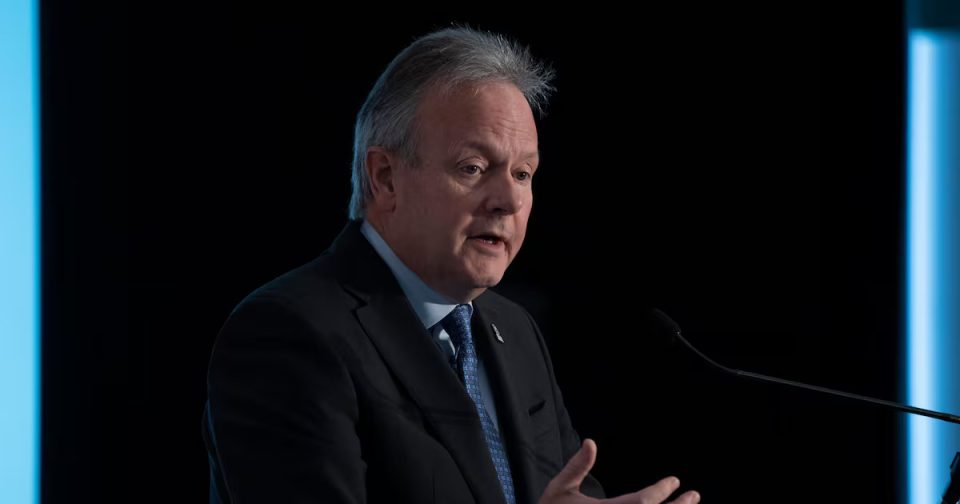
Stephen Poloz, the former governor of the Bank of Canada, is sounding a cautious note about the economic outlook for both Canada and the United States. In recent remarks, he warned that the two countries’ economies are showing signs of slowing down enough to suggest they could be heading toward a recession. Poloz’s perspective draws from his deep experience managing monetary policy in Canada during turbulent times and reflects emerging concerns over a range of economic pressures.
Poloz noted that while neither economy is currently in an outright recession by the strict technical definition, they are “sliding in that direction.” His comments came during a recent interview when he pointed to indicators such as rising unemployment numbers and weakening labor markets as proof the economic backbone of both nations is under strain. In Canada, for instance, the unemployment rate jumped to 7.1% in August following the loss of 66,000 jobs, marking the highest unemployment level since May 2016 apart from the pandemic period. Youth unemployment is even more troubling at 14.5%, double the overall rate, a sign that new technologies like artificial intelligence could be reshaping entry-level job opportunities in sometimes unexpected ways.
Despite these challenges, Poloz acknowledged a modest positive in Canada’s consumer spending. Retail sales have remained relatively steady, buoyed largely by Canadians vacationing domestically and purchasing locally made products. However, he remained skeptical about the sustainability of this support, especially given broader economic uncertainty and headwinds.
Across the border, the U.S. economy has not faced quite the same level of turbulence but is showing signs of slowing momentum. Housing and labor markets have weakened, and while consumption spending is still holding up for now, Poloz warned that this could be the next area to falter. His view suggests that businesses in both countries need to prepare for significant structural changes and possible enduring challenges in the near term.
A key source of ongoing concern is the uncertain trade environment between the U.S. and Canada. Poloz highlighted how tariffs and tariffs-related anxiety have created a chilling effect on investment and business confidence, especially in Canada. He pointed out that Canada’s economy is weaker now than it was prior to the COVID-19 pandemic, lacking the resilience it once had. In contrast, the U.S. has benefited from various tax incentives that have bolstered business investment and productivity, leaving Canada at a competitive disadvantage.
The threat of tariffs persists despite some temporary reprieves, and Poloz expressed worry that these trade tensions could add inflationary pressures that complicate efforts by central banks to maintain price stability. He also cast doubt on the effectiveness of monetary policy strategies such as interest rate cuts if underlying structural issues caused by tariffs remain unaddressed. Poloz said, “Cutting rates in that scenario merely stimulates demand without the supply to fulfill it, potentially leading to higher inflation.”
Looking ahead, the former central banker emphasized the need for policymakers and business leaders to acknowledge the shifting economic landscape and prepare for a world that may not look like the post-pandemic recovery period. The combination of slowing labor markets, uneven investment, tariff uncertainties, and emerging technological impacts like artificial intelligence all create a complex and precarious environment for growth.
While Poloz’s warnings are not new to those watching the economic data closely, his insights carry added weight given his background and ongoing involvement as an advisor in economic matters. His call to readiness and realism provides a useful lens through which to view the challenges facing Canada and the U.S. in the months and years ahead.
