
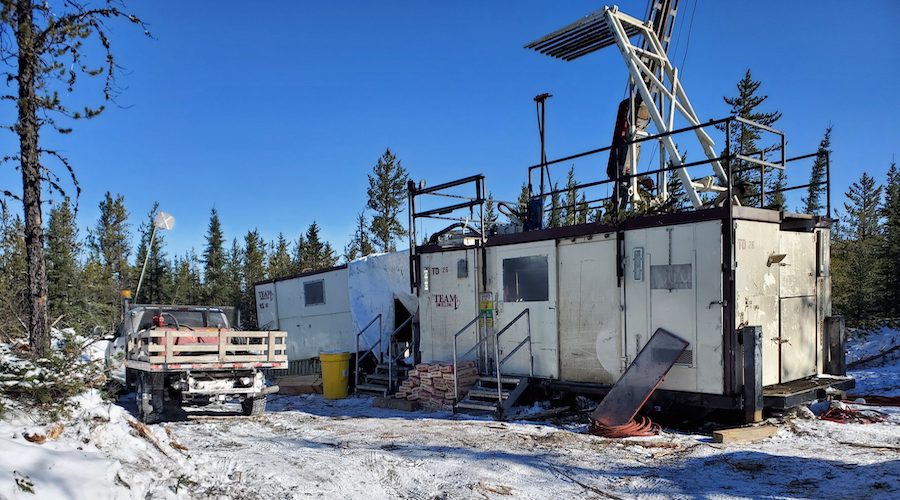
CanAlaska Uranium Ltd. (TSXV: CVV, OTCQX: CVVUF, FSE: DH7) recently announced it has regained full ownership of the Cree East Project in Saskatchewan’s southeastern Athabasca Basin following the termination of a property option agreement with Nexus Uranium Corp. that had been in place since March 2024. This change took effect September 19, 2025, returning the project to CanAlaska unencumbered and 100% owned, freeing the company to advance exploration based on promising drill results from earlier this year.
Situated roughly 35 kilometres west of the Key Lake Mine and Mill complex, the Cree East Project holds strategic significance as a possible uranium supply source to support the nearby milling infrastructure after the anticipated depletion of McArthur River reserves in about 15 years. Historically, the property has been the focus of over $20 million in exploration, including numerous geophysical surveys and 91 diamond drillholes since 2006 by CanAlaska. Under the recent Nexus option agreement, about $3.4 million was invested, generating and advancing several new priority targets that revitalized prospects on a site dormant for more than a decade.
CanAlaska’s CEO, Cory Belyk, expressed satisfaction with the project’s return to CanAlaska shareholders, highlighting the work accomplished under Nexus’s tenure. This work included a thorough review and re-interpretation of extensive historical data, resulting in the identification of multiple high-priority target areas for uranium exploration. Notably, the 2025 winter drill program, the first on Cree East in over ten years, intersected graphitic fault zones with structural reactivation signatures, hydrothermal alteration, and localized uranium mineralization, indicative of promising uranium-bearing hydrothermal fluids moving through the subsurface geology.
The winter program specifically focused on Target Area B, where the team recorded significant hydrothermal alteration, including bleaching, clay, and sooty pyrite within the lower sandstone column across approximately 450 metres of strike length. These alterations and fault structures bear close resemblance to those found at CanAlaska’s successful Pike Zone discovery on its West McArthur project, suggesting geological continuity conducive to uranium deposits. Elevated radioactivity measures in basement rocks and faults further underscore the prospectivity of the area.
Looking ahead, CanAlaska plans to expand exploration beyond Target Area B to additional newly delineated targets labelled Areas A, I, and an untested conductor zone. These targets are oriented around geological features such as graphitic stratigraphy adjacent to a large, rigid banded iron formation. The contrast in rock competency and structural reactivation may provide pathways for uranium-bearing fluids, creating further opportunities for discovery. CanAlaska’s approach integrates the extensive legacy data with fresh geological insights as it aims to push the Cree East Project closer to a significant uranium discovery.
Meanwhile, excitement continues at CanAlaska’s West McArthur project, where the summer 2025 drill campaign targets 15 to 20 new unconformity target intersections along the C10S corridor. The program includes step-out drilling to gauge the extent of the Pike Zone mineralization and ongoing hydrothermal alteration signatures. The summer drill season is expected to conclude shortly, complementing the winter work and underscoring CanAlaska’s broader uranium exploration effort in a key mining district.
CanAlaska Uranium operates with a project generator model, assembling a portfolio of approximately 500,000 hectares of uranium properties primarily within the Athabasca Basin. The company focuses on high-grade uranium exploration, securing properties strategically positioned near major mines and mills under safe and stable Canadian jurisdiction. Its recent successes and fully funded 2025 drill programs reflect a dedicated pursuit of new uranium deposit discoveries amidst a backdrop of tightening nuclear fuel supply needs.
Navigating this transition period, CanAlaska intends to build on the momentum created during the Nexus partnership, leveraging the new target inventory and encouraging drill results to regain exploration momentum at Cree East swiftly. With the project now unencumbered, CanAlaska holds both operational control and the creative freedom to accelerate efforts towards locating new uranium resources vital for the future of Canadian nuclear fuel supply.
