
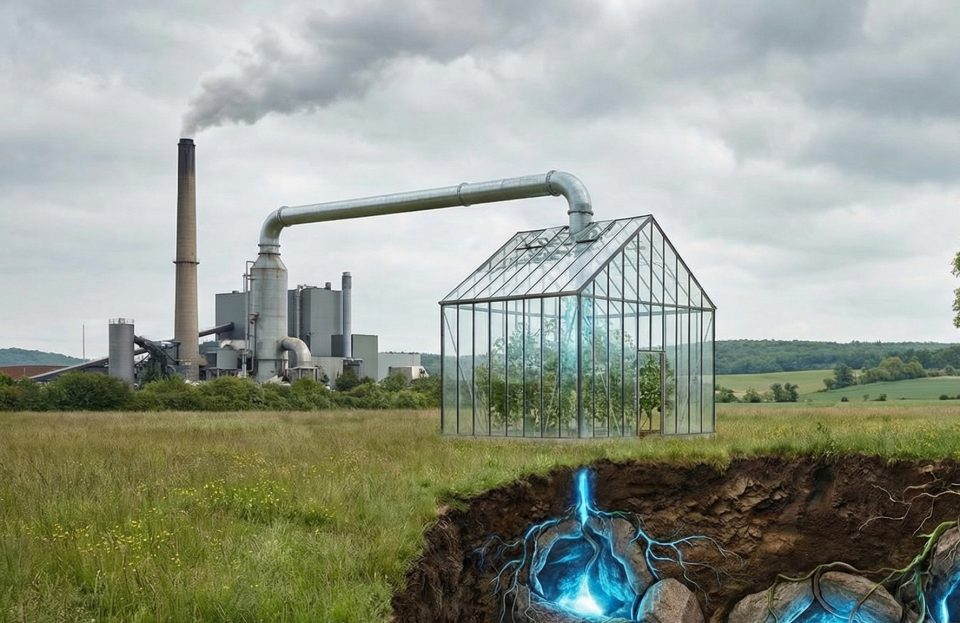
Every year, human activity adds around 37 billion tons of CO₂ to the atmosphere, mostly from burning fossil fuels and industrial processes, according to the latest Global Carbon Budget assessment. Carbon sequestration offers a practical way to pull that excess CO₂ back out or stop it from getting there, then lock it away long term in soils, rocks, or underground storage. The industry is growing rapidly, with one recent forecast projecting that the global carbon capture and sequestration market will expand from about $5.3 billion in 2026 to roughly $20 billion by 2034, an annual growth rate of just over 18%. Growth is led by North America, which accounts for close to 60 percent of the market, underpinned by policy tools such as the U.S. Section 45Q tax credit that pays companies for each ton of CO₂ they permanently store.
This first article in this four-part series introduces the main categories from familiar farming practices to cutting-edge machines, with later parts exploring nature-based methods, engineered systems, and leading companies in more detail.
Carbon sequestration manages excess CO₂, the main gas driving climate change from burning fossil fuels and industrial activity. It works by capturing CO₂ either from the air around us or directly from factory smokestacks, then storing it in places where it stays put, like deep underground rock layers, soils, or even building materials. In North America, governments push this through tax credits like the U.S. Section 45Q program, which pays companies up to $85 per ton of CO₂ stored, creating jobs in construction, engineering, and operations. Over 380 million tons of CO₂ have already gone into permanent storage since 1996, mostly in the U.S. and Canada, showing real-world proof that it functions.
One straightforward category relies on living systems to grab and hold carbon. Trees, soils, and coastal wetlands naturally soak up CO₂ through photosynthesis and store it in roots, leaves, and muddy bottoms. Farmers in the U.S. Midwest and Canadian prairies use practices like planting cover crops or leaving fields untilled to build carbon levels in soil, which also boosts crop yields over time. Restoring mangroves or peatlands along North American coasts, known as blue carbon projects, packs away huge amounts because water keeps the carbon from breaking down quickly. These methods feel familiar since they build on farming and forestry traditions, but they need long-term land commitments to keep the carbon secure.
Another set combines plants with some processing. Take biochar: workers heat leftover crop stalks or wood chips without much oxygen to make a charcoal-like material, then mix it into fields where it stays stable for hundreds of years while feeding soil microbes. Bioenergy with carbon capture, or BECCS, grows crops for fuel, burns them to make electricity, captures the CO₂ released, and pumps it underground. In places like the U.S. Midwest, ethanol plants already test this, turning corn into biofuel while storing the emissions. These hybrids appeal to agribusiness because they create energy sales alongside carbon storage, though scaling them requires steady biomass supplies without competing with food production.
Engineers handle the rest with machines designed for heavy industry. At factories making cement or steel, systems grab CO₂ from exhaust gases using chemicals that bind to it, then compress and inject the CO₂ into rock formations miles below ground. North America leads here with 77 operational sites capturing 64 million tons per year as of late 2025, plus more under construction, driven by policies in the U.S. and Canada. Direct air capture pulls CO₂ straight from the sky using giant fans and filters; companies like Climeworks run plants in places with cheap renewable energy, such as Iceland, though North American hubs aim for massive capacity soon.
Even rocks play a part. Spreading crushed basalt or olivine on farms speeds up a natural reaction where CO₂ turns into solid carbonates, like limestone, over years. Underground, saline aquifers and old oil fields trap CO₂ under impermeable layers, with chemical reactions making it stick permanently. Projects in Texas and Alberta already store millions of tons this way, often linked to oil recovery that pumps CO₂ into fields to push out more crude.
North American companies eye these technologies for compliance with emissions rules and to sell carbon credits, with investments topping $5 billion in direct air capture alone. Carbon sequestration is quickly moving from a niche experiment to a major part of the climate solution toolkit. Across North America, supportive policies and growing investments are helping turn this idea into real projects that pull carbon out of the atmosphere and keep it safely stored. The challenge now is making sure these efforts happen at the scale and speed needed to make a lasting impact, while supporting communities, industries, and ecosystems.
In the remaining articles, we’ll look closer at how businesses are turning nature-based sequestration into measurable projects, how engineered systems are tackling the hardest emissions, and which companies across North America are leading the charge. Together, these pieces explore how carbon capture is becoming not just a climate goal, but a practical path toward a cleaner economy.
