
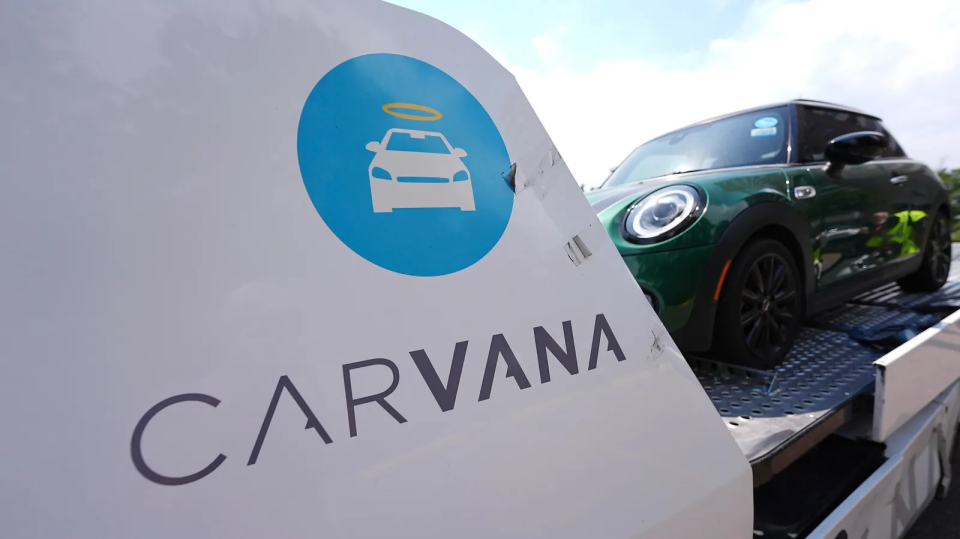
Carvana Co. (NYSE: CVNA) seemed destined for the scrap heap just a couple of years ago, only to roar back with record profits and snag a seat at the S&P 500 table. The online used car retailer, known for its vending machine style delivery and app-based buying, faced brutal headwinds during the post pandemic slowdown. High interest rates crushed demand for big ticket items like cars, while the company grappled with massive debt from its aggressive expansion. By late 2022, Carvana teetered on bankruptcy rumors, its stock plunging over 98% from pandemic highs as losses mounted and operations strained under weak sales.
The turnaround began with ruthless cost cutting and a sharper focus on efficiency. Carvana slashed its workforce, closed underperforming locations, and refinanced debt to buy breathing room. Leadership leaned hard into technology tweaks, like better inventory algorithms and in house reconditioning to trim transport costs. These moves paid off quickly. In 2024, retail sales jumped 33% to 416,000 vehicles, with adjusted EBITDA margins hitting 10%, double what rivals managed. By Q1 2025, EBITDA soared to $488 million, more than double the prior year, pushing margins to a leading 11.5% among public auto dealers. Full year 2024 net debt fell to $6 billion from $8.4 billion in 2022, dropping the debt to EBITDA ratio to a manageable three times.
The market reaction came fast when S&P Dow Jones Indices announced Carvanas addition to the S&P 500. Shares leaped over 20% in a single day as index funds rushed to buy in, a classic passive investing boost that floods newcomers with billions in demand. This inclusion signals institutional trust in Carvanas revival, likely improving liquidity as big players hold long term stakes. For a stock that surged 450% in the prior year alone and trades around $432 with an 8% daily gain recently, the move reassures skeptics who questioned if growth could sustain without fresh capital pressures.
Stack Carvana against peers like CarMax Inc. (NYSE: KMX) and AutoNation Inc. (NYSE: AN), and the profit gap stands out. CarMax, the used car volume king, sold about 790,000 retail units in fiscal 2025 with flat revenues around $26.35 billion, but its margins lagged at 4%. AutoNation, with its mix of new and used across 26,000 employees, posted stronger scale at over $27 billion in market share metrics for Q3 2025, yet margins hovered at 6%. Carvanas secret sauce lies in its financing model, bundling loans through affiliates like Bridgecrest and selling them via asset backed securities, which juices gross profit per vehicle to sky high levels, often $4,000 plus in recent quarters. Critics note this approach approves riskier buyers, but it has driven earnings projections to $4.99 per share for 2025, up 214% year over year.
Beyond Carvana, S&P 500 entry ripples through auto retail. Peers face stiffer competition as Carvanas online model draws younger buyers away from lots. Expect tighter margins industry wide, with used car stocks like CarMax and AutoNation potentially gaining tariff tailwinds from President Trumps policies, but none match Carvanas momentum. Liquidity for Carvana improves, easing trades for everyday investors, while the sector watches if this upstart redefines dealerships.
Carvana story shows resilience in a fickle market. Its path from distress to S&P prestige highlights how smart pivots can flip fortunes, even as debt lingers and rates fluctuate. For business watchers, it is a reminder that turnarounds thrive on execution, not hype, setting the stage for what comes next in online auto sales.
